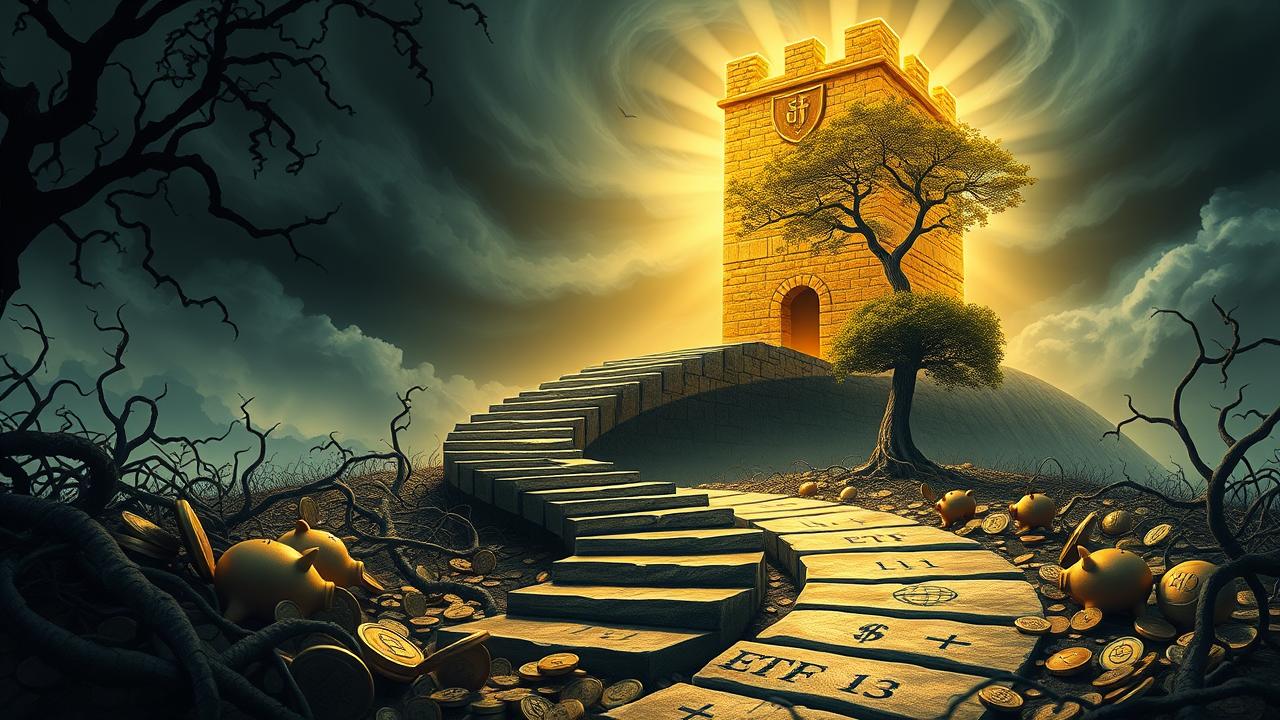
The Blueprint for Peace
There is no more profound act of love than bringing order to the chaos you will one day leave behind. This isn’t a map for your death; it is a blueprint for their life after you are gone. It’s about seizing control today to protect them tomorrow. Here’s the estate planning checklist battle plan:
- Arm Yourself with the Core Four: Secure the essential legal documents that form the bedrock of your plan.
- Catalogue Your Kingdom: Take a fearless inventory of everything you’ve built, from the house to the hidden digital treasures.
- Appoint Your Guardians: Choose the people you trust to carry out your wishes with integrity and strength.
- Shield Your Wealth: Understand the strategies to protect your assets from being devoured by taxes and legal battles.
- Commit to the Living Document: Recognize that this plan must evolve as your life does.
The Unbreakable Foundation: Your Four Essential Documents
The air in the single-bay garage was thick with the ghost of stale coffee and hot oil. Fluorescent lights flickered over a sea of disorganized paperwork covering the workbench—past-due notices, cryptic bank statements, and a stack of medical bills that felt heavy enough to anchor a ship. His father’s ship, now sunk. He had been a good man, a hard worker, but he believed planning was for the rich, an indulgence he couldn’t afford.
Winston, his hands stained with grease and his heart heavy with a grief that had soured into rage, stared at the probate court summons. A vulture in a crisp suit had called it a formality. It felt like a violation. His father’s life, his modest savings, the old tools he’d promised to his grandson—all of it was now frozen, dissected by a system that didn’t know his name. The fighting had already started. His aunt wanted the grandfather clock; his uncle claimed dad promised him the truck. It was all talk. Nothing was written down. It was chaos by default.
You can prevent this. You can build a fortress against this exact kind of heartache. It starts with four pillars:
- Last Will and Testament: This is your direct command. It specifies who gets your property, who you appoint as a guardian for your minor children, and who—your Executor—will be in charge of making it all happen. Without it, the state guesses, and your family fights.
- Advance Health Care Directive (or Living Will): What happens if you can’t speak for yourself? This document is your voice. It outlines your wishes for medical care, life support, and end-of-life decisions. It’s a profound gift to the person you love, freeing them from making an impossible choice in a moment of crisis.
- Durable Power of Attorney for Finances: If you become incapacitated, someone needs to pay your bills, manage your investments, and handle your financial life. This document appoints that trusted person. It’s the difference between seamless management and a court-appointed conservator bleeding your accounts dry with fees.
- Living Trust (Often Revocable): For many, this is the master key. While a will has to go through the public, costly, and soul-crushingly slow process of probate (Winston’s personal hell), assets held in a trust can pass directly to your beneficiaries. It’s private, it’s fast, and it’s a powerful tool for maintaining control even after you’re gone.
A Visual Guide Through the Document Maze
The paperwork can feel like an avalanche. Seeing the components laid out visually can cut through the noise and transform abstract legal terms into tangible, manageable steps. This video provides a clear, no-nonsense overview of the must-have documents for your estate plan, bringing the checklist to life.
Cataloging Your Kingdom: An Inventory of Everything
The cold, metallic weight of a safe deposit box key in your palm. The soft, digital hum from a laptop displaying a cryptocurrency portfolio. The dusty feel of a car title in a forgotten filing cabinet. Your life’s work isn’t just a number in a bank account. It’s a constellation of assets, both physical and intangible, each with its own story and value.
Taking inventory is a warrior’s task. It requires a fearless, head-on confrontation with the totality of what you have built. Go beyond the obvious. Of course, you’ll list the deed to your house and the statements from your brokerage accounts. But the real power comes from a brutally thorough list.
Think about the person who has to untangle your life. Make it easy for them. That is an act of supreme grace.
Include retirement accounts (401(k)s, IRAs), life insurance policies, vehicle titles, jewelry, art, and intellectual property. Yes, the novel you’ve been writing or the music you’ve composed has value. Don’t forget credit card information (for closing accounts), mortgage details, and even a list of monthly utility bills. You are creating a user manual for your life, and leaving it behind is an act of ultimate responsibility and love.
The Digital Ghost: Taming Your Online Afterlife
The third-floor walk-up smelled of turpentine and fresh linen canvas. Sunlight streamed through the large window, illuminating dust motes dancing over stacks of brilliant, finished paintings. But her most valuable work wasn’t on canvas. It was in the cloud—a massive portfolio, a sprawling social media presence with thousands of followers, and client lists stored in a dozen different apps. A close call with a delivery truck that ran a red light had left her with a racing heart and a chilling realization: if she had been in that intersection a second later, her entire creative legacy could have vanished. Poof.
Her name was Sage, and she was a digital artist whose life’s work was a string of ones and zeros. That night, she didn’t paint. She made a list. Every login. Every password. Social media, online galleries, cloud storage, commission platforms, and the crypto wallet holding a few Ethereum she’d forgotten about. This wasn’t morbid; it was powerful. She was securing her kingdom.
Today, a complete digital legacy planning strategy is non-negotiable. It involves creating a secure inventory of your digital assets and passwords (using a password manager is ideal) and appointing a “Digital Executor” to manage, transfer, or delete your accounts according to your wishes. Each platform has its own rules for handling a deceased user’s account. Don’t leave your digital ghost to wander the internet aimlessly. Give it a destination.
Choosing Your Champions: Executor, Trustee, and Guardian
Whom do you trust? Not just with your money, but with your legacy. With your children. This is one of the most critical decisions you will ever make. You’re not just filling a blank on a form; you are choosing the champion who will fight for your wishes when you cannot.
- The Executor: This is your field general. They are responsible for gathering your assets, paying your debts, and distributing what’s left according to your will. They must be organized, unshakably trustworthy, and resilient enough to handle bureaucracy and potential family drama.
- The Trustee: If you create a trust, this person (or institution) is its warden. They manage the assets in the trust for the benefit of your beneficiaries. This is a long-term role that demands financial acumen and a deep commitment to your values.
- The Guardian: For parents of minor children, this is everything. Who will raise them? Who will instill your values, love them, and shape them into the adults you dream they will become? It’s a decision that transcends finance and touches the sacred.
The most important qualifier isn’t financial genius, it’s character. Choose someone who understands you, shares your values, and has the emotional fortitude for the job. And once you’ve chosen, talk to them. Ask them if they are willing to serve. Surprising someone with this monumental responsibility is a recipe for disaster.
Shielding the Harvest: Tax and Wealth Transfer Strategy
In his small suburban home, the morning light caught the dust motes dancing in the air. He had spent forty years on the road, a long-haul trucker watching the country blur past his window, all to provide for this. The house was paid off. The pension was solid. By any measure, he had succeeded. But now, a new anxiety gnawed at him.
Allen, retired and a grandfather twice over from two different marriages, knew that peace was fragile. He’d seen families implode over far less. He wasn’t a Rockefeller, but the value of his paid-off home had ballooned, and he feared his blended family’s simmering tensions could ignite into a full-blown war. He also feared the government taking a greedy slice of the humble pie he’d worked his entire life to bake. He was determined to leave a legacy of support, not a battlefield.
This is where strategic planning becomes your shield. It’s not just for the ultra-wealthy. With smart inheritance tax strategies, you can protect your assets. For many, this involves using trusts not only to avoid probate but also to minimize estate taxes and protect assets for future generations. Proper generational wealth planning ensures that your hard-earned wealth serves your family, not the taxman. It’s about ensuring a smooth multi generational wealth transfer, whether you’re passing on a business or just a beloved family home.
The Great Divide: Wills vs. Trusts
So, what’s the difference, and why does it feel like a secret language? The distinction between wills vs trusts is one of the most misunderstood parts of planning, yet it’s brutally simple.
A Will is a letter of instruction to a probate court judge. It says, “After I’m gone, here’s who I want to get my stuff.” The key phrase is to a probate court judge. A will guarantees probate. It’s a public process, it’s slow, and it can be expensive. It’s Winston, drowning in paperwork in his greasy garage.
A Trust, specifically a revocable living trust, is like creating a private company for your family. You put your assets (your house, your bank accounts) into the trust’s name while you’re alive. You still control everything completely. But when you pass, there’s no need for court. The person you named as your successor trustee simply follows the instructions you wrote. It’s private, immediate, and avoids the probate nightmare. The benefits of trusts for families are immense, especially when you want to avoid conflict and delays. For those asking how to create a family trust, the first step is always speaking with a qualified attorney to structure it for your specific family dynamics.
The Living Plan: Your Mandate for Maintenance
Your life is not a static photograph. It’s a churning, evolving, unpredictable movie. You get married, have children, get divorced, change jobs, experience loss, celebrate windfalls. To think that a plan you created five years ago still perfectly reflects your life and wishes is a dangerous fantasy.
Your estate plan must be a living, breathing document. Set a recurring appointment on your calendar—every three to five years, or after any major life event—to review it. Are the people you named still the right people? Are the assets you listed still accurate? Most critically, have you checked the beneficiary designations on your life insurance, 401(k), and IRA accounts? These designations often override your will. An ex-spouse could inherit everything if you forget to update one simple form.
This isn’t a chore. This is the ongoing work of stewardship. This is how you secure true legacy and generational freedom. It’s an active process of legacy planning, not a one-and-done task you check off a list.
Finding Your Tools and Your Team
Yes, there are a thousand downloadable PDFs and checklists out there. They can be good starting points for organizing your thoughts. But a checklist is not a plan. A template is not a shield.
The most powerful tools at your disposal are expertise and organization. Specialized software can help you create that master inventory, from password managers that secure your digital keys to document vaults that organize everything in one place. Think of these as your digital quartermaster, keeping your supplies in order.
But the real game-changer is your team. A qualified estate planning attorney and a financial planner are not expenses; they are investments in peace of mind. You are the architect of your legacy. They are the master builders who know the codes, the materials, and the techniques to make your vision indestructible.
Further Fortification: Your Reading List
Knowledge is the ultimate power. Before you step into an attorney’s office, arm yourself with a foundational understanding. These texts can help clear the fog and empower you to ask the right questions.
- The Complete Guide to Organizing Your Records for Estate Planning by John N. Peragine, Jr.: For when you’re staring at a mountain of papers and don’t know where to start. This is the boots-on-the-ground manual for turning chaos into an orderly arsenal.
- Estate Planning For Dummies by Jordan S. Simon: Don’t let the title fool you; there’s nothing dumb about seeking clarity. This book breaks down complex topics into digestible, actionable information, stripping away the intimidating legal jargon.
- Digital Estate Planning: A Simple Guide to Your Online Life by A.I. Mchain: A crucial read for the modern world. It directly addresses the questions Sage faced in her apartment, providing a roadmap for securing your digital assets and identity.
Dispatches from the Front Lines
What are the essential first steps in the estate planning process?
First, stop thinking and start doing. Take inventory of what you own and what you owe. Second, think about who you trust to be in charge (your Executor) and who you want to inherit your assets. Third, find a qualified attorney in your state. Going to that first meeting with an organized list of your assets and goals will save you thousands in legal fees and prove you’re serious.
How much does this all cost? It sounds expensive.
Let’s be blunt. Planning costs money. A simple will might cost a few hundred dollars; a complex trust plan can be several thousand. But now ask yourself: how much does not planning cost? Probate fees, legal battles, lost assets, and the emotional toll on your family will dwarf the upfront cost of creating a solid plan. It’s one of the few things in life where the price of inaction is guaranteed to be higher than the price of action.
What are the four must-have documents I absolutely need?
Think of it as your personal readiness kit: a Will, an Advance Health Care Directive, a Durable Power of Attorney for Finances, and for many people, a Revocable Living Trust. These four documents are the cornerstones of a basic but effective estate planning checklist, ensuring your wishes for your property and your personal care are known and legally enforceable.
Armory and Allies
- The National Council on Aging (NCOA): Offers a solid, reliable starting checklist for older adults.
- LegalZoom’s Checklist: A good overview of the initial steps from a well-known online legal service.
- Charles Schwab’s Checklist: Provides a strong focus on cataloging financial assets.
- r/EstatePlanning: A forum where you can see the real-world questions and scenarios people face. Remember, advice here is not a substitute for professional legal counsel.
Your First Step on the Path
The summit of this mountain seems impossibly far away. So don’t look at the summit. Look at your feet. The journey to a complete estate planning checklist, to securing your place on the financial independence roadmap, begins with a single, deliberate step.
Tonight, don’t try to solve everything. Just do one thing. Open a new document on your computer. Title it “My Life’s Inventory.” Write down the name of your primary bank and your account number. That’s it. You have begun. You have chosen order over chaos. You have taken your first step toward peace.