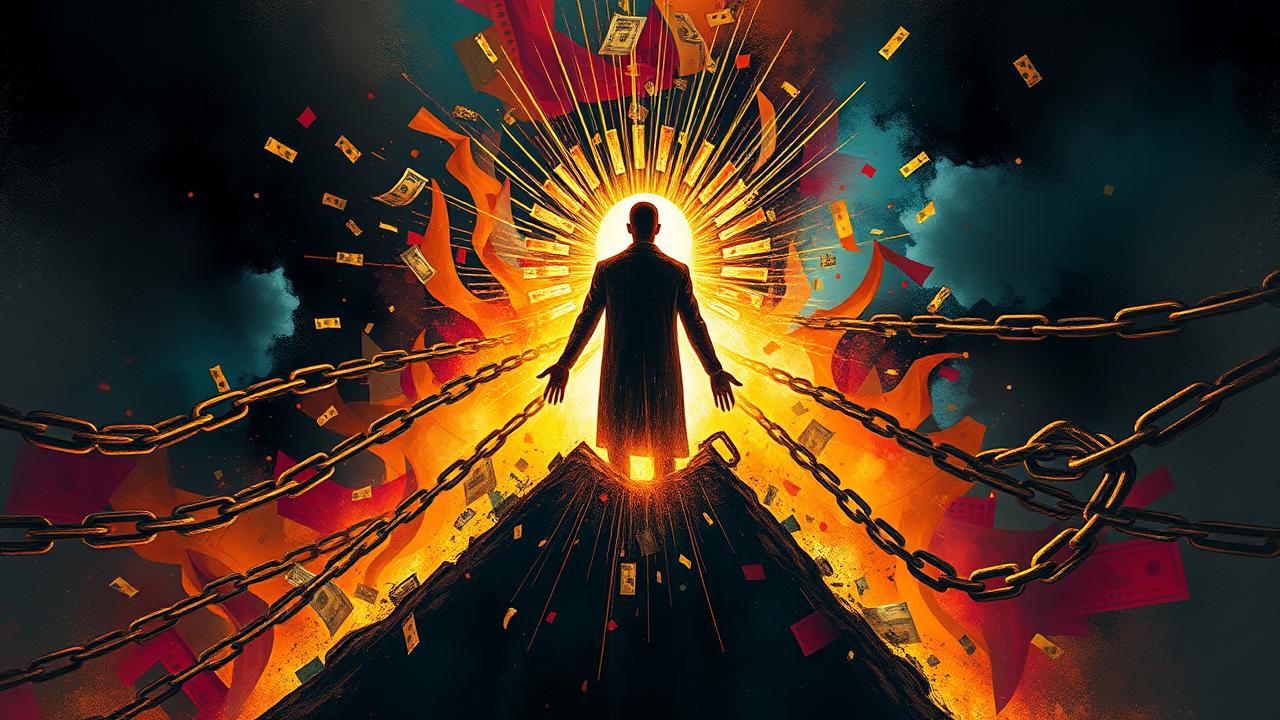
The Weight of the Waiting Room
There’s a particular shade of beige reserved for bank offices, a soul-draining color designed to make you feel small. It’s the color of waiting. Waiting for a loan approval that feels more like a judgment. Waiting for a wire transfer to clear while your opportunity evaporates. Waiting for a human to answer the phone who has the authority to do anything more than offer a hollow apology.
You feel it in your bones—the slow, grinding friction of a system that wasn’t built for you. It was built to have walls, and you are on the outside. Every form you fill out, every fee you pay, is a quiet reminder that you are not in control. You are a supplicant, asking for permission to use your own money, to build your own future. And isn’t it just a little insulting that they play bland, generic music while they do it?
What if the walls came down? Not with a bang, but with a quiet line of code. What if there were no waiting rooms, no branch managers, no gatekeepers at all? This is the raw-knuckled promise of a world where our understanding of decentralized finance (DeFi) simplified becomes our key to a new kind of freedom.
The Unchained Blueprint
This isn’t another abstract tech manual. This is a map out of the maze. We’re going to dismantle the engine of traditional finance and show you the parts of its replacement—a system built on code, not on committees. You will understand how to lend, borrow, and trade without asking for permission. You will see the battlefield, learn the risks, and discover the tools to not just survive, but to forge a new path toward genuine financial sovereignty.
What Exactly Is This New World?
The fluorescent lights of the print shop hummed, casting long shadows across stacks of unsold inventory. For weeks, Sadie had felt a knot tightening in her chest. Her small business, importing artisanal coffee beans, was bleeding money on international transfer fees and currency conversion. A payment from a client in Japan was stuck, tangled in the red tape between banks. It was a prison of process, and she was rattling the bars, helpless.
This is the world we know. A world of middlemen. What is decentralized finance DeFi is the answer to a question that has haunted people like Sadie for generations: “Does it have to be this way?”
At its heart, DeFi is a parallel financial system being built on blockchain technology. Think of it not as a company, but as a public utility—like the internet itself. It’s a network of financial services that operates without a central authority. No head office, no board of directors, no one to deny your transaction because it’s after 5 PM. It’s finance for everyone, everywhere, all at once.
The Unbreakable Promise: Smart Contracts
Imagine you and a stranger agree on a bet. You write the terms on a piece of paper: “If X happens, you pay me $100.” You both put your money into a locked box with a transparent lid. The box is connected to a trusted news source and is programmed with one command: when the news confirms X happened, the lock on your side opens. If it doesn’t, the lock on theirs opens. The box is the judge, jury, and executioner. It cannot be bribed, swayed, or convinced to take a long lunch.
That box is a smart contract. These are the gears of the DeFi machine. They are self-executing agreements with the terms written directly into code. Smart contracts in DeFi are what allow you to borrow funds, swap assets, or earn interest automatically, based on a set of rules that are transparent and unchangeable. There’s no “let me check with my manager.” The code is the manager.
How It Works: The People’s Ledger
The core engine for all of this is the blockchain. Forget the complex diagrams for a moment. Picture a shared digital notebook, passed among thousands of people around the world. Every time a transaction happens—Sadie sends money to her supplier, you trade one digital asset for another—a new line is written in the notebook.
But here’s the magic: before the line is written, everyone with a copy of the notebook checks to make sure the transaction is valid. Once they agree, the entry is added. It’s chained to the previous entry, creating an unbreakable, chronological record that cannot be altered without everyone noticing. This is the essence of how DeFi works for beginners. It’s a system of trust built not on a single institution’s reputation, but on collective, verifiable truth. Your transaction is no longer a secret between you and your bank; it’s a public fact, secured by a global network.
The Old Guard vs. The New Code
The difference between traditional finance and DeFi is the difference between a walled garden and an open frontier. In the garden, the owner decides who gets in, what can be planted, and takes a cut of every harvest. On the frontier, you just need a map and the courage to explore. This contrast is the core of DeFi vs traditional finance.
Traditional Finance (TradFi) is permissioned. You need to apply. You need to be approved. Your identity, your credit score, your location—they are all barriers to entry.
DeFi is permissionless. Armed with a crypto wallet and an internet connection, you can access its services. It doesn’t ask who you are, only what you want to do. It replaces the slow, biased, and expensive human intermediaries with efficient, impartial code. This is a fundamental shift in the psychology of adapting to new money; it requires us to trust math more than we trust institutions.
The Powers You Inherit
So, what does this actually give you? It’s not about just getting rich quick, though the potential is there. It’s about gaining capabilities you never had before. These are the primary benefits of decentralized finance:
- Autonomy: You, and only you, control your assets. With your own digital wallet, you are your own bank. No one can freeze your account or block your transactions.
- Transparency: Every transaction is recorded on a public blockchain. While your identity remains pseudonymous, the flow of funds is open for anyone to audit. It’s a system that’s hard to corrupt because the lights are always on.
- Accessibility: Anyone with an internet connection can participate. This opens up financial services to billions of people who are unbanked or underbanked by the traditional system.
- Efficiency: Transactions are settled in minutes, not days. Automated smart contracts cut out the costly human layer, reducing fees and delays.
Seeing is Believing: The Core of DeFi
Sometimes, the best way to understand a revolution is to see it in motion. This video breaks down the fundamental concepts we’ve discussed, offering a clear visual explanation of how DeFi is rebuilding finance from the ground up. It’s a powerful primer on what could very well be the future of money.
The People’s Marketplace
A Decentralized Exchange, or DEX, is a flea market on overdrive. There’s no central organizer, no one taking a massive cut to rent you a stall. It’s just buyers and sellers meeting directly to trade their goods—in this case, digital assets. This is the heart of decentralized exchanges explained: peer-to-peer trading without a broker.
You connect your wallet, select the asset you have and the asset you want, and a smart contract facilitates the swap. The prices are determined by supply and demand within pools of assets provided by other users. It’s a living, breathing marketplace that makes crypto for everyday people a tangible reality, not just an abstract idea.
Borrowing and Lending Without a Banker’s Scowl
Remember Sadie, the coffee importer being strangled by fees? She discovered DeFi lending. Instead of waiting on a bank loan, she deposited some of her own digital assets into a lending protocol—a giant, automated pool of funds. This served as her collateral, allowing her to instantly borrow stablecoins (digital dollars) to pay her supplier in Japan. The transaction took minutes and cost a fraction of a traditional wire transfer. The knot in her chest finally began to loosen.
This is DeFi lending and borrowing explained in human terms. Users supply assets to liquidity pools and earn interest. Other users can then borrow from those pools. The smart contract handles the collateral, the interest rates, and the liquidations. It’s a system where capital flows fluidly, driven by code, not by credit committees.
Putting Your Assets to Work: Staking
The low hum of the refrigerator was the only sound in Stanley’s small kitchen. A retired pipefitter, he watched the evening news with a growing sense of unease. His pension felt like a shrinking boat in a rising tide of inflation. He wasn’t a gambler, but he couldn’t just sit there and watch his savings dissolve. After weeks of careful research on his old desktop computer, he took a small portion of his nest egg and learned how to “stake” it on a major blockchain network.
Here’s DeFi staking explained: He was essentially putting his assets to work to help secure the network. In exchange for this service—for participating in the validation of transactions—the network paid him rewards, like interest. It wasn’t a fortune, but it was steady. A small, consistent stream of income that felt earned, not given. It was a feeling of agency he hadn’t had in years.
The High Stakes Game: Yield Farming
If staking is tending a garden, yield farming is professional storm chasing. It’s a more complex and high-risk strategy for generating returns. Yield farming simplified means constantly moving your crypto assets between different lending and liquidity protocols to find the highest “yield” or return. Farmers might lend on one platform, use the receipt token from that loan as collateral on another, and so on, creating complex chains to maximize rewards.
This is the deep end of the pool. The rewards can be extraordinary, but the risks are magnified. It requires constant attention and a deep understanding of the protocols involved. It’s the furthest edge of the frontier, where fortunes are made and lost in the blink of an eye, and a core strategy for those focused on building resilient wealth in the digital age, provided they manage the immense risk.
The Path to Passive Income
The ultimate goal for many is to make their money work for them. DeFi offers several paths to do just that. The question of how to earn passive income with DeFi isn’t a single answer, but a spectrum of strategies based on your risk tolerance.
- Low Risk (Staking): Stake major cryptocurrencies like Ethereum on the core network or via liquid staking platforms. The returns are relatively modest but are tied to the fundamental security of the blockchain itself.
- Medium Risk (Lending): Supply stablecoins or established blue-chip crypto assets to major lending protocols like Aave or Compound. You earn interest from borrowers, with risk being tied to the smart contract’s security.
- High Risk (Yield Farming): Provide liquidity to newer or more exotic pairs on DEXs or engage in multi-step farming strategies. This offers the highest potential rewards but also the highest risk of loss.
Your First Steps onto the Frontier
The journey of a thousand miles begins with a single, terrifying, exhilarating step. Exploring DeFi isn’t as hard as it seems. Here’s how to start using DeFi:
- Get a Wallet: This is your passport and your bank vault. Start with a user-friendly browser wallet like MetaMask. Write down your seed phrase on paper and store it somewhere safe. This is the master key to your funds. Do not ever share it.
- Acquire Crypto: You’ll need some fuel for the journey. Use a reputable centralized exchange like Coinbase or Kraken to buy a base currency like Ethereum (ETH) with your local currency.
- Transfer to Your Wallet: Send the ETH you just bought from the exchange to your personal wallet address. This is the moment you truly take custody of your assets. It feels like leaving the harbor for the open sea.
- Connect to a dApp: Go to a well-known DeFi application (like Uniswap or Aave). There will be a “Connect Wallet” button. Authorize the connection, and you’re in. You can now interact with the protocol directly. Start small. Try a tiny swap. Get a feel for the process.
Your Digital Keys to the Kingdom
Your wallet is everything. It holds the cryptographic keys that prove you own your assets. Choosing the right one is crucial. For those just starting, the best DeFi wallets for beginners prioritize ease of use and security.
- Software Wallets (Hot Wallets): These are browser extensions (MetaMask) or mobile apps (Trust Wallet). They’re convenient for frequent use but are connected to the internet, making them inherently more vulnerable. They are essential tools for interacting with the DeFi world, deeply tied to your privacy, identity & digital wallets.
- Hardware Wallets (Cold Wallets): Devices like Ledger or Trezor store your keys offline. This is the digital equivalent of a vault. They are the most secure way to store significant amounts of crypto. You use them to authorize transactions initiated by a software wallet, offering the best of both security and usability.
Landmarks in the DeFi Universe
The DeFi landscape is vast and constantly shifting, but there are established continents and bustling capital cities. Some of the most popular DeFi platforms 2025 will likely be a mix of old titans and new innovators.
Protocols like Aave are pillars of lending and borrowing. Uniswap remains a dominant force among decentralized exchanges. Lido has become a central hub for liquid staking, allowing users to stake their ETH while receiving a token they can use elsewhere in DeFi. Exploring these platforms—even just by browsing their interfaces—is a crucial part of learning the lay of the land.
Navigating the Storm: Risks and Realities
With great power comes great responsibility—and in DeFi, great risk. This isn’t a utopian paradise. It’s a frontier, and frontiers have dangers. This video provides a sober look at the challenges, helping you understand the landscape of risk so you can navigate it with intelligence and foresight.
Where the Monsters Lie
The screen glowed, mocking him. One minute, the number in Marcelo’s yield farming dashboard represented nearly a year of freelance logistics work, carefully saved. The next minute, it was zero. The project’s website was gone. The social media accounts were deleted. The money hadn’t been “lost” in a market crash; it had been stolen. A “rug pull.” The code had a hidden backdoor, and the anonymous developers had used it to drain every last cent. He felt a cold, metallic sickness rise in his throat. It wasn’t just money; it was time. It was trust. It was hope, turned to digital dust.
Marcelo’s story is a brutal but necessary one. The risks of decentralized finance are real and unforgiving. They include:
- Smart Contract Bugs: Code is written by humans, and humans make mistakes. A flaw in a protocol’s code can be exploited by hackers, draining funds.
- Scams and Rug Pulls: Anonymous developers can, and do, create projects with the sole intention of stealing investors’ funds. Learning the patterns for navigating financial scams & rug pulls is a non-negotiable survival skill.
- Market Volatility: The value of crypto assets can swing wildly. The collateral you’ve posted for a loan could plummet in value, causing your position to be liquidated.
- Regulatory Uncertainty: Governments around the world are still figuring out how to handle DeFi. Future regulations could impact how certain protocols operate.
The Unfolding Horizon
Despite the risks, the trajectory is clear. This isn’t a fleeting trend; it’s a fundamental rewiring of our financial infrastructure. The future of DeFi technology points toward a world where the boundary between digital and physical assets blurs. We’re already seeing the beginnings of tokenized real estate & assets, where a piece of property or a share in a company can be represented on the blockchain, traded frictionlessly across the globe.
This is more than just a `digital banking evolution`; it is a revolution. It challenges the very definition of a bank, an asset, and a market. Understanding it today is not just about investment; it’s about preparing for a future where financial autonomy is not a privilege, but a basic technical skill.
Tools for the Modern Explorer
You wouldn’t climb a mountain without the right gear. Navigating DeFi is no different. Arm yourself with the right tools:
- Wallets: As discussed, MetaMask is the standard for browser interaction, while hardware wallets from Ledger or Trezor provide Fort Knox-level security for your assets.
- Portfolio Trackers: Platforms like Zapper or DeBank are indispensable. They provide a unified dashboard to track all your assets, debts, and staked positions across multiple DeFi protocols. It’s your personal mission control.
- Information Hubs: Sites like DeFi Llama provide critical data on the health of the ecosystem, showing the Total Value Locked (TVL) in different protocols—a key metric for assessing their scale and user trust.
The Armchair Expedition: Deeper Reading
A single article is a starting point. To truly master this new world, you must become a perpetual student. These books offer powerful perspectives:
- The Wall Street Era is Over by DEFIYIELD App: A bold declaration and a practical guide to why this transition is happening and how investors can position themselves for the shift.
- Digital Gold by Nathaniel Popper: While focused on Bitcoin, this book provides a riveting narrative history of the misfits and visionaries who first dared to imagine a world with decentralized money.
- Decoding DeFi by Kavya Rajan: An excellent next step for beginners, this text digs deeper into the specific mechanics of yield farming and other core DeFi strategies in a clear, accessible way.
Questions From the Edge of the Map
What is decentralized finance in simple terms?
It’s peer-to-peer finance. Imagine cutting out the bank, the broker, and the payment processor. It’s a system where you can borrow, lend, and trade directly with others, using automated code (smart contracts) as the trustworthy middleman. Our guide to decentralized finance (DeFi) simplified is designed to make this powerful concept accessible to everyone.
Is DeFi illegal in the US?
It’s not illegal, but it exists in a regulatory gray area. The technology is new and moving faster than lawmakers can keep up. Different aspects of DeFi, like certain assets or lending activities, may fall under existing financial regulations, and the landscape is constantly evolving. It is crucial to stay informed and understand that compliance and tax reporting responsibilities still fall on you, the individual user.
So is this just for tech geniuses and gamblers?
Absolutely not. While the bleeding edge is home to high-risk strategies, the core of DeFi—staking, lending stablecoins, and simple swaps—is becoming increasingly user-friendly. The perception that it’s too complex is often because people were never taught to think about finance fundamentally. The real challenge isn’t the technology; it’s unlearning a lifetime of reliance on traditional gatekeepers and embracing true ownership. It is, at its core, about empowering yourself.
Continue Your Journey
True mastery comes from continuous exploration. These resources can serve as your compass:
- Investopedia’s DeFi Overview: A solid, foundational resource for key terms and concepts.
- Fidelity’s DeFi Guide: See how a traditional finance titan is approaching and explaining this new world.
- r/defi: A Reddit community for deep dives, project discussions, and direct-from-the-source insights.
- r/CryptoCurrency: A broader community covering all aspects of the crypto world, including DeFi.
- Polkadot’s DeFi Starter Guide: An explanation from one of the major blockchain ecosystems.
The First Step Is Control
This world can feel vast and intimidating. The temptation is to wait for it to become simpler, safer, or more certain. But the power here is not in waiting. The power is in deciding that you will no longer be a passive passenger in your own financial life. The journey toward understanding decentralized finance (DeFi) simplified doesn’t start with investing your life savings. It starts with a decision. It starts with installing a wallet. It starts with reading one more article. It starts with taking the first small, deliberate step toward owning your future.
Your financial autonomy is waiting. Go claim it.