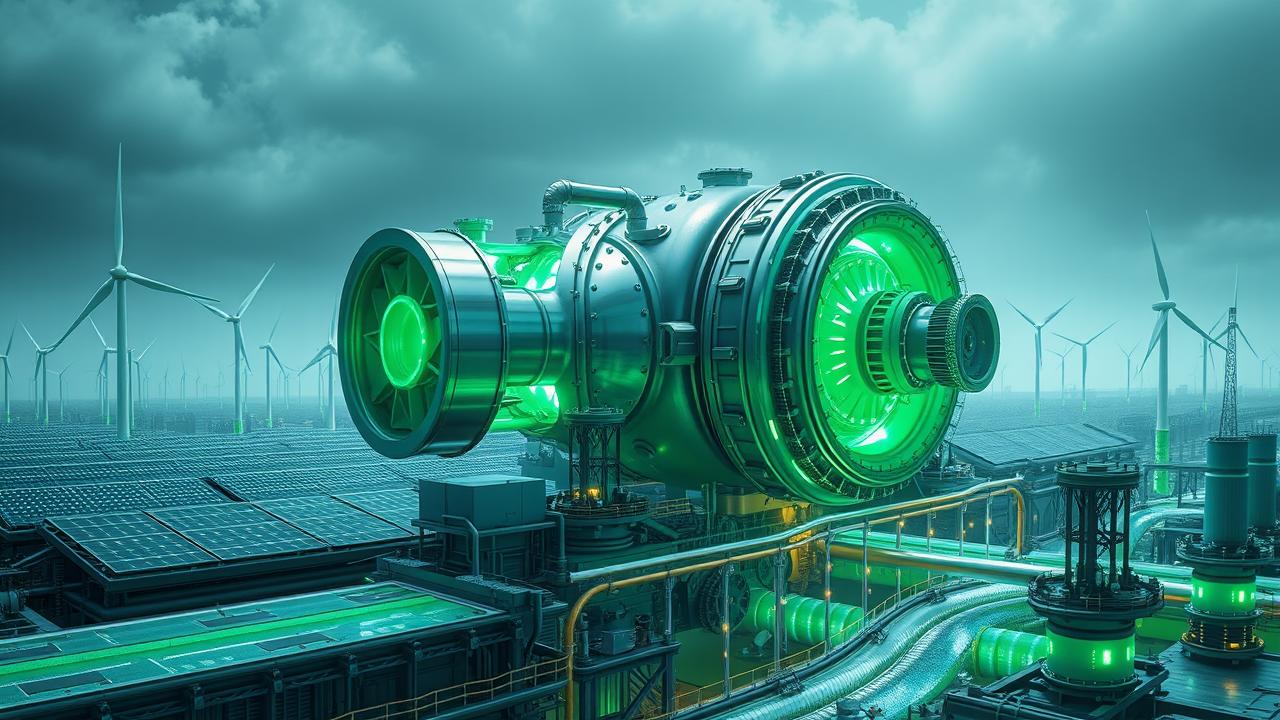
There’s a tremor in the world, a low hum you feel in your bones before you hear it with your ears. It’s the sound of an old machine shuddering to a halt and a new one groaning to life. That machine is the global economy, and the fuel is changing. For generations, wealth was built on extraction, on consumption, on a bill that was always kicked down the road. Now, the bill is on the table, flapping in the hot wind of a changing climate.
Some see an invoice for our sins. Others, the wise and the wary, see something else entirely. They see the single greatest economic realignment in a century. This isn’t about hugging trees or patting yourself on the back for buying a reusable coffee cup. This is about understanding that adapting to reality is where power lies. True power, the kind that secures your future, your family’s future, is found in aligning your financial destiny with the planet’s survival. It’s found by future economy investment trends that are rewriting the rules. This is about the cold, hard, and ultimately exhilarating business of investing in the green economy.
Your Compass in the Coming Storm
The ground is shifting. The path forward is lit by both genuine opportunity and the deceptive glow of marketing hype. Here’s the unvarnished map: The green economy is a total system overhaul—far beyond solar panels—demanding trillions in capital for energy, water, and infrastructure that doesn’t poison us. Your entry points are specialized financial tools like Green Bonds and accessible ETFs, but the trail is littered with the traps of “greenwashing.” Success requires a ruthless focus on fundamentals, a deep understanding that policy can make or break markets, and the courage to confront the paradox that we must invest in massive growth to ultimately enable a world of less consumption. This is not a game for the faint of heart, but for the prepared survivor.
Beyond Solar Panels and Self-Congratulation
A thick, humid haze hung over the porch, blurring the edges of the distant hills. It was the kind of air that felt heavy with memory, something a man who’d spent forty years in oil field logistics knew intimately. Now retired, Matthias watched the sky and felt a knot tighten in his gut—a quiet, persistent conflict between the world he helped build and the one his grandchildren would inherit. His pension, a testament to a life of hard work, was tied to the very systems he now saw as fragile, as finite as the black crude he once tracked across oceans.
He wasn’t an activist. He was a pragmatist who read balance sheets the way a sailor reads the clouds. And the balance sheet of the planet was screaming red. The conversation about the green economy isn’t an academic exercise; it’s a financial reckoning. It’s a systemic pivot toward sustainability, sure, but also toward resource efficiency and, most critically, what the strategists call a “Just Transition”—the idea that this new world can’t be built on the backs of the old one’s victims. It must create equity and opportunity.
This isn’t just a need; it’s what one economist called the biggest growth opportunity of the 21st century. The transition requires a staggering injection of capital, turning planetary necessity into raw, undeniable economic torque.
The Engines of the New World
So where does the money go? It flows into the guts of this new machine, the tangible assets that will power the next hundred years.
Renewable Energy’s Backbone
This is the most obvious play, but its true scope is often misunderstood. It’s not just about solar farms shimmering in the desert or turbines spinning majestically offshore. The real long-term game is in the boring stuff: the grid modernization, the battery storage facilities that look like windowless fortresses, the geothermal wells plumbing the earth’s own heat. This is the heavy-lifting infrastructure that makes renewable energy not just possible, but reliable.
The Bones of a Circular World
The second pillar is less glamorous but just as vital. It’s the world of green infrastructure. Think beyond energy. This is investment in advanced recycling plants that can turn a mountain of plastic waste into usable material. It’s the new businesses pioneering sustainable building materials. It’s the entire paradigm shift of how to invest in future industries that form a circular economy, where “waste” is just a resource in the wrong place. This includes restoring the natural capital we’ve spent down—the forests, the wetlands, the soil—because no economy can thrive on a dead planet.
The Primal Demand for Water Security
Before energy, before everything, there is water. Its scarcity is no longer a distant threat; it’s a clear and present danger to agriculture, industry, and life itself. Smart capital is flowing into water resource management, hyper-efficient irrigation systems, wastewater treatment and recycling, and conservation projects. These aren’t just utilities; they are investments in the most non-negotiable commodity on Earth.
The Tools, The Traps, and The Trade-Offs
The city lights reflected off the condensation on her apartment window, a million tiny promises she couldn’t quite grasp. Laney, a graphic designer with a fierce heart and a thin bank account, had scraped together a few thousand dollars. She was determined to make it count for something more than just a number on a screen. But the world of “sustainable investing” felt like a labyrinth designed to confuse her. ESG, SRI, Impact… the acronyms swarmed like gnats. Every fund claimed to be changing the world, but the fees felt predatory and the holdings—when she could find them—were often a messy compromise.
She wasn’t stupid. She knew this was a a world of sustainable future investing, but the paralysis was real. The fear of being duped, of accidentally funding the very problem she wanted to solve, was a weight on her chest. Her experience is the silent majority’s struggle. You need tools, but more than that, you need clarity.
The formal definition of a green investment is simply capital allocated to projects with clear environmental benefits. To navigate this, you have a growing arsenal:
- Green Bonds: These are loans taken out by companies or governments specifically for environmental projects, like building a water treatment plant. They offer a direct line of sight between your money and a tangible outcome.
- Green Energy ETFs (Exchange-Traded Funds): For investors like Laney, this is the most practical entry point. An ETF is a basket of stocks that gives you diversified exposure to an entire sector. This is how you place a bet on the whole renewable ecosystem, including investing in clean energy startups alongside established giants, without trying to pick a single winner from a field of thousands.
The key is to cut through the noise. These are just tools. The real work is learning how to wield them without cutting yourself.
A Visual Dose of Reality: Performance Meets Resilience
It’s one thing to read about these seismic shifts; it’s another to see the logic laid bare. This video cuts through the aspirational fog to connect the dots between green investment strategies and the hard-nosed goal of building a portfolio that can weather the storms ahead—both literal and financial. It’s a masterclass in how aligning with sustainability isn’t just about virtue, but about intelligent risk management.
Source: FNEGE Médias via YouTube
Separating the Saints from the Sinners
Here lies the dark forest of greenwashing, where good intentions go to die. So many companies have learned to speak the language of sustainability without changing their behavior. They wrap themselves in a green flag while their core business remains as brown as ever. Your job as an investor is to become a cynic, a detective.
This is where ESG (Environmental, Social, and Governance) criteria, when used correctly, become your X-ray glasses. It’s a framework for judging a company not on its marketing, but on its actions. How does it manage its carbon footprint? How does it treat its workers? Is its board of directors asleep at the wheel? This isn’t just a moral scorecard; it’s a powerful tool for identifying operational risks that old-school analysis often misses. A company pouring toxins into a river isn’t just immoral; it’s facing a future of massive fines and reputational implosion—a bad investment waiting to happen.
Scrutinize disclosures. Look for alignment with verifiable standards. This is the grunt work of investing in the future economy. You have to be willing to look under the hood, to ask the hard questions, and to walk away when the story doesn’t add up.
The Invisible Hand Needs a Shove
The beautiful, brutal truth is that private capital alone cannot turn this ship. The risks are too high, the timelines too long. The invisible hand of the market needs a firm, unequivocal shove from the visible hand of government. Supportive public policy is the jet fuel for this transition.
When governments create clear investment frameworks, de-risk projects through blended finance or loan guarantees, and put a price on carbon, they send a powerful signal to the market: this is where the future is being built. This coordinated effort, known as Climate Finance, is designed to make the economics of green projects irresistible to private investors.
But it’s more than that. This is where the concept of a “Just Transition” becomes paramount. Policy must ensure that this new economy creates good jobs, supports communities left behind by the old one, and promotes genuine equity. This is about rewriting the very definition of what we value, ensuring that the future of money is measured not just in profit, but in resilience, well-being, and shared prosperity.
The Capitalist’s Conundrum
The downtown skyline was a monument to ambition, a collection of steel and glass towers that Jackson, a commercial real estate developer, knew by name and number. He saw the world in terms of square footage and yield. For him, the “green” movement was initially just another angle, another set of tax credits to be exploited. It was a cold, calculated play to lower operating costs on his aging properties. He wasn’t thinking about polar bears; he was thinking about profit.
But as he dug into the retrofitting projects—the HVAC upgrades, the smart-glass installations, the rainwater capture systems—a different reality emerged. He found himself on Reddit forums late at night, reading a comment that stuck in his mind: “Most industries trying to reduce carbon emissions…are incredibly capital-intensive to build out.” The sheer scale of it was staggering. This wasn’t a quick fix; it was a wholesale reconstruction. His epiphany wasn’t a moral one. It was strategic. He realized the upfront costs were enormous, creating a massive barrier to entry. But for those who could afford the ticket, it created an almost unbreachable long-term competitive moat. His success wasn’t in finding a get-rich-quick scheme, but in shifting his entire philosophy from short-term speculation to a diversified, long-haul position in a resource-constrained world.
This reveals the core paradox: the green economy requires colossal growth and investment to get off the ground, yet its ultimate aim is to create a world that consumes less. It’s a direct challenge to the very foundation of growth-based capitalism. For the investor, this means holding two opposing ideas at once. You must embrace the growth opportunity while maintaining a sound, almost boring, investment philosophy. Prioritize risk management. Stick with low-cost, broadly diversified portfolios. Even as you hunt for alpha in this new world, the timeless rules of wealth preservation are your only true shield.
Further Dispatches from the Front Lines
To navigate this terrain, you need more than a map; you need the wisdom of those who have charted it. These books are vital dispatches.
- Green Bonds for Water Security by Robert C. Brears: For the strategist who understands that water is the new oil, and the financial instruments that control its flow are the new pipelines.
- Sustainable Entrepreneurship and Investments in the Green Economy by Jean Vasile, Andrei: A look at the DNA of the companies actually building this new world. Essential reading for those who want to invest in the builders, not just buy the indexes.
- The Little Book of Common Sense Investing by John C. Bogle: A powerful, grounding reminder. In a revolutionary market full of seductive stories and complex products, the timeless principles of low-cost, diversified investing are your anchor and your shield.
Lingering Echoes in the Mind
Is green energy actually worth investing in?
Yes, but not with blind faith. The tailwinds of government policy and falling technology costs are immense, suggesting strong long-term growth potential. However, the sector is notoriously volatile, subject to policy shifts and intense competition. It is worth investing in as part of a diversified portfolio, not as an all-or-nothing bet. Treat it as a powerful growth component, not a magic bullet.
What really distinguishes green investing from regular investing?
Think of it as adding another layer of data to your analysis. Traditional investing looks at financials: revenue, profit, debt. Green investing adds a non-financial filter: the Environmental, Social, and Governance (ESG) data. It’s a strategy designed to identify long-term risks and opportunities that a standard balance sheet won’t show you. Done right, it’s not a sacrifice of returns; it’s a more complete form of risk management for the modern world.
How can a beginner start investing in the green economy without getting overwhelmed or scammed?
For someone like Laney, feeling lost in the complexity, the answer is to start simple. Forget picking individual stocks. Begin with a low-cost, broadly diversified clean energy ETF from a major provider like iShares or Invesco. Look at its top 10 holdings—do they make sense to you? This approach gives you instant diversification and lowers your risk. You can start small, learn as you go, and avoid the paralysis that comes from trying to find the “perfect” investment on day one.
Tracking the Tectonic Shifts
The landscape is changing constantly. Stay ahead of the curve by tapping directly into the data and discourse that shapes this market.
- LSEG Green Economy Reports: Corporate-grade data and analysis on financial flows into the green economy. This is where the big money looks for signals.
- Green Economy Coalition: A vital resource for understanding the policy and social justice dimensions of the transition.
- World Economic Forum (WEF): High-level insights on the intersection of global policy, finance, and the green transition.
- Carbon Collective Investing: Offers clear, actionable definitions and guides for retail investors trying to make sense of green financial products.
- r/greeninvestor: A raw, unfiltered look into the minds of other investors, complete with successes, failures, and hard-won wisdom.
Your First Step on the New Map
The power to navigate this new world isn’t out there. It’s inside you. It begins not with a grand gesture but with a single, deliberate decision. Look at your own finances, your own portfolio. What story does it tell? Is it a story of the past, or a story of the future?
Your next move isn’t about trading your way to a quick fortune or saving the world overnight. It’s about taking back control of your own financial narrative. The first step in investing in the green economy is simply to ask the right questions and have the courage to seek out real answers, beyond the hype. Start there. The rest will follow.