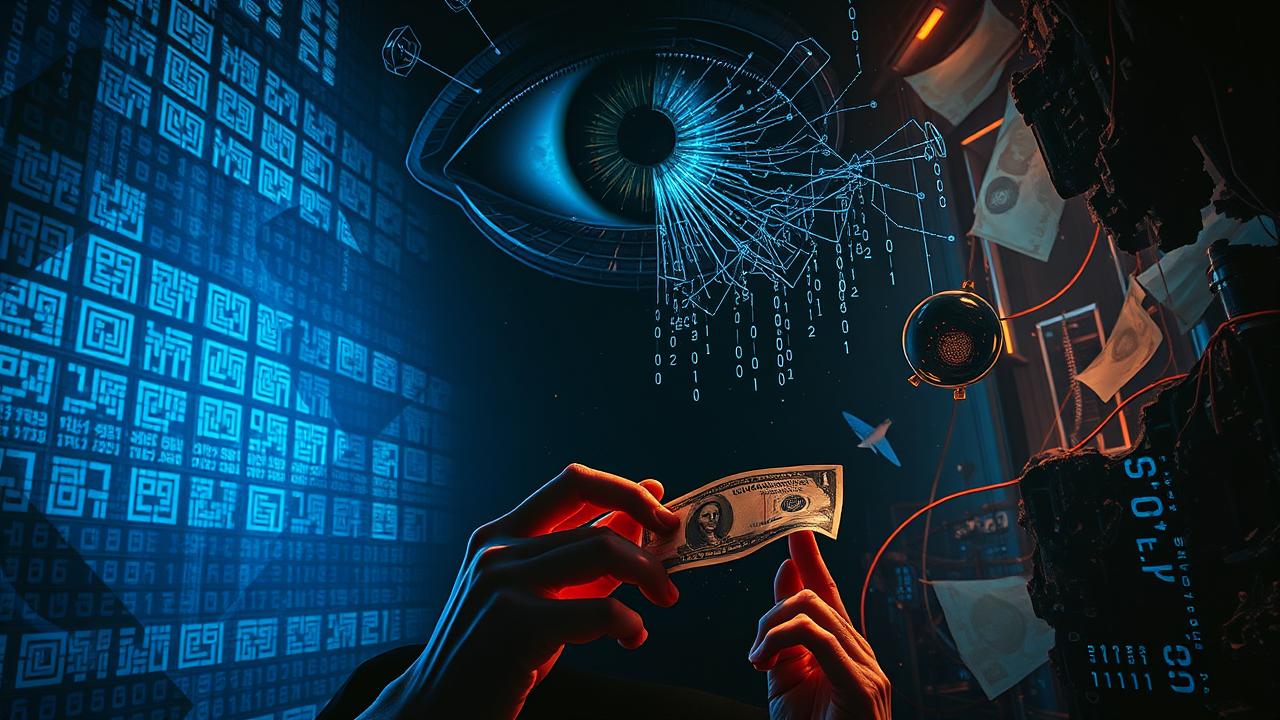
The checkout line hums with a quiet, digital efficiency. A tap, a beep, a silent confirmation. It’s seamless, clean, almost elegant. But in that frictionless moment, a trade is being made, and it’s a bargain you never consciously struck. You’re trading a fistful of crinkled, anonymous paper for a permanent, searchable, and ultimately controllable digital footprint. We’ve been sold a story of progress and convenience, a slick upgrade to an outdated system. The truth is far more complex and carries with it profound and often unseen risks of a cashless society that go far beyond a simple preference for plastic over paper.
The Unvarnished Truth
Before the deep dive, understand this: the shiny promise of a cashless world conceals a high-stakes gamble with your autonomy. It’s a world where every purchase you make adds another brushstroke to a portrait of you—a portrait you don’t own and can’t control. It’s a world built on a fragile digital foundation that can crack under the weight of a solar flare, a cyberattack, or a simple line of bad code, leaving you utterly powerless. It is a system that risks leaving the most vulnerable behind, erased from the economic map. This isn’t fear-mongering; it’s a clear-eyed assessment of the stakes.
The Day the World Just… Stops
The air inside the cab of the eighteen-wheeler was stale with the lingering scent of coffee and diesel. Outside, the Wyoming night was a vast, starless void, the kind that swallows sound and light. The truck stop was supposed to be an oasis of fluorescent light and hot food, but a regional power grid failure had plunged it into the same primordial darkness as the surrounding plains. The pumps were dead. The registers were blank screens. He had a reefer trailer full of produce that would start to turn in twelve hours.
His name was Hector, and the sick churn in his gut wasn’t from hunger. It was from the chilling realization of his own impotence. His corporate card was a useless rectangle of plastic. The personal debit card in his wallet, equally worthless. He had five dollars and some change in his pocket, not enough for a cup of coffee even if they could make one. The electronic logs, the digital dispatch, the entire system that governed his life on the road—it all vanished when the lights went out. He was stranded, not by a blizzard, but by the flick of a switch hundreds of miles away. It isn’t just about massive outages; even a simple glitch explains why cashless payment systems can be so fragile.
This is the brittle reality of total digital dependence. The system works perfectly until, suddenly, it doesn’t. Disruption risks from cyberattacks, power outages, and natural disasters aren’t theoretical bogeymen; they are the termites chewing at the foundations of a society that has forgotten the resilience of the tangible.
The Invisible Ledger of Your Life
In a cramped but cozy corner of a city library, a laptop glowed, casting a soft light on a determined face. She was a volunteer community organizer, a tireless advocate for local housing reform, and she was mapping out a peaceful demonstration. A few online purchases earlier that day—poster board, markers, a permit application fee—were the mundane logistics of civic engagement. Her phone buzzed. A text from her bank. Her account was temporarily frozen. The reason: “Unusual spending patterns requiring verification.”
A cold dread, slick and immediate, washed over Aliyah. It wasn’t about the money. It was the feeling of being watched. An algorithm, devoid of context or humanity, had flagged her legal, constitutional actions as suspicious. Her anonymous passion was now a data point on a server, judged and found wanting. This is one of the most insidious risks of a cashless society—not just the loss of privacy, but the
chilling effect it has on personal freedom. When every donation, every purchase, every trip is recorded, the line between citizen and subject becomes terrifyingly thin. It creates a digital panopticon where we become our own wardens, modifying our behavior to avoid tripping an unseen digital wire. True freedom requires pockets of obscurity, and protecting privacy in a cashless economy becomes a battle for the very soul of personal liberty.
A Dispatch from the Front Lines
This isn’t just an abstract discussion. Journalists and experts are already documenting the real-world impact of this shift. They are speaking with the people who are feeling the squeeze and analyzing the systemic vulnerabilities we’ve just explored. To see what this looks like on the ground, witness the powerful reporting from ABC News, which lays bare the friction and fear accompanying this so-called upgrade.
Source: ABC News (Australia) via YouTube
Erased from the Economy
The automatic glass doors of the new “frictionless” market slid open with a faint hiss, revealing a sterile world of polished concrete and glowing screens. An elderly man, his back stooped with the patient curve of eighty years, stood just inside, clutching a worn leather wallet. He needed bread, milk, and a can of soup. A simple list for a simple evening meal. But here, there were no carts, no cashiers, only an array of QR codes and app-based portals he couldn’t begin to comprehend.
His name was Theodore, and a wave of profound irrelevance washed over him. He felt like a ghost haunting a future he was never meant to inhabit. His flip phone was for calls, not for scanning geometric shapes. The crisp ten-dollar bill he held in his hand, once a universal key, was now just paper. Humiliation burned hot in his throat. He turned and walked back out into the fading light, his small mission a failure. He was not just unbanked; he was becoming un-personed.
Proponents preach inclusion, but the reality is a new kind of segregation. A cashless society ruthlessly excludes those who are unable or unwilling to join the digital hive. The elderly, the poor, people in rural areas with spotty internet—they become invisible. The question of how to stay financially inclusive in a cashless future is not an academic one; it is a moral imperative we are currently failing.
The Golden Leash of Programmable Money
The power to track every penny is one thing. The power to control every penny is another entirely. This is the ominous horizon of Central Bank Digital Currencies (CBDCs). It sounds so benign, so official. It’s anything but.
Imagine your money is no longer just a neutral tool of exchange. Imagine it comes with rules attached. A government stimulus payment that can only be spent on “approved” goods, and which expires in 30 days. Your salary, docked in real-time for a disputed fine before you even have a chance to appeal. Your ability to purchase fuel, switched off because you exceeded your carbon allowance for the month.
This isn’t a dystopian novel; it’s the logical endpoint of programmable money. It’s a golden leash, offering the illusion of wealth while giving a central authority absolute veto power over your economic life. The entire debate over the government role in a cashless economy hinges on this point. Handing over this level of control to any single entity, no matter how benevolent it claims to be, is an act of breathtaking generational folly.
The Vanishing Friction of Spending
There is a primal, physical intelligence in using cash. The weight of coins, the thickness of a wad of bills. When you hand over a fifty for a tank of gas and get a twenty back, your brain registers the exchange in a tangible way. It feels real. Your wallet is lighter. A limit has been approached.
Digital payments erase this friction. A tap, a click—the transaction is an abstraction. There’s no visceral sense of loss, only the promise of a future reckoning when the credit card statement arrives. This psychological disconnect is a dream for lenders and a nightmare for budgets. It encourages casual overspending and makes the accumulation of debt feel effortless, even pleasant. Learning to manage this invisible flow of currency is a critical part of knowing how to prepare for a cashless society; it demands a level of mindfulness that physical cash once provided for free.
Building Your Financial Ark
Acknowledging the storm doesn’t mean surrendering to the flood. It means you have the foresight to build your ark. You reclaim your power not by rejecting technology, but by mastering it and refusing to be mastered by it.
- Maintain a Cash Buffer: This is non-negotiable. Treat cash like the ultimate insurance policy. Keep a reasonable amount in a safe place at home for emergencies—enough to cover food, fuel, and essentials for at least a week. It’s your personal system reboot when the digital world fails.
- Use Virtual Credit Cards: Services like Privacy.com allow you to generate single-use or merchant-locked card numbers. This is one of the essential tools for living in a cashless world, as it shields your actual financial information from data breaches and prevents companies from tracking your spending across different sites.
- Practice ‘Cash-Stuffing’ Digitally: The psychological trick of budgeting with physical envelopes can be replicated. Open multiple, no-fee savings accounts and label them: “Groceries,” “Gas,” “Utilities.” Transfer your budgeted amounts at the start of the month. When an account is empty, the spending stops. It reintroduces the friction that digital spending removes.
Essential Dispatches from the Edge
True empowerment begins with knowledge. These authors have stared into the abyss of our financial future and returned with maps. Read them.
-
The End of Cash: Power, Control, and Your Financial Freedom by John H. Maverick: This isn’t a dry economic text, but a gut-punch of a warning about who really holds the power when physical money disappears. Maverick lays out the blueprint for control, daring you to ignore it.
-
The Lords of Easy Money: How the Federal Reserve Broke the American Economy by Christopher Leonard: To understand where we’re going, you must first understand the machine that got us here. Leonard provides a visceral, infuriating account of how centralized financial power has warped our economy.
-
The Power of Cash: Why Using Paper Money is Good for You and Society by Jay L. Zagorsky: A powerful counter-narrative to the relentless drumbeat of “progress.” Zagorsky makes a compelling, human-centric case for the humble banknote, grounding its importance in psychology, privacy, and social fabric.
Questions from the Precipice
What are the real dangers of a cashless society?
The core dangers aren’t about convenience; they’re about control and fragility. You face the complete loss of financial privacy, as every transaction becomes a permanent, traceable data point. You’re vulnerable to massive system failures—from cyberattacks to power outages—that can halt all economic activity. It creates a digital divide, excluding the elderly, the poor, and the unbanked. And most critically, it opens the door to centralized control and programmable money, where an authority could dictate how and when your money is spent. The “benefits” of this for you are, shall we say, debatable.
Who suffers the most if we go completely cashless?
The people who are already on the margins. Think of Theodore, the elderly man locked out of a grocery store. Think of the unbanked who rely on the cash economy for side jobs and daily needs. Think of people in rural communities with unreliable internet. It also impacts victims of domestic abuse who may need anonymous cash to escape a dangerous situation, and anyone who values the simple, fundamental right to privacy. A cashless system assumes everyone has a smartphone, a bank account, and a stable digital life—a dangerously privileged assumption.
So, what is a cashless society, and why shouldn’t we want it?
On the surface, what is a cashless society is an economy where all financial transactions are conducted digitally, without physical banknotes or coins. But beneath that, it’s a fundamental restructuring of our relationship with money and power. We should resist it not out of nostalgia, but out of a fierce desire for resilience and freedom. Cash is offline, anonymous, and universally accepted. It works when the power is out. It can’t be remotely frozen by a bank algorithm. It doesn’t track you. Trading these robust features for the fragile convenience of a “tap to pay” world is a bad deal, and it’s one we don’t have to accept. The ongoing risks of a cashless society are a clear signal to preserve this essential tool.
Your Compass for the Coming Storm
Continue your own research. Question the narratives. The more you know, the more resilient you become.
- ACLU: “Say No to the ‘Cashless Future’” – A powerful argument for financial privacy as a civil liberty.
- Swiss Re: “Digital payments – disruption risks” – A sobering look at systemic risk from a global insurance perspective.
- Cash Matters: “Beyond Convenience” – An advocacy group dedicated to preserving the option of cash.
- r/privacy – A community discussion on all forms of privacy in the digital age.
- r/preppers – A subreddit focused on practical readiness for all kinds of disruptions, including financial ones.
Secure Your Place in the Future
The march toward a cashless world may feel inevitable, but your role in it is not. You are not a passive passenger on this journey. You are the navigator of your own life. The critical risks of a cashless society are not insurmountable obstacles; they are calls to action. They are signals for you to awaken your own inner resilience, to become more conscious, more prepared, and more sovereign in your financial life.
This isn’t about hoarding gold bars or living off-grid. It’s about taking one small, powerful step today. Go to the bank and withdraw a week’s worth of grocery money in cash. Feel its reality in your hand. Use it. Notice the difference. This simple act is a declaration. It’s you deciding that you will have a say in the future of money, and that your freedom is not for sale, especially not for the price of convenience.