The Cold Dawn of a Digital Ghost
The numbers on the screen glow with an alien wrongness. It’s that pre-dawn moment, the house silent, when the world feels like it belongs only to you. But the balance in your savings account—the one you’ve bled for, sacrificed for, built with calloused hands and tired eyes—is a flat, mocking zero. A cold dread, sharp and metallic, coils in your gut. Someone, a faceless phantom in the machine, has walked through the digital walls of your life, taken everything, and left you a ghost in your own financial story.
They didn’t just steal money. They stole your past efforts and your future dreams. They stole your name. This raw, violating experience is the modern-day haunting, and the hard truth is that waiting for it to happen is an invitation for disaster. True power lies in proactively protecting financial accounts from identity theft before the specter ever reaches your door.
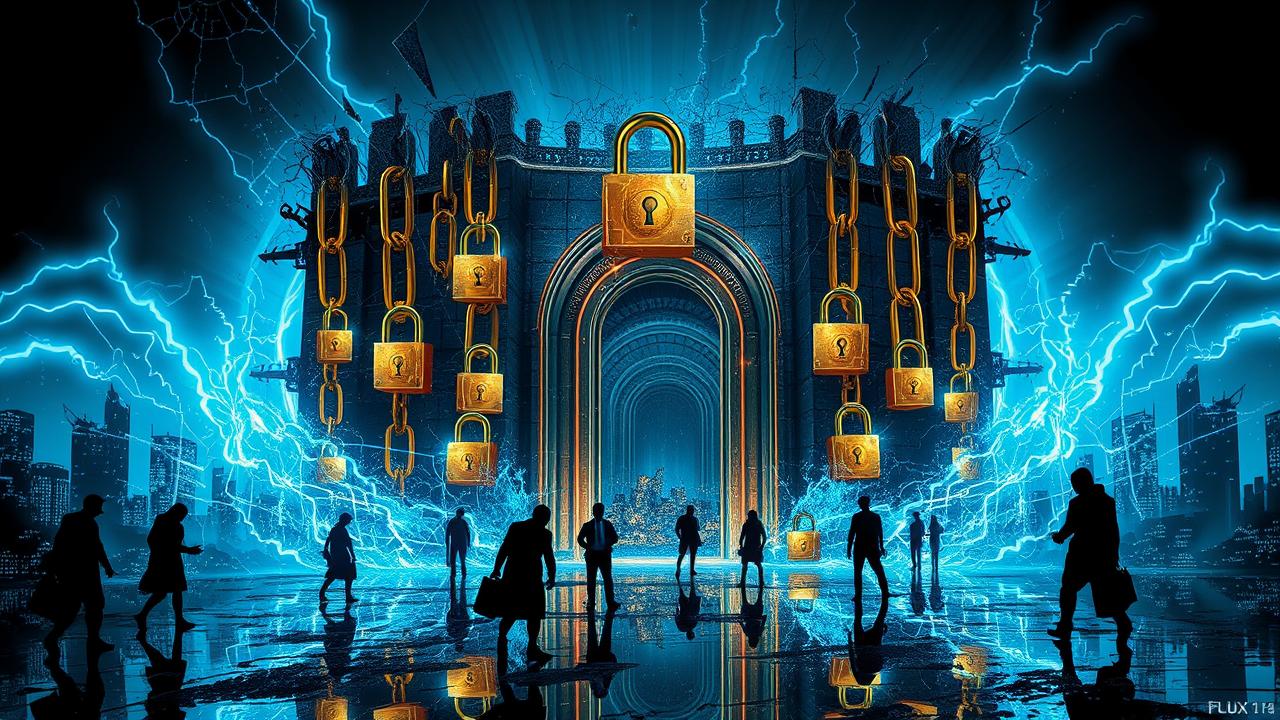
This isn’t about fear. This is about reclaiming your power. It’s about forging an iron will and an unbreakable defense, transforming you from a potential target into an unbreachable fortress.
Your Unbreakable Code of Conduct
There is no single silver bullet. There is only a discipline, a daily practice that becomes as second nature as locking your front door. This is your new reality, and your new source of strength. It boils down to five core commands:
- Fortify Your Gates: Use passwords that are fortresses, not welcome mats, and lock every critical account with multi-factor authentication. This is non-negotiable.
- Maintain Constant Vigilance: Review your accounts not weekly, but daily. Watch transactions like a hawk, knowing that the smallest anomaly could be the first tremor of an earthquake.
- Deploy the Nuclear Option: Freeze Your Credit. Proactively block all three major credit bureaus. This is the single most powerful move you can make to stop thieves from opening new accounts in your name.
- Practice Digital Austerity: Treat your personal information like the state secret it is. Secure your devices, shred your mail, and be obsessively aware of what you share and where.
- Prepare for the Worst: Know the exact steps to take if the breach occurs. Have your recovery plan ready, because in a crisis, hesitation is fatal.
The Whispers in the Wires
The call came on a Tuesday, during his lunch break. He was a heavy machinery operator, a man who dealt in the tangible world of diesel, steel, and solid ground. The digital ether was a place of noise and nonsense he mostly ignored. His phone buzzed, displaying a number that looked suspiciously like his bank’s. The voice on the other end was calm, professional, and full of unnerving authority.
Roger listened, a half-eaten sandwich in his hand, as the man detailed a “major security update” happening across their network. He explained that a series of fraudulent transfers had been attempted from Roger’s region and, for his protection, they needed to verify his identity immediately to lock the account. The man already knew his address. He knew the last four digits of his debit card. The details gave the lie a horrifying texture of truth. Roger felt a spike of adrenaline, a mix of fear and gratitude. They caught it, he thought. Thank God. He followed the instructions, reading back the verification code that had just appeared on his phone. The professional on the line thanked him, assured him his account was now secure, and disconnected. The relief was immense. It lasted for about six minutes.
That’s when the real bank notification arrived: a withdrawal. For everything. The phantoms don’t just kick down the door anymore; they have a key. They use sophisticated social engineering, piecing together scraps of your life from a dozen data breaches you never even knew about. They know how hackers steal digital financial data—by exploiting the one vulnerability no software can patch: human trust.
Forging the Fortress of Access
In a small, sun-drenched floral studio, surrounded by the scent of eucalyptus and fresh-cut roses, a quiet revolution was taking place. The shop was her dream, a vibrant business built from scratch, and every invoice, every payment, and every supplier order flowed through her online accounts. She had heard a story from a fellow small business owner—a nightmare of a hacked email leading to rerouted payments and a near-total collapse.
That night, Georgina sat at her kitchen table, the laptop’s glow illuminating a determined face. She wasn’t going to be a victim. She was going to be a fortress. The process was tedious, a digital pilgrimage through every financial app, every email account, every login she possessed. First came the passwords. No more pet names or birthdates. She installed a password manager, a digital vault, and let it generate brutally complex, utterly meaningless strings of characters for every single site. It felt like learning a new, secret language.
Then came the real power move: activating two-factor authentication for financial apps on everything. Her bank, her investment app, her email. Every login now demanded a second password, a code sent only to her phone. With each account she secured, she felt a click, a deadbolt sliding into place. It wasn’t just a technical task; it was a declaration. A statement that her life, her work, and her future were hers alone. This was the foundation of her own personal security protocol, the first step in building a complete system for her digital financial identity protection.
The Watchtower and the Wall
Hope is not a strategy. Assuming your bank will catch everything is a catastrophic mistake. The power is not in their hands; it’s in yours. This requires two things: a watchtower and a wall.
The watchtower is your relentless monitoring. Check your credit card statements, bank accounts, and investment portfolios with an obsessive eye. Not once a month. Daily. Set up alerts for every transaction, no matter how small. That $1 coffee purchase you don’t recognize isn’t an error; it’s a test. It’s a thief checking to see if the stolen card number works before they go for the big score.
The wall is the credit freeze. This is not a polite suggestion. It is an absolute imperative. Go to the websites for all three major credit bureaus—Equifax, Experian, and TransUnion—and place a security freeze on your credit. It’s free. It takes minutes. Doing so prevents anyone from accessing your credit report to open a new line of credit—a car loan, a mortgage, a credit card—in your name. When a thief tries, they hit a brick wall. Yes, it’s a mild inconvenience if you need to apply for credit, as you’ll have to temporarily unfreeze it. But that momentary hassle is nothing compared to the soul-crushing nightmare of trying to prove you didn’t buy a new luxury speedboat in another state.
Diligent monitoring credit reports for identity safety is a critical defensive layer, but the freeze is your proactive strike.
Five Moves to Total Control
The battlefield is digital, but the strategies for victory are clear. While the principles are timeless, seeing them in action can crystallize your resolve. This short, powerful briefing from TIAA breaks down five critical moves you must make—not someday, but today—to establish a commanding defense over your financial life.
Source: TIAA on YouTube
The Messy Reality of Cyber Hygiene
It would be nice if security were just about software and settings. A bit of a shame it’s also about the greasy fingerprint you left on a coffee shop tablet or the unopened bank statement you tossed in the recycling bin. Understanding how to protect your digital identity means accepting that the perimeter is everywhere.
This is what they call “cyber hygiene,” which is a fancy way of saying you need to clean up your digital act. Stop using public Wi-Fi for anything important. That “Free_Airport_WiFi” network is often a trap set by a bored predator with a laptop. Use a VPN if you must connect. Shred every single document with your name or an account number on it before it goes in the trash. Assume every piece of mail is a potential weapon against you.
And then there’s your phone. Your pocket-sized life-archive. Keep it locked, not just with a simple number, but with strong biometric security for personal finance like a fingerprint or facial recognition. Encrypt its storage. These aren’t paranoid delusions; they’re the best practices for online financial security in a world that wants to pick your digital pocket at every turn.
When the Worst Happens Anyway
The loan officer delivered the news with a practiced, sterile compassion that made everything worse. He couldn’t approve the car loan. The credit report showed multiple new accounts, all delinquent, and a debt load that made his jaw ache. Standing there in the sterile fluorescent light of the dealership office, the hum of the air conditioner suddenly sounded like a roar. He was a paramedic, a man who ran toward chaos to fix it, and he had never felt so utterly powerless.
Miles spent the next three months in a bureaucratic hell. The first step was a frantic call to his bank, freezing what little was left. Then he filed a report at IdentityTheft.gov, the official starting point that generates the affidavit he would need. That single document became his shield. He sent copies to the fraud departments of the companies where the fake accounts were opened. He called the credit bureaus to dispute the charges, a process that felt like shouting into a void.
Each phone call was a maze of automated menus and hold music, each email a drop of water against a mountain of institutional indifference. He had to prove he was himself, over and over, to people who seemed to believe the digital ghost more than the man of flesh and blood standing before them. The financial identity theft recovery steps weren’t just a checklist; they were a grueling, full-time job that paid only in stress and sleepless nights. He was winning, slowly, but the fight had carved something out of him that he knew would never grow back.
Your Personal Arsenal
You don’t go into battle unarmed. These tools are not luxuries; they are fundamental components of your defense system.
- Password Managers: Stop trying to remember two dozen complex passwords. You can’t. Get a reputable password manager to create, store, and fill them for you. It’s the only way to achieve the level of password security required today. Think of it as your digital armory.
- Credit Freezes: This isn’t an app, but a service offered directly by Equifax, Experian, and TransUnion. Locking down your credit is the single most effective barrier against new account fraud.
- ChexSystems Freeze: Most people have never heard of it, but thieves have. ChexSystems is a consumer reporting agency for bank accounts. Freezing your report there can help prevent criminals from opening new checking or savings accounts in your name.
- Virtual Private Network (VPN): A quality VPN encrypts your internet traffic, making it unreadable to anyone snooping on a public network. It’s essential for anyone who ever works or browses from a coffee shop, airport, or hotel.
Advanced Training Manuals
Knowledge is power, and these authors provide deep dives into the mindset and mechanics of both the criminal and the protector.
Swiped: How to Protect Yourself in a World Full of Scammers, Phishers, and Identity Thieves by Adam Levin. A comprehensive field guide that exposes the tactics thieves use and gives you practical, actionable defense strategies.
The Art of the Steal by Frank W. Abagnale. Written by one of the world’s most famous former con artists, this book offers unparalleled insight into the criminal mind and how to thwart it. It’s a masterclass in seeing the world through a scammer’s eyes.
MONEY Master the Game: 7 Simple Steps to Financial Freedom by Tony Robbins. While not strictly a cybersecurity book, its core message is about taking ultimate control of your financial destiny. That mindset is the psychological foundation upon which all good security is built.
Questions from the Trenches
Should I freeze my credit if someone has my Social Security number?
Yes. Don’t hesitate. Don’t think about it. If you even suspect your SSN is compromised, freeze your credit with all three bureaus immediately. It is the most decisive action you can take to prevent someone from using your most critical piece of data to open new credit lines. It’s not paranoia; it’s basic self-preservation in the 21st century and a cornerstone of protecting financial accounts from identity theft.
Should I close my bank account if my identity is stolen?
Your first instinct is to burn it all down. That’s understandable. The strategic move, however, is to first contact your bank’s fraud department. Explain the situation and ask them to freeze or close the compromised accounts. They will guide you on whether you need to close everything and open new accounts or if securing the existing ones is sufficient. Acting in panic can sometimes complicate the recovery and investigation process.
Can someone open a bank account if my credit is frozen?
A credit freeze is exceptionally powerful for stopping new credit accounts (loans, credit cards). It is less effective at stopping someone from opening a new deposit account (checking, savings), as banks often use other services like ChexSystems for verification. This is why freezing your ChexSystems report is another critical, though less-known, step for a comprehensive defense.
Your Intelligence Dossier
Stay informed with direct guidance from the agencies on the front lines of this fight. These are your official resources, free from hype and full of actionable intelligence.
- IdentityTheft.gov: The U.S. government’s one-stop resource to report and recover from identity theft.
- FTC Consumer Advice: The Federal Trade Commission offers clear, concise guidance on prevention and recovery.
- FINRA Prevention Checklist: A fantastic checklist specifically for investors from the Financial Industry Regulatory Authority.
- IRS Identity Theft Central: Your resource for dealing with tax-related identity theft, including how to get an IP PIN.
- Consumer Financial Protection Bureau (CFPB): Provides essential information on your rights and steps to take after a theft.
- r/IdentityTheft: A Reddit community offering peer support and practical advice from others who have been through it.
The First Step Is Yours
The feeling of vulnerability is a choice. The powerlessness you feel when staring at that zero balance is the result of inaction. But the future is not yet written. The power to change your story resides within you, right now, in this moment. It doesn’t begin with a giant leap, but with a single, decisive step.
Choose one thing from this guide. Just one. Go freeze your credit. Install a password manager. Enable MFA on your primary bank account. Take one small piece of the power back. That single act of defiance is the first brick in your fortress. It’s the moment you stop being a potential victim and start becoming the architect of your own security. This is the essence of protecting financial accounts from identity theft—not as a chore, but as the fundamental practice of building your own sovereign money blueprint.
Don’t wait for the cold dawn. Act now. Your future self will thank you for it.