Your Fingerprint is the New Financial Fortress
The cheap fluorescent lights of the truck stop diner flickered, casting long, dancing shadows. He was a thousand miles from home, nursing a coffee that tasted like burnt plastic, when a blur of motion snatched the phone from the counter. A gut-punch of pure, ice-cold dread. His entire life—bank accounts, credit cards, the app for his fuel card, photos of his kids—was in that glowing rectangle, now disappearing into the rain-slicked darkness of the parking lot.
This isn’t just a story. It’s the precipice we all stand on every single day. That feeling of violation, of absolute powerlessness, is the silent terror of our digital age. We’ve been told to protect our fortunes with strings of letters and numbers a child could guess, a stranger could shoulder-surf, or a hacker could brute-force in minutes.
It’s an absurd, broken system. But what if the key wasn’t something you remembered, but something you are? What if the unique, intricate map of your fingerprint, the precise geometry of your face, or the specific resonance of your voice was the only thing that could open the vault? This is the raw power and profound promise of biometric security for personal finance. It’s not just about convenience; it’s about reclaiming your financial sovereignty in a world that wants to tear it away.
The Bottom Line Unlocked
You’re standing at a crossroads. One path leads back to the swamp of forgotten passwords and constant low-grade anxiety. The other is paved with the undeniable truth of your own biology. Here’s the essence of the choice:
- You are the password. Biometrics use your unique physical traits—fingerprints, face, voice—to create a key that cannot be easily guessed, forgotten, or stolen.
- It’s a fortress, not a fence. Modern systems don’t just stop at the front gate. They combine multiple biometrics (multimodal) and use AI to watch for suspicious behavior inside your accounts.
- Your data’s “black box”. The most secure systems use a vault inside your phone’s chip, a Trusted Execution Environment (TEE), to process your biometric data, keeping it isolated even from a compromised operating system.
- The risks are real, but manageable. Your biometric data, if stolen, can’t be changed. But the real risk isn’t someone lifting your fingerprint from a glass; it’s a company with weak security getting breached. Choosing the right services is everything.
- This is about empowerment. Activating biometrics is your first, most powerful step toward building a true defense around your financial life.
The Blueprint of You: What Biometric Security Actually Is
At its core, biometric security is beautifully, brutally simple. It’s a system that grants access based on who you are, not what you know. It trades the fragile memory of `Hunter2` for the immutable reality of your physical self. It’s an authentication bouncer that doesn’t ask for your ID; it knows you on sight.
In the world of finance, this translates into a digital key forged from your very being. We’re talking about:
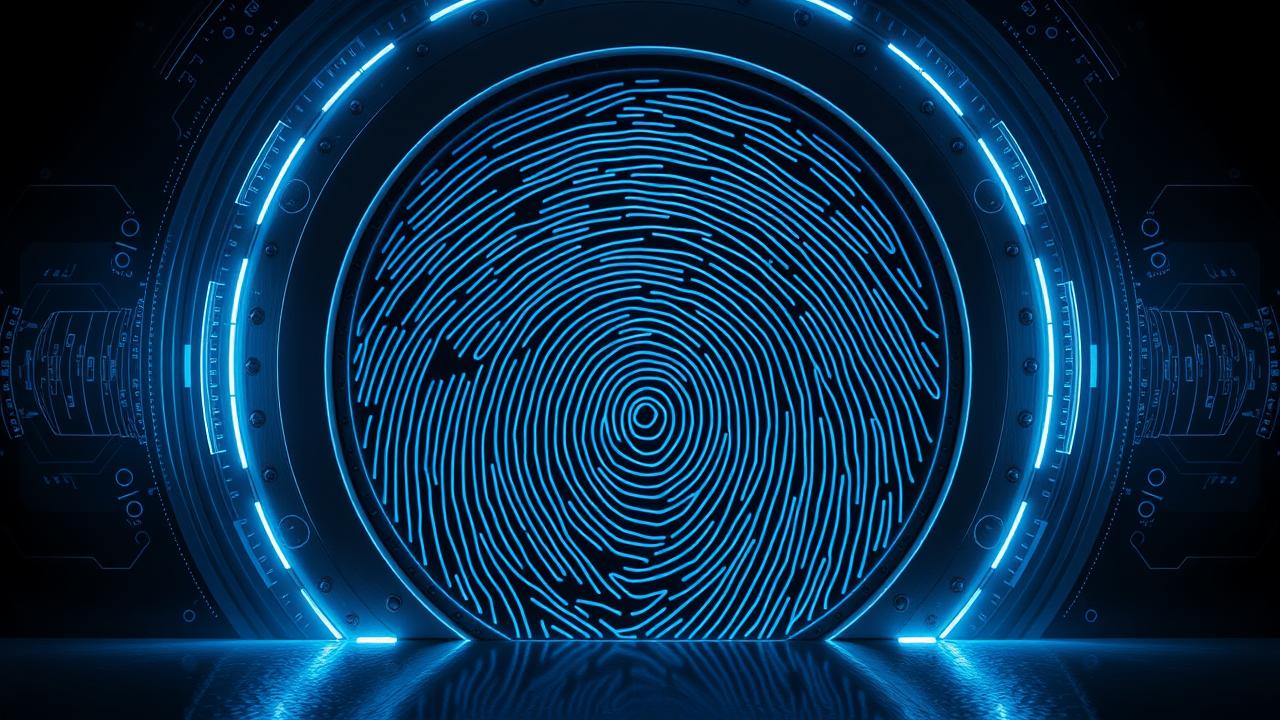
- Fingerprints: The classic. The unique whorls and ridges on your fingertip become a cryptographic signature. Every banking app worth its salt offers this. It’s fast, reliable, and deeply personal.
- Facial Recognition: More than just a photo. Modern systems map dozens of nodal points on your face—the distance between your eyes, the shape of your nose, the curve of your jaw—creating a complex 3D model that’s difficult to fool with a simple picture.
- Voice Recognition: It’s not what you say, but the timber, pitch, and cadence of how you say it. Your vocal tract is as unique as a fingerprint, creating a “voiceprint” that can verify transfers over the phone or secure access to an investment app.
- Iris Recognition: The sci-fi version made real. The intricate, colorful pattern of your iris is a mesmerizingly complex piece of data, offering one of the highest levels of security available. Think high-security vaults and nation-state secrets.
- Palm or Vein Patterns: Less common but incredibly secure. Infrared light illuminates the unique pattern of veins beneath your skin. It’s invisible to the naked eye and nearly impossible to replicate.
These aren’t just parlor tricks. They are the foundational elements of a new financial armor, each one a testament to your own irrefutable identity.
Video: Peeling Back the Curtain on Banking Security
Words can paint a picture, but seeing the technology in action rips the mystery away and replaces it with clarity. This video cuts through the technical jargon to show you exactly how that fingerprint scan or face ID on your banking app translates into a shield for your money, making the abstract concept of digital protection tangible and real.
Source: The Teen Economist on YouTube
Beyond The Forgotten Password: The Raw Power of Inherent Security
In the greasy light of that truck stop, Jason’s heart hammered against his ribs. The thief was gone. The phone was gone. He mentally scrolled through the damage: checking, savings, the business credit card, his daughter’s college fund. A lifetime of work, accessible in seconds. But then, a different thought pushed through the panic. A cold, hard kernel of certainty. They can’t get in. His fingerprint was the only key. The thief could smash the phone, wipe it, sell it for parts, but they couldn’t become him.
This is the fundamental shift. Passwords are a liability. We make them too simple. We reuse them. We write them on sticky notes. We fall for phishing scams. Each password is a potential point of failure, a rusty link in the chain. Biometrics eliminate that weak point. You can’t “forget” your face. You can’t “lose” your voice.
This isn’t just about preventing catastrophic theft; it’s about making everyday finance seamless and strong. It represents a quantum leap in secure authentication methods for online banking, moving us from a state of constant vulnerability to one of inherent strength. The friction and anxiety of the password reset loop are replaced by the simple, confident press of a thumb.
Layered Like an Onion of Paranoia: Multimodal Defense
The quiet hum of the server rack was the only sound in the office. Sparks from the grinder had long since faded as Matteo, a metal fabricator, stared at the tablet in his hands. A six-figure materials invoice for a new skyscraper project. His biggest yet. The payment app demanded verification. First, a scan of his face. Check. Then, a voice command spoken into the microphone. “Authorize payment Alpha-Seven-Three.” Check. The funds moved instantly. It wasn’t one lock; it was two, stacked together, each guarding the other. A moment of intense pressure, met with calm, decisive security.
This is multimodal biometrics. It’s the digital equivalent of a bank vault that requires two different keys held by two different people. By combining two or more distinct biological traits—like your face and your voice, or your fingerprint and an iris scan—the system becomes exponentially harder to fool. A high-resolution photo won’t trick a system also listening for your unique voiceprint.
But the deepest strategy goes even further. The most advanced financial platforms are now watching you after you log in. They use sophisticated algorithms to understand your rhythm, your habits, your digital heartbeat. This is how ai enhances financial identity security. It learns that you usually transfer money on Fridays, but never to an account in Eastern Europe at 3 AM. If your authenticated session suddenly starts acting erratically, the AI can flag it, challenge it, or freeze it—a silent guardian angel watching your back long after the gate is unlocked.
The Black Box: Your Personal Fort Knox
Where does your fingerprint actually go when you scan it on your phone? Does it get beamed up to some corporate cloud, waiting for a hacker to snatch it? The thought is enough to make anyone stick with passwords. But that’s not how secure systems work. The real magic happens inside a digital vault buried deep within your device’s main processor.
This vault is called a Trusted Execution Environment (TEE). It’s an isolated, tamper-proof-by-design area of the chip, completely walled off from the main operating system—the one that runs your apps, gets your emails, and can get infected with malware. When you scan your thumb, the raw data goes directly into the TEE. All the complex math to verify that it’s really you happens inside this black box. The main OS never sees it. It just gets a simple “yes” or “no” answer.
This is the absolute bedrock of modern digital financial identity protection. It means that even if your phone is riddled with viruses, even if a piece of spyware is recording every tap on your screen, it can’t access or steal the biometric template that represents you. That data is locked in its own impregnable fortress, a secret between you and the silicon.
The Unthinkable: What If They Steal You?
The deadline loomed like a guillotine. Outside her window, the world was a wash of gray, rainy afternoon light. Inside, Harper, a freelance cartographer, felt a knot of pure panic tightening in her chest. Her face, still bruised and swollen from a clumsy cycling accident a few days prior, was unrecognizable to her phone. The facial recognition failed again and again. Access Denied. The software subscription she needed to finish a high-paying map project was about to expire, and the payment was locked behind a face it no longer knew. She was locked out of her own financial life by her own face.
This is the dark side of the coin. A password can be reset. A compromised credit card can be canceled. But you can’t change your fingerprint. You can’t get a new iris. The fear of biometric data being stolen isn’t just about losing money; it’s about losing a part of your identity that is permanent and irreplaceable.
The good news is that secure systems don’t store a high-resolution photo of your face. They store a “template”—a mathematical representation of the data points. It’s encrypted gibberish to a human. But the risk of it being reversed or replicated by a sophisticated attacker, while low, is not zero. It highlights the non-negotiable importance of using services that store this data locally in a TEE, not on a server somewhere. Because if that central server gets breached, there’s no “forgot my face” button to click.
The Price of Admission: Sovereignty vs. Security
There’s an undeniable transaction happening here, one that goes beyond dollars and cents. In exchange for this powerful security, we are handing over the most personal data imaginable. We let corporations and governments map our faces, record our voices, and digitize our fingerprints. It raises a writhing nest of uncomfortable questions. Who owns this data? How is it being used? How can you be sure it won’t be used against you?
It’s a tightrope walk between security and personal sovereignty. This tension is at the heart of the global debate around how to protect your digital identity. On one hand, biometric passports streamline travel and enhance border control. On the other, they create massive, centralized government databases of citizens’ biological data—a thought that should send a chill down anyone’s spine.
This has pushed some nations toward a sovereign money blueprint, a drive to develop their own cryptographic and data protection infrastructure. The goal is to reduce reliance on foreign technology and ensure that their citizens’ data is governed by their own laws, not the policies of a tech company halfway around the world. It’s a battle for control, and your personal data is the territory being fought over.
Your Move: An Action Plan for Financial Armor
Knowledge without action is just trivia. You now understand the battlefield. You see the weapons, the strategies, and the stakes. It’s time to fortify your own position. This isn’t some far-off, hypothetical exercise; it’s a series of concrete steps you can take right now to wrap your financial life in layers of steel.
- Activate the Obvious: Go into every single financial app on your phone—banking, investing, credit cards, crypto—and enable biometric login. Face ID, Fingerprint Lock, whatever it’s called. Do it now. This is your frontline defense, and it’s criminally underused.
- Guard the Crown Jewels: For high-value assets like a significant cryptocurrency portfolio, a simple app lock isn’t enough. Invest in a hardware wallet. Many of these physical devices require a combination of PINs and physical confirmation, and some are integrating their own biometric scanners, creating an air-gapped fortress for your digital wealth.
- Maintain Your Armor: Keep your devices and apps updated. Security patches are not suggestions; they are critical repairs to the walls of your fortress. An outdated OS is an open invitation for attack.
- Integrate Your Defenses: Effective best practices for online financial security doesn’t exist in a vacuum. It should be part of a holistic strategy. This means still using a strong, unique password for the account itself (managed by a password manager) and enabling two-factor authentication (2FA) wherever possible. These are your layered defenses, and they are essential components of the overall security picture.
Your Arsenal: Tools for the Modern Financial Warrior
You don’t need to be a cybersecurity guru to assemble an effective toolkit. The best tools are often the ones built right into the systems you already use, waiting to be activated.
- Native OS Authentication: Look for apps that support your phone’s built-in biometrics, like Apple’s Face ID/Touch ID or Android’s Fingerprint Unlock. This leverages the device’s secure hardware (like the TEE) and is almost always the strongest option.
- Biometric-Enabled Password Managers: A good password manager is non-negotiable. Choose one that allows you to unlock your vault of passwords with your fingerprint or face. This gives you the best of both worlds: unbreakably complex passwords for every site, with the effortless, secure access of biometrics.
- Hardware Wallets: If you hold cryptocurrency, this is not optional. A hardware wallet is a small, physical device that keeps your private keys offline, immune to internet-based attacks. Top-tier wallets require physical confirmation for transactions, and some are now adding biometric verification for an even higher level of security.
The Strategist’s Library
For those who want to go deeper, to understand the machinery behind the curtain and the philosophies that drive it, these texts offer a masterclass in modern security.
Personal Cybersecurity: How to Avoid and Recover from Cybercrime by Marvin Waschke
A brutally practical field guide for the everyday person. Waschke cuts through the fear and gives you a clear, actionable playbook for defending your digital life, from social media to your bank account.
Securing Biometrics Applications by Charles A. Shoniregun
This is a look under the hood. Shoniregun explores how biometric systems are built, where their vulnerabilities lie, and what it takes to design an application that is truly secure. A must-read for anyone building or evaluating these systems.
Trusted Execution Environments by Carlton Shepherd
Ready to understand the “black box”? This book demystifies the TEE, explaining the cryptographic architecture that makes secure, on-device biometric authentication possible. It’s dense, but it’s the blueprint for the Fort Knox in your pocket.
The Lingering Questions in the Back of Your Mind
What exactly is biometrics in finance?
It’s the ultimate gatekeeper. Instead of a password you remember, it’s a system that verifies your identity using your unique biological traits—fingerprints, face, voice, etc.—to authorize financial transactions and protect your personal data. It’s about leveraging what you are to protect what you have. When discussing biometric security for personal finance, this is the core concept.
What’s the biggest disadvantage of using biometric security?
The dark side is permanence. If a database storing your biometric template is breached, you can’t just “reset” your fingerprint like you would a password. That data is compromised forever. This makes privacy and the security architecture of the company holding your data paramount. It’s also why on-device storage in a TEE is vastly superior to cloud-based storage.
So, is biometrics actually safe for banking?
When implemented correctly, yes. It is magnitudes safer than the alternatives. A password can be stolen from across the globe; your face cannot. The key is in that “implemented correctly” part. Systems that use on-device processing (TEEs), combine multiple factors (multimodal), and come from reputable financial institutions are incredibly secure. It’s far better than the sticky note with `BankP@ssw0rd1` on your monitor, anyway.
What’s the difference between a biometric template and a photo of my face?
A huge one. A photo is an image. A template is math. When you enroll your face, the system doesn’t save a selfie. It measures dozens of key points—the distance between your eyes, the width of your nose, the contour of your jaw—and converts those measurements into an encrypted numerical code. This template is what’s used for matching. It’s not human-readable and, in a secure system, cannot be easily reverse-engineered back into a picture of your face.
Down the Rabbit Hole
Your journey to financial resilience doesn’t end here. These resources offer deeper dives into the technology, the risks, and the strategies that will define the future of security.
- Aware Biometric Solutions for Financial Services – See what enterprise-grade, multi-modal biometric systems look like.
- Stripe’s Guide to Biometric Payments – A clear overview of how biometrics are changing the point-of-sale landscape.
- Understanding Biometric Verification for Fraud Prevention – A solid primer from Unit21 on using biometrics to fight financial crime.
- Banking Biometrics: Hacking Risks – A Financial Times video exploring how even these advanced systems can be challenged and what it means for consumers. It’s a sobering but necessary look at how hackers steal digital financial data.
- r/privacy – A community dedicated to discussing the tools, techniques, and philosophical questions around digital privacy.
- r/personalfinance – A massive forum for all things money, where real people discuss the security tools and challenges they face daily.
Your First Step to Financial Sovereignty
The feeling of control isn’t something that’s given to you. It’s seized. It’s built, brick by brick, decision by decision. You’ve seen the path forward, the way to trade flimsy passwords for a fortress built from your own identity. The chasm between vulnerability and security is crossed with a single step.
So take it. Right now. Pick up your phone. Open one app—your primary bank, your favorite investment platform, just one—and go into the security settings. Find “Face ID,” “Fingerprint Lock,” or whatever they call it, and turn it on. Feel that faint click of empowerment as you enable a powerful layer of biometric security for personal finance.
It’s not just a setting. It’s a declaration. It’s you, telling the world that your financial life is yours and yours alone, locked behind a key that can never be copied, stolen, or forgotten.