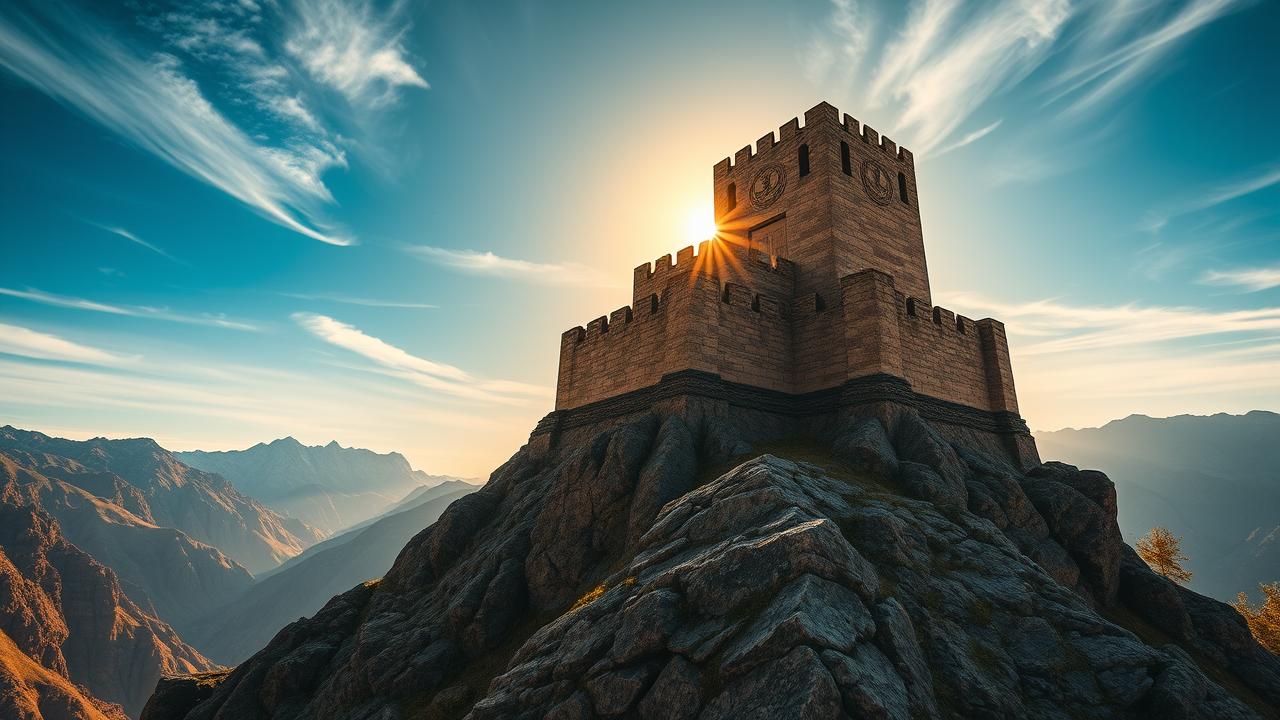
Protecting Your Legacy in a Borderless World
The tremor starts not in the earth, but in your gut. It’s the 3 AM jolt, the cold sweat that has nothing to do with the temperature of the room. It’s the sudden, gut-wrenching realization that everything you’ve built—the rewards of sleepless nights, sacrificed weekends, and relentless ambition—is perched on a fragile ledge. A lawsuit, a vindictive partner, a political wind shift you never saw coming… and it could all shatter. This isn’t paranoia; it’s the chilling acknowledgment of reality in a world where borders are merely lines on a map to those who want what you have. But that fear, that vulnerability, contains a seed of immense power. It’s the catalyst that forces you to look beyond the conventional and discover the robust world of international asset protection structures, the tools not just for defense, but for absolute financial sovereignty.
The Fortress Blueprint
This isn’t about hiding money. This is about building a monument to your hard work so formidable that predatory attacks simply break against its walls. Here’s the core of that design:
- Recognize the Fault Lines: Your domestic “safe” harbors—basic LLCs, local trusts—are often the first to flood in a real storm. True security requires a global perspective.
- Embrace Layered Defense: Like a medieval castle, your protection needs multiple walls. We’ll explore the three tiers, from statutory protections to the unbreachable outer fortress of international structures.
- Master the Tools: Offshore Asset Protection Trusts (OAPTs), Private Interest Foundations (PIFs), and International LLCs are the bricks and mortar. We’ll show you how they fit together.
- Choose Your Ground Wisely: The jurisdiction you choose is the ground upon which your fortress is built. Stability, legal firewalls, and pro-privacy laws are non-negotiable.
- Compliance is Your Shield: In this game, transparency with regulators is your greatest strength. We’ll demystify the rules like FATCA and CRS, which separate the strategists from the fools.
The Myth of the Ironclad Domestic Wall
The sterile white walls of the consultation room felt smaller today, pressing in on him. For thirty years, his hands, steady and sure, had performed intricate miracles inside the human heart, earning him a reputation as solid as the oak desk he now gripped. He was a pillar of his community, a man who believed in rules, in systems, in the tangible security of the life he’d meticulously constructed. His lawyer had called his domestic asset protection plan “bulletproof.” A series of carefully arranged LLCs and a state-based irrevocable trust, a testament to prudent planning. His name was Roger, and his world was beginning to fracture.
The lawsuit came from across an ocean, filed by the family of a foreign diplomat who had died on his operating table despite a flawless procedure. It was meritless, a predatory shakedown, but the plaintiff’s lawyers were sharks swimming in international waters. They laughed at his domestic trust. They saw it not as a barrier, but as a conveniently packaged treasure chest, and their home court was inclined to agree. The sickening truth dawned on Roger: his fortress was made of drywall, built to withstand a local fistfight, not a global siege. His legacy, his family’s security, his very identity felt exposed, shivering in a gale-force wind he never knew existed.
Roger’s story isn’t an anomaly. It’s the terrifying norm for those who mistake geographic proximity for legal security. A domestic LLC or a family trust governed by the laws of your own state can be—and often is—easily pierced by a domestic court order. When litigation has an international dimension, or when you’re dealing with aggressive creditors who know how to play the game, these structures can become liabilities. What you need is not a higher wall, but a wall built on entirely different ground, under a different legal sky.
The Three Tiers of a Resilient Defense
You don’t build a fortress in a single day, and you don’t use just one material. True resilience comes from layers, each designed to slow or stop a different kind of attack. Think of your wealth as the royal family in a castle keep, protected by concentric rings of defense.
- Tier One: The Homesteader’s Fence. These are your statutorily protected assets. Think retirement accounts (like 401(k)s or IRAs), certain annuities, and the cash value of life insurance policies. They are protected by local law, which is a great start. But these laws vary wildly and can be changed by a simple legislative vote. This is your wooden fence—good for keeping out stray animals, but it won’t stop a determined army.
- Tier Two: The Stone Curtain Wall. This is where domestic trusts and robust business entities (like well-structured LLCs and limited partnerships) come in. They offer a much higher degree of separation and protection. You’ve moved beyond a simple fence to a real wall. Yet, as Roger discovered, this wall is still connected to your home kingdom. A judge in your own country holds the keys and can, under duress, command you to open the gates.
- Tier Three: The Offshore Citadel. This is the final, ultimate layer. These are your international asset protection structures. An offshore trust in a jurisdiction like the Cook Islands or Nevis isn’t just a wall; it’s a fortress on a remote, sovereign mountain. It operates under a completely different legal system, one that intentionally refuses to recognize foreign court orders. An attacker can’t just demand the keys; they have to mount an entirely new invasion on foreign soil, with foreign rules, and almost no chance of success. This is where your assets achieve true separation from your personal liabilities.
The Master’s Tools: Trusts, Foundations, and Bulletproof Companies
The neon glow of the cityscape bled through the panoramic window, casting long shadows across the polished concrete floor. She sat, not in a chair, but on a simple meditation cushion, a glowing tablet in her lap. The code she wrote had built a logistics empire from nothing, and its sale had deposited a sum into her account that felt more theoretical than real. But Liv, unlike so many others, understood that numbers on a screen were fragile. True wealth wasn’t the number itself, but its resilience. Her journey was about turning digital ether into an unbreakable physical and legal reality.
At the core of her strategy were the three dominant tools of global asset architects:
- Offshore Asset Protection Trusts (OAPTs): This is the apex predator of asset protection. An OAPT is an irrevocable trust created in a foreign jurisdiction with powerful pro-debtor laws. You (the Grantor) place assets into the trust, which is managed by a foreign Trustee. A “Protector” (often a trusted advisor or friend) oversees the Trustee. The secret sauce? A “flight clause” that lets the Trustee move the trust to another Jurisdiction if threatened, and a “duress clause” that forbids the Trustee from making distributions if you are being coerced by a court. Trying to force a Cook Islands trustee to pay your creditor is like yelling at a hurricane. They simply don’t care about your local judge’s temper tantrum.
- Private Interest Foundations (PIFs): Think of a foundation as a hybrid—it has the succession planning benefits of a trust but acts like a corporation with its own legal personality. Popular in civil law countries like Panama or Liechtenstein, a PIF can hold assets, conduct business, and distribute funds according to its charter. It’s less about shielding from creditors (though it does that well) and more about structured, multi-generational wealth management and philanthropy.
- International Business Companies (IBCs) & Offshore LLCs: These are the armored vehicles that hold your actual assets. Your Nevis or Cook Islands trust doesn’t directly hold your 20 different brokerage accounts and real estate properties. That would be messy. Instead, the trust owns an LLC. That LLC, in turn, holds all the assets. This creates another powerful layer of separation and privacy. Understanding offshore trust formation basics is one thing; combining them with a strategy of borderless business incorporation is where you move from amateur to grandmaster.
The Question That Keeps You Awake: Who Holds the Keys?
Here we arrive at the heart of the matter, the ice-cold spike of fear that stops so many people dead in their tracks. You’re giving legal control of your life’s work to someone in another country. Who do you trust? This isn’t just a legal question; it’s a deeply human one. The video below cuts through the noise and tackles this central anxiety, exploring the delicate balance between control and true protection. It reveals the scariest—and most empowering—part of this entire journey.
Source: The Business Guy | Asset Protection Planners on YouTube
Choosing Your Ground: Where Law Is Your Shield
A fortress built on sand is just a future ruin. The jurisdiction you choose is the bedrock of your entire strategy. It has nothing to do with sandy beaches and everything to do with ironclad legal precedent. You’re shopping for laws, not weather.
The premier jurisdictions—Cook Islands, Nevis, Belize—have spent decades crafting legislation with one purpose: to protect assets held within their trusts from foreign creditors. The key feature is what’s known as a “firewall.” These jurisdictions simply do not recognize or enforce legal judgments from other countries. If a litigant wants to try and crack a Cook Islands trust, they must fly there, hire local lawyers, and re-litigate the entire case from scratch, often within an absurdly short statute of limitations (sometimes as little as one year). And they have to prove fraudulent transfer beyond a reasonable doubt—an almost impossible standard.
You must also consider the legal system type. Most top-tier trust jurisdictions are based on English Common Law, where the concept of trusts originated. This provides centuries of precedent. Others, often in Europe, use Civil Law, where Private Foundations are more common. The choice depends on your specific goals, the types of assets you hold, and your long-term vision. With the rise of digital money, jurisdictions that are explicitly crypto-friendly are also becoming a critical factor in the decision-making matrix.
The Unsexy Truth: Compliance Is Your Superpower
Let’s clear the smoke from the room. This is not your grandfather’s world of secret, numbered Swiss bank accounts. Getting cute with taxes is the fastest way to void every protection you’ve built and land yourself in a world of pain that makes a lawsuit look like a playground scrape. The modern age of asset protection is defined by radical transparency with authorities.
Global regulations like the Foreign Account Tax Compliance Act (FATCA) for U.S. persons and the Common Reporting Standard (CRS) for most of the rest of the world mean that financial institutions globally are automatically reporting your accounts to your home tax authority. Hiding is impossible. And why would you want to? The goal isn’t tax evasion; it’s tax optimization and legal protection. True power comes not from breaking the rules, but from using them to your supreme advantage.
This means meticulous reporting. FBARs, Form 8938, Form 3520—the alphabet soup of compliance is dense. But this administrative burden is the price of admission. It’s the very thing that legitimizes your structure. Integrating legal compliance in global tax planning from day one ensures that when—not if—your structure is scrutinized, it is found to be pristine, compliant, and legally unassailable. Reputational risk is real, and having a structure that is perfectly legal and fully reported is the ultimate rebuttal to any accusation of shady dealings.
hundred
The New Frontier: Protecting Digital Gold and Future Generations
The smell of turpentine and old canvas filled the sprawling loft, a chaotic cathedral of creation. Half-finished sculptures stood like sentinels among stacks of books and discarded tech. For years, Arjun had poured his soul into generative art, a language spoken by algorithms and aesthetics. Then, the world caught on. An NFT auction turned his obscure passion into a fortune measured in Ethereum, a currency that felt as ethereal and volatile as his art. Now, he faced a problem the old masters never dreamed of: How do you put a digital ghost into a legal machine built of paper and precedent?
The rigid framework of a traditional trust deed chokes on the concept of a private key. Where is it? Who holds it? What happens if it’s lost? Structuring non-traditional assets like cryptocurrency and NFTs requires bespoke legal craftsmanship. The trust documents must include highly specific language governing the management, succession, and security of digital wallets and keys. This is where most off-the-shelf solutions fail catastrophically.
But when structured correctly, these ancient legal vehicles become the perfect vessels for modern wealth. They facilitate a global wealth diversification plan that goes far beyond stocks and bonds. More importantly, they provide a seamless mechanism for intergenerational transfer, bypassing the agonizing, public, and often contentious process of probate. This is the essence of building a dynasty. It’s not just about protecting money; it’s about ensuring your vision, your values, and your family’s security flow effortlessly across borders and across generations. This is a core component of sophisticated geo-financial freedom strategies.
The Sovereign Ecosystem: Your Personal Financial Universe
A well-designed international asset protection structure isn’t a standalone product. It’s the sun at the center of your own financial solar system. It works in concert with a variety of other powerful tools, each playing a specific and vital role. The synergy is where the magic happens.
Your Cook Islands trust, for example, is the ultimate owner. But it doesn’t do business. It owns an IBC or LLC. That LLC is your operational arm. It’s what opens the bank and brokerage accounts. This requires savvy navigation of offshore company banking solutions, as banks are rightly cautious. The LLC is also what might hold title to foreign real estate or own shares in an operating business.
Crucially, this ecosystem must have real substance. The days of a “paper” company with a PO box in Panama are long gone. Anti-avoidance rules globally will tear apart a structure that has no economic reality. This means rigorous administration is not optional. Regular board meetings (even if via Zoom), proper record-keeping, and timely filings are the ongoing work of maintaining your fortress. This meticulously managed ecosystem becomes the bedrock of your sovereign money blueprint, transforming you from a passive participant in a flawed system to the architect of your own secure, global future.
Mind-Expanding Reading for the Global Strategist
True mastery begins with knowledge. These books cut through the fog, offering deep dives into the mechanics and philosophy of global wealth protection.
- Offshore Trusts Unveiled by Jiang Jing (Sean): A fantastic primer that demystifies the structure and purpose of offshore trusts, breaking down complex concepts into manageable insights for mastering asset protection.
- Asset Protection in Action by DR. MATTIA GALAVOTTI: This guide provides a practical look at not just protecting wealth, but transferring it safely and successfully, focusing on actionable strategies you can discuss with a professional.
- Navigating Offshore Finance by Chinelle Spencer: A crucial read that connects the dots between asset protection and tax efficiency, framing the conversation within today’s compliant and transparent global financial system.
Questions from the Edge of the Map
What is the typical minimum net worth required to justify an offshore asset protection trust?
There’s no magic number, but the setup and maintenance costs (which can be tens of thousands of dollars initially and several thousand annually) mean this is a tool for significant wealth. Many experts suggest a minimum of $1-2 million in liquid assets you wish to protect. However, for those in extremely high-risk professions (like Roger, the surgeon), the calculus changes. The question is less “How much do you have?” and more “How much are you prepared to lose?”
Can a domestic court undo an offshore trust?
Directly? No. That’s the whole point. A U.S. or European judge has no jurisdiction over a trustee in the Cook Islands. They cannot compel the trustee to act. However, they can exert pressure on you, the grantor. This is where the “duress clause” is so critical. If a judge orders you to repatriate the assets, you can instruct your trustee, but the trustee is legally obligated by the trust deed to ignore your instruction because it is being made under duress. This creates a legal “impossibility” for you to comply with the court order, which can be a powerful defense.
What are the real differences between a trust and a foundation?
Think of it this way: a trust is a legal agreement. A foundation is a legal entity. A trust is a relationship where a trustee holds assets for beneficiaries. A Private Interest Foundation, by contrast, is like a company without shareholders. It owns the assets itself and is managed by a foundation council according to its charter. Trusts are a creation of common law (UK, US, Commonwealth), while foundations are native to civil law (continental Europe, Latin America). The best choice depends entirely on your goals, asset types, and desired level of control versus protection.
How do international asset protection structures affect my country’s tax reporting (FATCA/CRS)?
They radically increase your reporting obligations. This isn’t a flaw; it’s a feature of a legitimate structure. If you are a U.S. person, you must report the existence of the trust (Form 3520/3520-A), the foreign accounts (FBAR), and the assets (Form 8938). Under CRS, your foreign bank will automatically report the account details to your home country’s tax authority. These international asset protection structures are designed for asset protection, not tax secrecy. Embracing this reporting is what keeps the entire structure legal and defensible.
Expand Your Global Knowledge Base
- Top 8 Offshore Trusts for Asset Protection: A jurisdictional overview from Blake Harris Law.
- Offshore Trust and International LLC Guide: Details on combining structures for maximum effect.
- Top Asset Protection Jurisdictions for 2024: A look at the legal systems of the strongest countries by Aliant Law.
- r/fatFIRE: A community discussing financial strategies at the highest levels, often touching on sophisticated protection structures.
- r/ExpatFIRE: Discussions focused on financial independence for those living a global lifestyle, where international structuring is a common topic.
The First Step Is Not Financial, It’s Psychological
The path to true financial sovereignty doesn’t begin with a wire transfer. It begins with a decision. It’s the decision to stop being a passive victim of circumstance and become the architect of your own security. It’s the choice to transform fear into fuel and vulnerability into strength. The world of international asset protection structures is complex, but it is not impenetrable. The first, most powerful step you can take is to commit to understanding it. Begin your journey by seeking counsel from a qualified international legal expert who can translate these powerful concepts into a blueprint for your personal fortress. Your legacy is not a game of chance; it’s a masterpiece of design. Start designing it today.