The Ground Beneath Your Feet
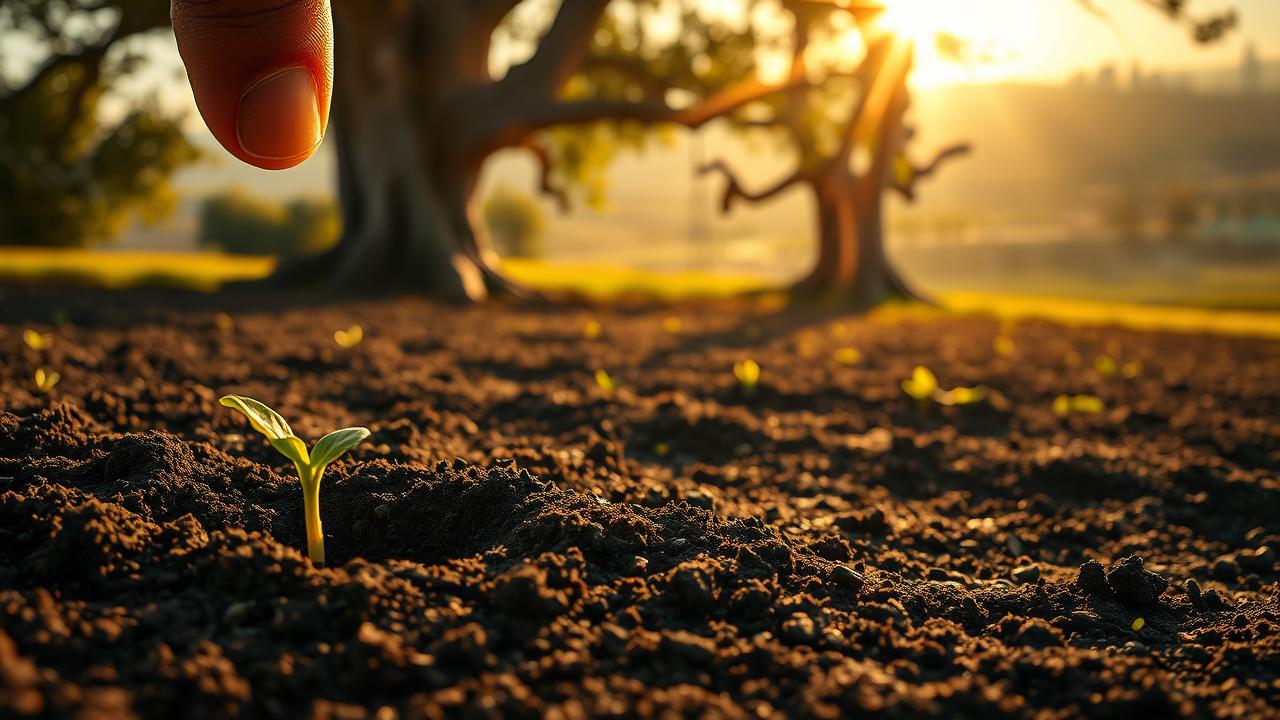
There’s a raw, undeniable truth in soil. It’s the grit under your fingernails, the scent of earth after a hard rain, the foundational reality of everything we eat, build, and are. In a world spinning on digital promises and flickering stock tickers, the ground itself remains defiantly real. The hum of the market is a distant noise when you stand on land that produces, that sustains, that endures. This isn’t just about money; it’s about a primal connection to something that cannot be coded away or devalued by a press release. Learning how to invest in farmland is about reclaiming a piece of that unshakable reality for yourself.
The Unvarnished Truth
Your financial future feels fragile because it is. It’s built on abstractions. Farmland is different. It’s a hard asset that hedges against inflation, shows low volatility, and meets a fundamental human need. You can buy it directly, if you have the capital and the stomach for it. You can own fractional shares through revolutionary new platforms, gaining access without the massive overhead. Or you can invest through publicly traded vehicles like REITs. Each path has its own demons and its own rewards. What follows is not a map for the timid, but a survival guide for those ready to build wealth on solid ground.
Why the Earth is the Ultimate Safe Harbor
The market panics. It soars on euphoria and plummets on fear. It’s a chaotic storm of human emotion disguised as rational numbers. And you’re just supposed to ride it out, trusting that the algorithms and institutions have your best interests at heart. A hilarious thought, if it weren’t so terrifying.
Farmland exists outside this madness. It’s a core real asset, a bulwark against the inflationary tides that erode your savings. Its value isn’t tied to the daily drama of Wall Street. Its returns are generated by the quiet, relentless cycles of cultivation and harvest. This is the essential distinction in the discussion of alternative assets vs traditional assets. One is a claim on a process; the other is a claim on a tangible piece of the planet that makes the process possible.
This pursuit of tangible security is the bedrock of a true sovereign money blueprint—a framework for wealth that you control, that isn’t subject to the whims of bankers or politicians. It’s about owning the source, not just the outcome.
The Weight and Power of Direct Ownership
The air in the cab of his secondhand Ford was thick with the scent of hot plastic and despair. Outside, the August sun bleached the sky to a colorless dome over 40 acres of what the realtor had called ‘prime-tillage opportunity.’ The cracked dirt, however, told a different story. A story of low yields and broken promises.
This was Jamison’s kingdom of dirt. A former logistics manager who’d cashed out his 401(k), he wanted something real. Direct ownership was the ultimate path: buying cropland and leasing it to a local farmer. It promised total control, a legacy carved from the earth. What it delivered was a gut-wrenching education in reality. The bank demanded a staggering down payment, the tenant farmer was testing his resolve at every turn, and the soil—the very foundation of his investment—was proving to be far less fertile than the glossy brochure had claimed.
Direct purchase grants you absolute authority, but it demands absolute accountability. You are the landlord, the manager, the bank’s primary target if things go south. And they can. For those with immense capital and an iron will, it’s the purest form of this investment. Some even pursue a sale-leaseback, where you buy a farm from an existing operator and immediately lease it back to them. It’s a beautifully passive income stream, but that security comes at a premium—you’ll pay more for the land, accepting a lower yield for the peace of mind. For Jamison, that peace was a distant memory.
The Democratic Revolution: Crowdfunding and Fractional Power
A silent scream was building behind her eyes, a pressure born from watching green and red numbers flicker across a screen that dictated her entire net worth. The city outside her 27th-floor apartment felt like a simulation, a collection of assets and liabilities she couldn’t touch. She yearned for something that felt anchored.
Her name was Amina, a data architect who built digital worlds for a living but felt increasingly disconnected from the real one. The thought of buying a farm outright was ludicrous, a fantasy for another life. But then she found it: a new breed of investment platform. Fractional ownership. Suddenly, the impossible became possible. For a fraction of the cost, she could buy a piece of an almond orchard in California or a corn farm in Illinois, managed by experts.
This is the game-changer. Platforms have shattered the old barriers to entry for accredited investors. You aren’t buying the whole farm; you’re buying a share. You get a sliver of the land title, a portion of the profits from rent or crop sales, and a stake in the land’s appreciation. The platforms handle the management, the paperwork, the headaches. For Amina, that first quarterly report—showing real returns from a real harvest—was more satisfying than any stock gain she’d ever seen. It was proof of concept. It was real.
Playing the Big Board: REITs and the Illusion of Liquidity
He sat on his porch, a glass of iced tea sweating onto the worn wooden arm of his rocking chair, watching the financial news scroll by on a tablet. The talking heads were breathless, selling certainty in a world that had taught him certainty was the most expensive lie you could buy.
Stanley, a retired supply chain analyst, had seen too many systems fail to place all his faith in one basket. He wanted exposure to farmland, but he also cherished his ability to get out fast. This is the appeal of publicly traded vehicles. You can buy shares in a Farmland Real Estate Investment Trust (REIT) like Farmland Partners (FPI) just as easily as you buy a share of Apple. This gives you instant liquidity—the ability to sell in seconds. You get the benefit of professional management and diversification across many properties.
But Stanley knew the trade-off. It’s indirect exposure. You own a piece of a company that owns the land. Its stock price will still be swayed by broader market sentiment, not just the value of the underlying assets. The same goes for agricultural ETFs, which are often even more removed, holding shares in companies related to farming—equipment manufacturers, fertilizer producers, grain processors—rather than the land itself. For Stanley, it was a practical compromise. A way to tap into the stability of the sector without having to bet the entire, well, farm.
The Cold, Hard Numbers and the Guardians at the Gate
Do you have the stomach for the handshake that feels more like a judgment? The one across a polished desk where the loan officer looks at your life’s savings and tells you it’s not enough. Because for direct land purchases, it rarely is. They’ll want 50% down. Maybe more. And that’s just for the land itself. It doesn’t touch the first year’s operating capital you’ll need to have on hand, just in case.
The financial barrier to entry is not a hurdle; it is a fortress wall. It’s fundamentally different from, say, investing in timberland, which has its own long-term cycles and complexities. With farmland, you’re dealing with immediate operational demands. Due diligence is your only weapon. You must become a fanatic about the details: what percentage of the acreage is actually farmable versus wooded or sloped? What is the soil composition? Is there reliable water access? You can’t trust the listing. You need to pull soil maps, talk to neighboring farmers, and find a realtor who specializes in agricultural properties—they often know of unlisted parcels and can smell a bad deal a mile away.
The Art of Seeing the Future: Climate, Code, and Community
The game is changing. The weather isn’t what it used to be. The old ways of farming, and investing, are being stress-tested by a planet in flux. The truly astute investor isn’t just buying dirt; they’re buying resilience. This means prioritizing investments in Climate-Smart Agriculture (CSA), where technologies like advanced irrigation, drought-resistant crops, and data-driven planting can slash production risk.
Thinking about how each piece of your financial life supports the others is the core of effective alternative asset diversification. Farmland isn’t just another line item; it is the anchor, the non-correlated asset that holds steady when your other boats are tossed by the storm. It provides a stability that few other investments can match.
But the strategy goes deeper still. It means understanding the impact of your investment. Large-scale acquisitions can disrupt local communities if handled carelessly. True long-term value is built in partnership with the communities that work the land. Supporting local operators, ensuring fair leases, and investing in technologies that create sustainable yields is not charity; it’s the smartest risk management strategy of all.
The New Gateways to the Land
For decades, the idea of owning a piece of productive American farmland was a distant dream for anyone without a family inheritance or millions in the bank. That old world is crumbling, replaced by sleek, powerful platforms that put this asset class within your reach.
- AcreTrader: This platform has become a dominant force in the space. They source and vet individual farm properties, placing each one into a unique LLC. As an accredited investor, you can buy shares in that LLC, giving you direct fractional ownership of a specific farm. They handle all management, from administration to working with the farmer, and you receive passive income from rent and, eventually, proceeds from the sale of the land.
- FarmTogether: Operating on a similar model, FarmTogether offers accredited investors access to a curated selection of U.S. farmland investments. They focus on providing a seamless experience through their all-in-one digital platform, with minimum investment thresholds that are far below the cost of a direct purchase, often starting around $15,000.
The Deeper Dive: Manuals for a New Reality
If you’re serious, reading the headlines isn’t enough. You need to understand the machinery beneath the surface. These books aren’t light reading; they are tactical briefings.
- Alternative Investments: A Primer for Investment Professionals by Donald R. Chambers: Don’t let the title fool you; this is the foundational text. It strips away the marketing and shows you exactly how assets like farmland, timber, and infrastructure fit into a sophisticated portfolio, teaching you the metrics of risk and return that professionals use.
- Governing large-scale farmland investments in sub-Saharan Africa by George C. Schoneveld: While focused on Africa, the lessons are universal. This book is a sobering, critical look at the social and political risks of large-scale land acquisition. It is essential reading for anyone who wants to invest ethically and avoid the hidden dangers of community conflict and regulatory backlash.
- The World for Sale: Money, Power and the Traders Who Barter the Earth’s Resources by Javier Blas & Jack Farchy: To understand farmland, you must understand the global commodity trade. This visceral, eye-opening book reveals the shadowy world of the traders who control the flow of the planet’s raw materials. It will change how you view every real asset on Earth.
Questions from the Edge of the Field
What kind of returns can I realistically expect?
Forget the “get rich quick” fantasies. Farmland returns are a story of slow, steady power. They come from two sources: annual cash income from renting the land to a farmer (typically yielding 3-5%) and the long-term appreciation of the land itself (historically 5-6% annually). Combined, you’re looking at steady, compounding returns that have historically outpaced inflation and shown minimal correlation with the stock market’s wild swings. It’s wealth that grows quietly, relentlessly.
What’s the absolute best way to start investing in farmland?
There is no “best” way, only the best way for you. If you have immense capital, a high-risk tolerance, and a desire for total control, direct purchase is your path. For most people, especially those new to the asset class, starting with a fractional ownership platform like AcreTrader or a publicly-traded REIT is the most logical entry point. It lowers the financial barrier, outsources the management headaches, and allows you to learn the ropes without betting your entire future on a single piece of land. It’s the smart way to dip your toes in before you try to dive into the deep end.
How much money do I actually need to get started?
This is where the road forks dramatically. For a direct purchase, you’re facing a brutal reality: lenders will likely require a 50% down payment on a property that can easily cost hundreds of thousands, if not millions, of dollars. Then you need operating cash on top of that. Conversely, fractional platforms can have minimums as low as $15,000. Publicly traded REITs are even more accessible; you can buy a single share for the price of a nice dinner. So, the question isn’t just about how much you have, but what level of commitment and risk you’re prepared to unleash.
Further Along the Path
True knowledge is built layer by layer. The resources below provide raw data, diverse opinions, and direct access to the platforms shaping the future of this asset class.
- AcreTrader: A leading platform for fractional farmland ownership.
- FarmTogether: Another top-tier platform offering curated farmland investments.
- Farm Credit Services of America: Offers deep insights into the financial realities and lending requirements of buying land.
- The Motley Fool’s Farmland Guide: Provides a solid overview from a traditional investment perspective.
- r/realestateinvesting: A forum for raw, unfiltered discussions about all forms of real estate, including farmland.
- Nuveen on Farmland: An institutional perspective on why agricultural land is a compelling alternative investment.
- Financial Residency’s 5 Ways to Invest: A clear breakdown of the primary investment paths for professionals considering what could be the best alternative investments 2025.
Make Your First Move
Knowledge without action is just trivia. You now understand the landscape of how to invest in farmland, from the brutal demands of direct ownership to the elegant simplicity of fractional platforms. The feeling of powerlessness in your financial life is a choice. You can continue to let it wash over you, or you can decide to anchor yourself to something real.
Your next step isn’t to buy a farm. It’s smaller. It’s more powerful. Go to one of the platforms mentioned here. Sign up. Look at the offerings. Read the reports. Do it not as a commitment to buy, but as a commitment to yourself—a declaration that you are taking control, moving from spectator to owner. The first step onto solid ground is the one that changes everything.