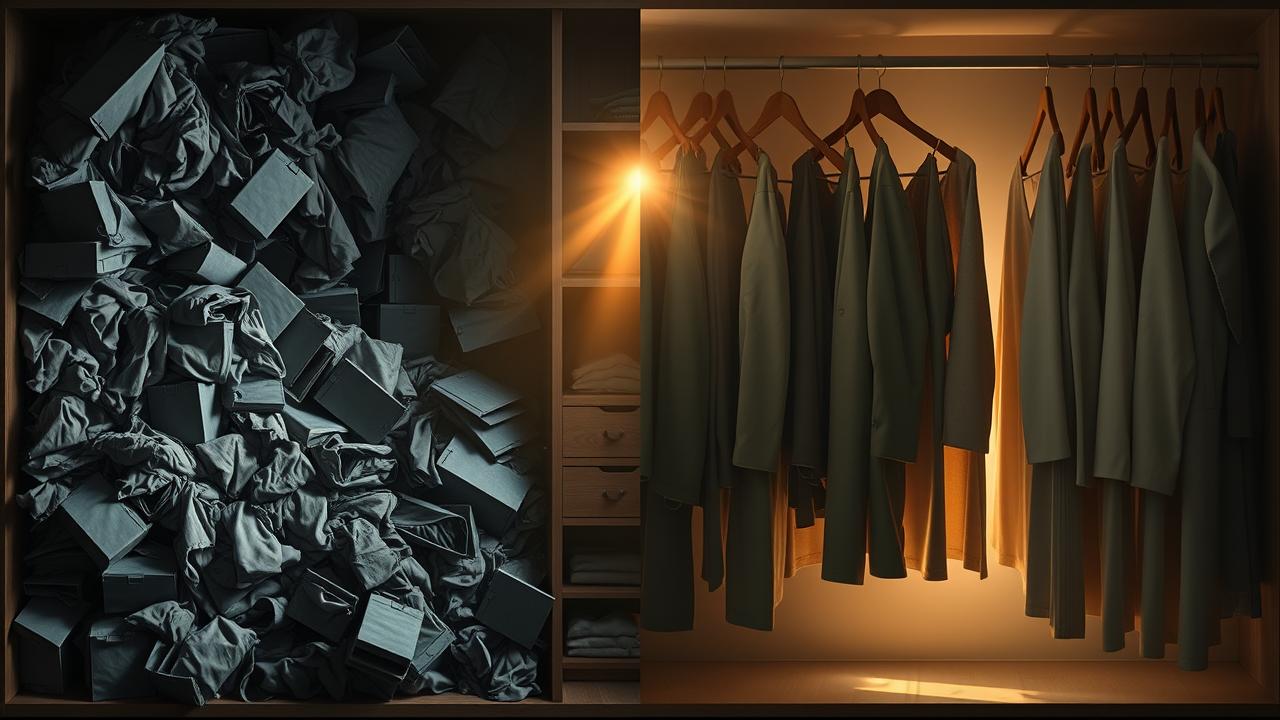
The closet door groans open, a portal to a familiar kind of hell. It’s a riot of fabric and failure, crammed with clothes that scream of past selves and mistaken identities. Nothing fits right. Nothing feels right. The morning ritual becomes a frantic, heart-pounding scavenger hunt that ends, as it always does, in resignation. You pull on the same tired shirt, the same worn-out jeans, feeling a fresh wave of quiet desperation. This isn’t just about clothing; it’s about the daily surrender to a life that feels slightly out of focus, a promise of confidence that never materializes. Crafting a capsule wardrobe on a budget isn’t about restriction; it’s about liberation from that suffocating chaos.
The Blueprint for a Life Reclaimed
This is not another flimsy list of “must-have” items. This is a battle plan. It’s a method for clawing back your time, your money, and your sense of self from the jaws of consumer culture. You will learn to see the gold hiding in your own closet, to define your signature style with ruthless precision, and to acquire only what serves you. This is about transforming your relationship with what you own, turning a source of daily stress into a wellspring of effortless power.
Phase 1: The Brutal Honesty of Your Own Closet
In her cramped apartment, under the unforgiving glare of a single overhead bulb, the mountain of clothes on her bed seemed to breathe. It was a monument to years of impulse buys, clearance rack gambles, and clothes for a life she was always about to start living. The scent of forgotten perfume and dusty fabric filled the air. She felt a familiar knot of shame tighten in her stomach. Her name was Julieta, and she worked nights cleaning commercial office buildings, a physically demanding job that left her too drained for anything but grabbing whatever was easiest in the morning.
The first step toward freedom isn’t a shopping spree. It’s an excavation. Before you spend a single dime, you must confront the hoard. This is the moment you shop in your own closet, pulling every last garment out and forcing a decision. This isn’t just tidying up; this is an act of defiance. It’s deciding that your space, your money, and your peace of mind are non-negotiable. This is the bedrock of minimalist wealth growing more by owning less.
Hold each piece. How does it feel? Does it fit the body you have right now? Not the one you hope for, not the one you once had. Does it make you stand taller? Or does it make you shrink? Separate them into three piles: the Heroes (you love them, they fit perfectly), the Maybes (need alteration, sentimental value), and the Ghosts (time to go). Those Heroes are your foundation, the 80% that will carry you. A simple alteration—hemming pants, taking in a waist—can feel like magic, transforming a forgotten piece into a custom-fit treasure.
Forging Your Signature Style and Color Strategy
The fluorescent lights of the ambulance bay reflected off his tired face as he stripped off his uniform. For twelve hours, he was Rayan, paramedic—a man with a clear purpose, defined by navy blue and crisp lines. But at home, standing before his closet, he was adrift. A sea of faded concert tees, ill-fitting promotional hoodies, and jeans from a decade ago stared back. His civilian clothes were an afterthought, a collection of random garments that said nothing about the man inside them. He felt like a ghost in his own life.
A cheap wardrobe looks expensive when it’s cohesive. This is where you become the architect of your own image. Forget trends. Choose a foundational color palette that speaks to you. Select two or three versatile neutrals—black, navy, charcoal, beige, olive—and one or two accent colors that make you feel alive—a deep burgundy, a vibrant cobalt, a rich forest green. This palette becomes your law. Every future purchase must adhere to it, ensuring everything you own can be mixed and matched effortlessly. It’s a creative constraint that breeds incredible freedom and stops budget-destroying impulse buys dead in their tracks.
Then, get brutally honest about your life. Where do you spend your time? Is it 70% work, 20% casual, 10% special occasions? Your wardrobe should reflect that reality. Stop buying sequined dresses if your life is lived in parks and home offices. Frameworks like Project 333 (33 items for 3 months) or the 5, 4, 3, 2, 1 method (5 tops, 4 bottoms, 3 layers/shoes, 2 dresses/bags, 1 accessory) are not prisons; they are starting blocks for your own personal revolution.
The Investment Mindset on a Paycheck-to-Paycheck Reality
The soles of her sneakers were worn smooth, slick as ice on the perpetually greasy floor of the restaurant kitchen. Phoenix, a line cook working doubles to cover her rent, felt the familiar ache creep up her spine. This was her third pair of cheap, black, non-slip shoes this year. Each pair cost $25, a seemingly small expense that bled her dry, one slow drop at a time. The faux leather had cracked within a month, the seams split by the second. She was trapped in a cycle of disposable garbage, a constant, frustrating reminder that being broke was expensive.
The myth is that a tight budget means buying cheap. That’s a lie designed to keep you on the hamster wheel. The truth is that value is the ultimate weapon. Buying one pair of $80, well-constructed leather work shoes that last for two years is infinitely cheaper than buying eight pairs of $25 plastic ones. This is the core of sustainable style and the secret to everyday wealth-building for all incomes. It’s about shifting your focus from the immediate price tag to the long-term cost per wear.
This doesn’t mean blowing your budget on a designer handbag. It means spending a bit more on the workhorses of your wardrobe: a coat made from a wool blend instead of acrylic, jeans with sturdy denim and reinforced seams, a t-shirt made from thick Pima cotton. These pieces feel better, look better, and outlast their fast-fashion counterparts by years. The luxury isn’t in the label; it’s in the reliability, the comfort, and the quiet confidence that comes from owning things that don’t fall apart at the slightest provocation.
Visualizing Victory: A Masterclass in Budgetary Chic
Sometimes, seeing is believing. The abstract principles of color palettes and versatile pieces can feel daunting until you watch them come to life. This video is a powerful visual guide, demonstrating how a small, curated collection of affordable items can be combined into an astonishing number of stylish, sophisticated outfits. Watch how the right basics become a canvas for endless creativity.
Phase 2: The Art of the High-Value, Low-Cost Hunt
A limited budget isn’t a curse; it’s a sharpening stone for your creativity. Once you’ve audited your closet and identified the 5-to-15 gaps in your new, streamlined wardrobe, the hunt begins. Your primary arenas are not the brightly lit malls of consumer despair. They are thrift stores, consignment shops, and online resale marketplaces.
Mastering the thrift is a superpower. Walk in with a plan. Touch everything. Your fingers can detect quality faster than your eyes. Hunt for natural fibers: wool, cotton, silk, linen. They last longer and look more expensive. Ignore size tags and focus on measurements and drape. Check the seams, the lining, the hems—these are the tell-tale signs of a well-made garment. Don’t be afraid of a missing button or a slightly dated style; new buttons cost a pittance and can completely modernize a piece. By taking the unwanted items you purged from your own closet, you can sell clutter for cash, creating a self-funding engine for your new, intentional wardrobe.
The Minimalist’s Shopping List: A Budget Capsule Checklist
Where do you even start? With the foundation. Always the foundation. Your goal is to build a small, ruthlessly efficient collection of items that all work together. Don’t get distracted by statement pieces until your core is solid.
A lean, powerful starting list for a temperate climate might look like this (think of it as a 12-piece fall capsule):
- Tops: 3 (e.g., one white t-shirt, one black long-sleeve, one neutral sweater)
- Bottoms: 2 (e.g., one pair of dark wash, perfect-fit jeans; one pair of black trousers or a versatile skirt)
- Dresses: 1 (a little black dress or neutral shirt-dress that can be dressed up or down)
- Layers: 2 (e.g., one classic blazer or structured cardigan, one trench coat or wool jacket)
- Shoes: 3 (e.g., one pair of stylish sneakers, one pair of ankle boots, one pair of flats or loafers)
- Bag: 1 (a structured, neutral leather or vegan leather tote or crossbody)
From these 12 pieces, dozens of outfits can be born. The power is in the synergy. Every top must work with every bottom. The jacket must work over everything. Versatility is your new god.
The Ironclad Maintenance Plan: Making Budget Pieces Endure
Your work isn’t done when you bring an item home. Longevity is the secret ingredient to budgetary success. Treating your clothes with respect extends their life, preserving your investment and the integrity of your look. This isn’t a chore; it’s a ritual of ownership, a philosophy that echoes the spirit of a buy it for life list.
Learn the sacred texts: the care tags on your clothing. Wash clothes in cold water to prevent fading and shrinking. Turn jeans and dark items inside out. Invest in a simple drying rack and air-dry as much as possible; the dryer is a fabric killer. Learn to sew on a button. It takes five minutes and is a skill that will save you hundreds of dollars over a lifetime. A small sewing kit is one of the most powerful financial tools you can own.
Your Digital Arsenal for Savvy Shopping
Technology can be a weapon of mass distraction or a tool of immense power. The choice is yours. Use digital tools to enforce your newfound discipline. Apps like Poshmark, ThredUp, and eBay are not for mindless scrolling; they are targeted acquisition tools. Create saved searches for the specific items on your list (e.g., “black wool blazer size 10,” “Levi’s 501 jeans 32×30”).
Beyond shopping, use a budgeting app to allocate a strict clothing fund. Seeing the number in black and white creates accountability. A simple notes app on your phone can serve as your wishlist, helping you differentiate between a fleeting want and a genuine wardrobe need. This practice becomes your digital declutter checklist for your shopping habits, clearing out the mental noise that leads to regretful purchases.
Intellectual Ammunition: Further Reading on Style and Substance
To truly change your life, you must change your philosophy. These texts go beyond simple tips and dig into the “why” behind an intentional wardrobe.
- Lessons from Madame Chic by Jennifer L. Scott: A revelation that true style isn’t about having more, but about savoring the quality of what you do have. It’s a lesson in living beautifully, not expensively.
- SUSTAINABLE FASHION HACKS ON A $50 BUDGET by Alex Green: A tactical field manual for the thrifter and upcycler. This is pure, actionable strategy for turning secondhand finds into fashion gold.
- The Minimalist Wardrobe by Derek Smalls: For those who crave structure, this book provides clear, logical frameworks for building a capsule for any season or lifestyle, cutting through the emotional clutter with precision.
Questions from the Trenches
What is the 3-3-3 Rule for a wardrobe?
It’s a micro-capsule challenge or travel packing method. You choose three tops, three bottoms, and three pairs of shoes. These nine items must create a multitude of outfits, forcing you to test the versatility of your choices. It’s a great exercise to see how few items you truly need.
What’s the difference between the 5-4-3-2-1 and 80/20 methods?
The 5-4-3-2-1 method is a prescriptive shopping list: 5 tops, 4 bottoms, 3 shoes/layers, 2 dresses/bags, 1 accessory. It’s a blueprint for building from scratch. The 80/20 rule is a philosophical guideline for an existing wardrobe: 80% should be timeless, functional basics (your workhorses), and 20% can be personality pieces—bold, trendy, or unique items that express your individual style. Both can be used to build a fantastic capsule wardrobe on a budget.
How much should a capsule wardrobe actually cost?
The cost is entirely relative. For one person, it might be $200 sourced entirely from thrift stores over six months. For another, it might be $1,500 invested in a few high-quality, ethically made pieces. The goal isn’t a specific number; the goal is to stop the endless, mindless spending on clothes that don’t serve you. The budget is a tool, not a judgment.
Your Arsenal for the Journey
You are not alone in this fight. Communities exist to share strategies, celebrate wins, and offer support when the temptation to impulse-buy strikes. Dive into these resources to deepen your resolve.
- r/capsulewardrobe: A community hub for sharing lists, asking questions, and getting inspiration from real people on the same path.
- r/minimalism: A broader discussion on living with less, where clothing is often a major topic. Here you can find people discussing accountability strategies like low buy year rules.
- Modern Minimalism Guide: A clean, step-by-step digital guide for those who appreciate a straightforward approach.
- Who What Wear’s Budget Buys: For finding specific, affordable pieces that have that high-end look and feel.
- The Capsulist’s Brand Guide: A resource for when you are ready to invest, helping you find affordable brands that are built to last.
Your First Step: The 30-Minute Reckoning
Reading is passive. Action is power. Your journey begins now. Don’t wait for someday. Give yourself the next 30 minutes. Go to your closet, put on some music that makes you feel like a warrior, and pull out one section. Just the shirts. Or just the pants. Handle each one and make a choice: Keep, Mend, or Go. That’s it. This small act is the first domino. It’s the first step in creating not just a better capsule wardrobe on a budget, but a life lived with intention, power, and unapologetic style.