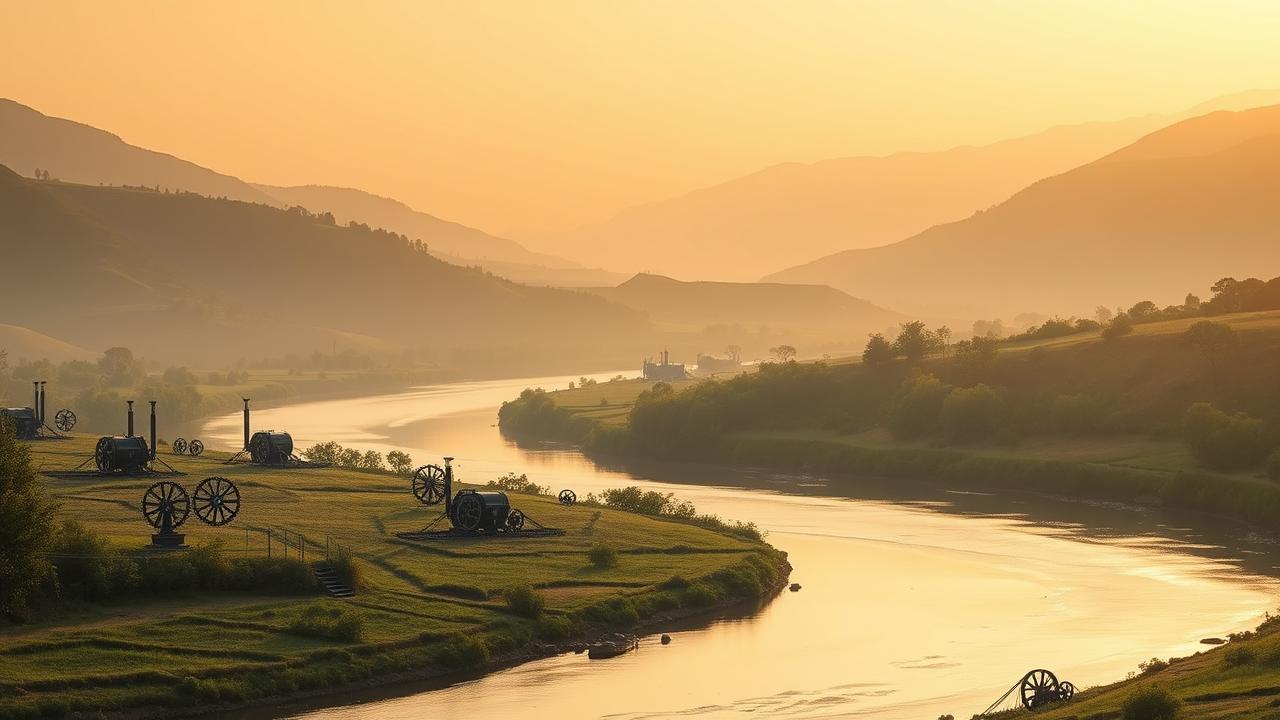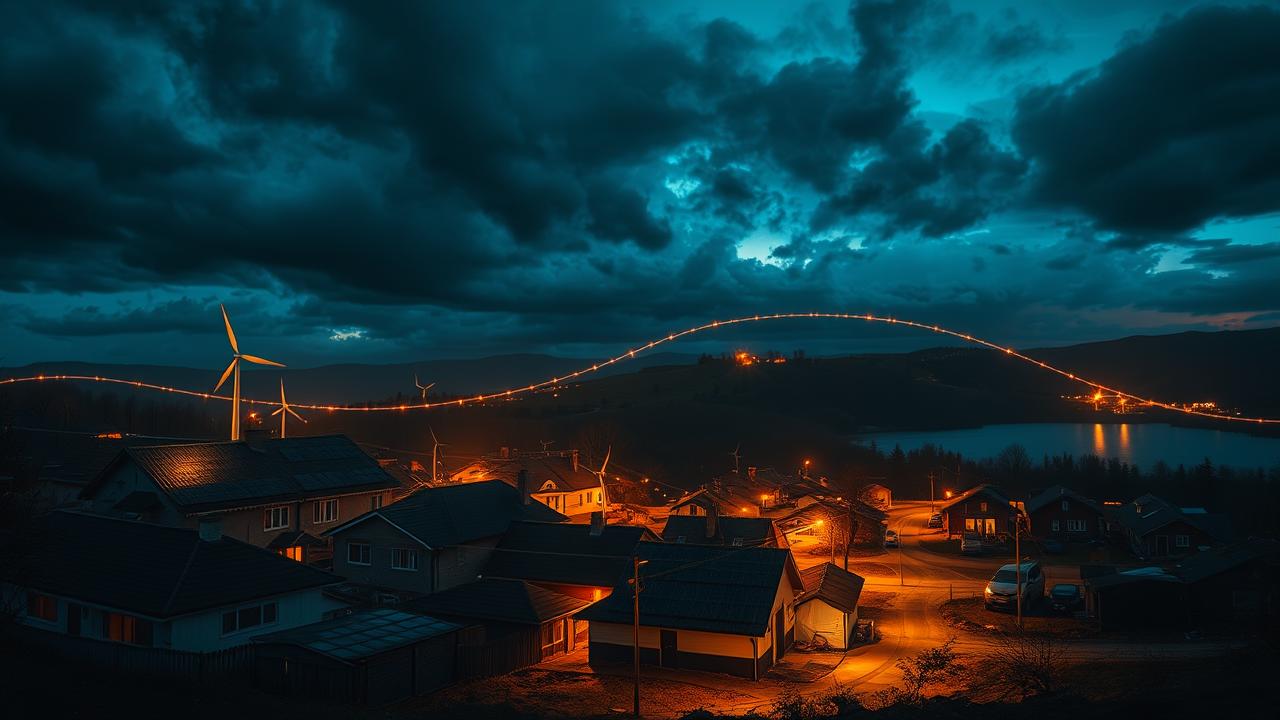
The night air hangs heavy and still, thick with the smell of ozone from the dying storm. Inside, the only light is the frantic, intermittent pulse of a phone’s flashlight beam cutting through the oppressive darkness. The silence isn’t peaceful; it’s a dead, cold thing, punctuated by the drip of a thawing freezer and the rising tide of panic in your chest. Every flicker of a distant headlight on the wet street is a false hope. You’re disconnected. Powerless. A customer number on an overdue bill, waiting for a stranger in a distant control room to flip a switch.
This feeling—this absolute dependence on a fragile, faceless system that sees you only as a revenue stream—is a modern poison. But what if the power wasn’t a commodity you buy, but a resource you control? What if the grid wasn’t a hundred miles of vulnerable wire stretched across a landscape, but a web of strength woven right into your neighborhood? This isn’t a fantasy. It’s the tangible, dirt-under-your-fingernails reality of community-owned renewable energy cooperatives, and it’s a revolution you can build yourself.
Here’s the Unbreakable Truth
You can cut through the noise and technical jargon. The shift to local power boils down to a few core certainties:
- Control Your Costs: Stop paying for corporate profits, executive bonuses, and shareholder dividends. Produce power at cost, for the people who use it.
- Own Your Future: Decisions are made in your community hall, not a distant boardroom. One member, one vote. True democracy in action.
- Build Unshakeable Resilience: When the main grid goes down in a storm or heatwave, your local microgrid can keep the lights on, the heat running, and the essentials operating. This is genuine security.
From Powerless to Proprietor
The hum of the commercial-grade refrigerator was the heartbeat of her small storefront bakery, a sound so constant she usually didn’t notice it. But its sudden absence was a thunderclap of silence. A storm had torn through the county, and now, standing in the dark, she could feel the cold sweat bead on her neck. Her daughter was asleep upstairs, blissfully unaware that the two massive sheet cakes for tomorrow’s wedding reception—the order that would finally get them ahead—were slowly succumbing to the room’s rising temperature. Flicking her lighter, the tiny flame illuminated her reflection in the glass display case: a face etched with a familiar, bone-deep exhaustion. Her name was Fiona, and she was so tired of being at the mercy of things she couldn’t control.
A renewable energy cooperative is the antithesis of that feeling. It’s a business, yes, but its purpose isn’t profit; it’s service. Imagine a group of neighbors, small business owners, and local farmers pooling their resources. They invest together, not in stocks, but in tangible assets: a field of solar panels, a series of small-scale wind turbines on a ridge, a micro-hydro project on a local creek. These assets are owned and governed by the very people they serve. It’s a legally recognized organization, often a non-profit, built on the radical idea that communities should own the infrastructure they depend on.
The Engine Running on Common Sense, Not Greed
The monthly bill from the big utility is a masterpiece of opaque accounting. You see line items for transmission, distribution, fuel surcharges, and a dozen other fees that feel suspiciously like someone just making things up. That’s because their goal is to extract maximum value from you. A co-op’s goal is to deliver maximum value to you.
The financial model is brutally simple: produce power at cost. When you and your neighbors own the solar farm, you are both the producers and the consumers. The price you pay for electricity is based on the actual cost of operating and maintaining the equipment, plus any loans taken to build it. There is no built-in profit margin for distant shareholders. Any surplus revenue—the “profits”—doesn’t get siphoned off to Wall Street. It gets reinvested in the system to improve it, or it gets returned to the members as dividends. This structure redefines the entire economic relationship, turning a monthly expense into a potential investment and making everyday wealth-building for all incomes a tangible possibility, not just a slogan.
See the Revolution in Action
Talking about this shift is one thing. Witnessing the defiant spirit of people actually doing it is something else entirely. The folks at Patagonia put together a film that doesn’t just skim the surface; it dives deep into the heart of communities across Europe that are severing ties with corporate energy and building their own future. You’ll see the faces, hear the stories, and feel the raw power of people deciding they’ve had enough. This is what it looks like when the Davids of the world decide to build their own slingshots.
One Member, One Vote, One Unbreakable Voice
His hands, stained with the ghost of 40 years of engine grease, were knotted together on the folding table. He’d come to the library basement meeting out of pure, cantankerous skepticism. He’d seen a flyer tacked to the bulletin board at the hardware store, the same flyer that had caught Fiona’s desperate eye. All this talk of ‘community power’ sounded like some pipe dream cooked up by idealists who’d never had to fix a busted transmission in the dead of winter. His name was Ezrah, and he trusted systems he could take apart and put back together, not ones built on hope.
But as he listened, something shifted. They weren’t just talking about solar panels; they were debating bylaws. A young woman was passionately arguing about voting rights for renters, not just landowners. A teacher was explaining a system for transparent financial reporting. It reminded him of the town meetings of his youth. This wasn’t a sales pitch; it was a blueprint. The democratic governance of a co-op is its soul. Unlike a corporation where voting power is tied to the number of shares you own, a co-op operates on a simple principle: one member, one vote. Whether you invested $100 or $10,000, your voice carries the same weight. This structure transforms abstract ideas like participatory budgeting initiatives from political science jargon into the real, messy, and beautiful work of building something together.
Forging True Energy Sovereignty
In a small, windswept valley a few hundred miles away, another group was chasing the same dream, but the ending was different. The valley floor was a patchwork of small-hold farms, constantly battling drought and the rising costs of irrigation. For them, energy wasn’t a convenience; it was the lifeblood of their crops. A co-op seemed like the only way out from under the thumb of the utility, whose rates seemed to spike maliciously during the hottest, driest months. His name was Ignacio, and he’d poured his heart, his savings, and all his youthful energy into the plan.
They hit a wall. And then another. The utility company threw up a barricade of legal challenges and connection fee disputes that bled their startup capital dry. Disagreements festered among the members—some wanted to fight, others wanted to fold. The meetings grew tense, the initial blaze of hope dwindling to a bitter ember. The project collapsed. Ignacio stood on his parched land, the silence of the failed venture heavier than any storm. This is the brutal truth: the path to energy sovereignty is an uphill fight against entrenched, powerful interests. Success isn’t guaranteed. But the desire for control, for genuine resilience against a system designed to fail you, doesn’t just disappear. The failure wasn’t an end, but a scar—a painful lesson in the true nature of the fight for community-owned renewable energy cooperatives.
More Than Kilowatts It’s About Building a Local Legacy
A funny thing happens when a community takes control of its energy. The victory isn’t just measured in watts or lower bills. The money that once flowed out of the town to a corporate headquarters hundreds of miles away now stays. It circulates. It pays for local technicians to maintain the solar arrays. It funds scholarships from the co-op’s surplus. It becomes the seed capital for other ventures.
Suddenly, the energy co-op becomes the anchor for a whole ecosystem of local strength. It’s the proof-of-concept that inspires other community wealth building initiatives. You start seeing connections to cooperative housing finance models and even examples of community land trusts. Why rent your power, your home, or your land from a distant landlord when you can own it together? This is the heart of what many are now calling neighborhood wealth community-driven prosperity models. It’s a fundamental rewiring of the local economy from the ground up, proving that the deepest well of prosperity is the one you dig with your own neighbors.
The Builder’s Toolkit, Not a Magic Wand
You don’t have to invent this from scratch. Pioneers have already hacked through the wilderness and drawn some reliable maps. These aren’t apps you download for a quick fix; they are robust frameworks for builders, thinkers, and organizers.
- The Permanent Community Energy Cooperative (PCEC): Developed by the Sustainable Economies Law Center, this is a legal and organizational model designed to be replicated. It’s a battle-tested blueprint for creating community-owned renewable energy that is equitable and scalable.
- Co-op Power: This network of community energy cooperatives in New England provides a powerful example of inter-cooperation. They share resources, knowledge, and buying power, proving that local movements are strongest when they link arms. Their site is a trove of practical insight into how these organizations function day-to-day.
Manuals for the Quiet Revolution
The people who wrote the books on this weren’t academics in ivory towers. They were organizers with dirt under their fingernails and fire in their bellies. Absorb their wisdom.
Power from the People: How to Organize, Finance, and Launch Local Energy Projects by Greg Pahl. This is your field guide. It bypasses the philosophy and gets straight to the ‘how’—the gritty, essential steps of turning an idea scribbled on a napkin at a town meeting into a functioning, power-generating reality.
Building a Healthy Economy from the Bottom Up by Anthony Flaccavento. Flaccavento lays bare the architecture of local resilience. He shows, with searing clarity, how energy independence is a cornerstone for building economies that are vibrant, equitable, and durable enough to withstand the shocks of the outside world.
Building Co-op Power by Janelle Cornwell. This isn’t theoretical. It’s a collection of stories and strategies straight from the front lines in the Connecticut River Valley. It’s a testament to the fact that this isn’t a new idea, but a powerful, proven tradition of collective action.
Straight Answers for Hard Questions
What exactly are renewable energy cooperatives?
At their core, renewable energy cooperatives are citizen-owned and democratically-controlled businesses that develop and manage renewable energy projects, like solar or wind farms. Instead of a for-profit corporation owning the power plant, the community members who use the energy own it themselves. As recognized by frameworks like the EU’s Clean Energy Package, this model puts control—and any financial surplus—directly into the hands of the local community.
This sounds great, but is it actually affordable for someone like Fiona, the baker?
This is the most critical question, and the answer is yes—with intentional design. It’s a myth that you need to be wealthy to participate. Most successful community-owned renewable energy cooperatives offer tiered investment levels. A share might be as low as $100. For those who can’t afford that upfront, many co-ops create innovative financing, sometimes with the help of a local credit union, allowing members to pay for their share over time, often out of the savings on their future energy bills. The goal isn’t to create an exclusive club; it’s to make ownership accessible to everyone.
What about failures, like what happened with Ignacio’s farm community? Is it just a lost cause?
Absolutely not. Ignacio’s story isn’t an ending; it’s a first draft. Failure is a brutal but effective teacher. That community learned about the legal tactics of incumbent utilities. They discovered the weaknesses in their own communication and governance. The next attempt—and there will be a next attempt, perhaps with a different legal strategy or a stronger coalition—will be built on that hard-won knowledge. True resilience isn’t about never falling; it’s about having the conviction to get back up, smarter and tougher than before. The fight for local power is a marathon, not a sprint.
Your Toolbox for the Revolution
Your journey doesn’t end here. These resources are the next step, the tools and maps for your own exploration into community power.
- The Permanent Community Energy Cooperative (PCEC) – A legal and organizational model to help you build from a proven foundation.
- Co-op Power – A real-world network of energy co-ops demonstrating the power of working together.
- Renewable Energy Cooperative (Wikipedia) – For a high-level, unbiased overview of the concept and its global context.
- Earth.Org’s Overview of Community Energy – A fantastic article framing the “why” behind this global movement.
- r/cooperatives – A Reddit community for discussing the broader world of cooperative models, from housing to worker-owned businesses.
The Switch Is in Your Hands
The power grid is the circulatory system of modern life. For too long, we’ve allowed our lifeblood to be controlled by entities that do not have our best interests at heart. They will not willingly give up that control. It must be taken.
This isn’t about a single grand gesture. It’s about a million small, defiant acts. It starts with a conversation over a fence with a neighbor. It grows with a question asked at a town hall meeting. It takes root when you decide that you are not just a consumer, but a citizen, an owner, a builder. Investigate community-owned renewable energy cooperatives. Find the others in your area who are tired of the darkness. The giant doesn’t fall from one blow, but from a thousand determined cuts. Pick up your tool. Start cutting.