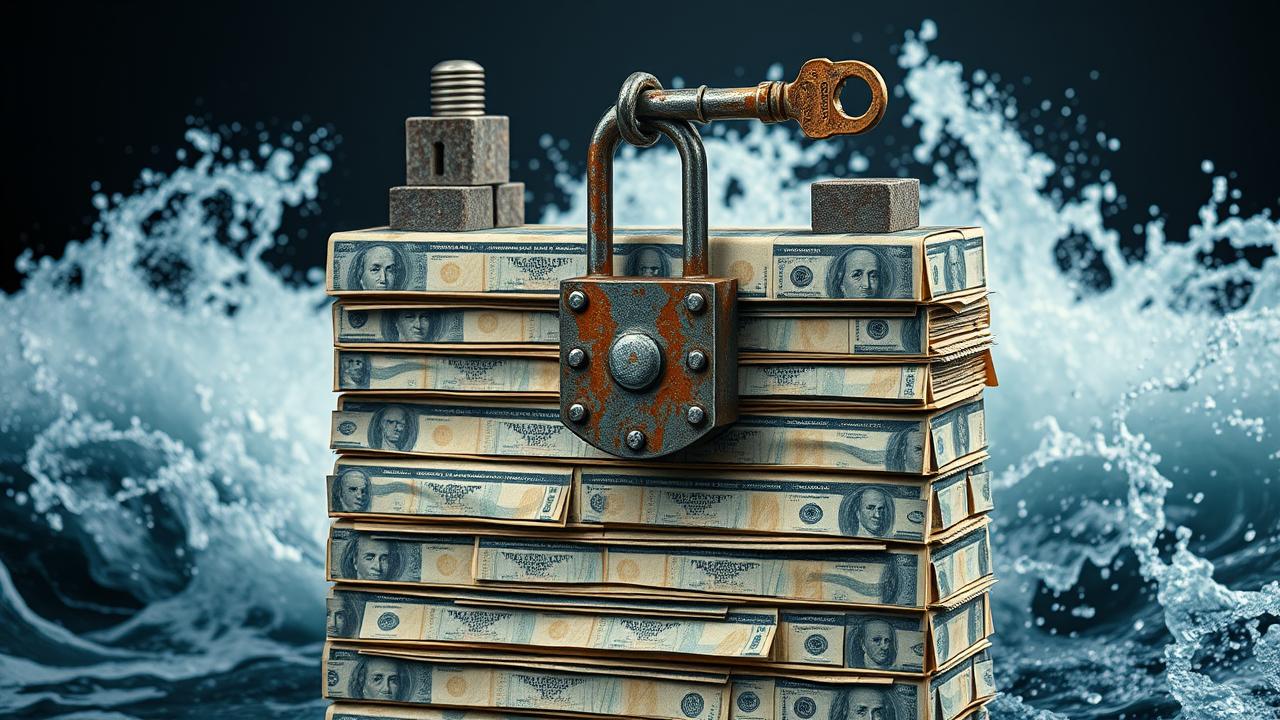
The air in the apartment is thin, smelling of stale coffee and rising panic. A glance at the banking app is a punch to the gut, a familiar sickening lurch that whispers you are not in control. It’s a quiet dread that lives behind your ribs, a shadow that lengthens with every tap-to-pay, every “treat yourself” moment that was supposed to bring joy but only delivered a heavier dose of anxiety.
This isn’t about being “bad with money.” This is about being human in a world designed to bleed you dry, one convenient subscription and one-click purchase at a time. You’re caught in a current, and it feels like drowning. But what if, for just 30 days, you built a dam? What if you decided to stand your ground and let the river of your own money gather behind it, becoming a source of power instead of a force of destruction? The essential 30 day spending freeze rules aren’t a punishment; they are the tools you use to build that dam. They are your declaration of sovereignty over your own life.
The Battle Plan, Distilled
You’re about to starve the beast of impulse and reclaim your power. For the next 30 days, you spend only on absolute necessities—shelter, utilities, essential groceries, and scheduled debt payments. Nothing else. No takeout, no new gadgets, no clothes, no little coffees. You will confront the void that mindless spending once filled and discover the formidable strength that was there all along. You will plan, you will resist, and you will win.
Phase One: Forging Your Fortress
A tidal wave of impulse is coming for you on Day One. Victory or defeat is decided right here, in the cold, quiet moments of preparation before the storm hits. This is not about tidying up; it’s about barricading the doors and windows of your financial life against the siege of old habits.
The linoleum of his kitchen floor was cold under his bare feet, a stark contrast to the frantic heat he felt behind his eyes. The clock on the microwave read 3:17 AM. Another shift patching people up from accidents and heart attacks was over, yet here he was, staring into the abyss of his own refrigerator, feeling a familiar cascade of failure. This was Malakai, a paramedic whose life was devoted to staving off chaos for others while his own finances were a five-alarm fire. He would win this war. He had to.
Your first move is a full reconnaissance mission. Take inventory. Open the pantry, the freezer, the bathroom cabinets. Confront the half-used bottles of shampoo and the zombie apocalypse-worthy collection of canned beans. This is your arsenal. Plan meals around what you already own. Knowing you have three dinners ready to go kills the siren song of expensive, soul-sucking takeout after a brutal day.
Then, go on the offensive. Unsubscribe from every marketing email. Delete the food delivery apps. Remove your credit card information from all online stores. This is the digital equivalent of salting the earth so nothing poisonous can grow. Some people wonder how to track spending without an app during this phase. The answer is beautifully primitive: grab a notebook and a pen. A simple ledger, written by hand, makes every potential expense painfully real. This isn’t data; it’s a confession.
The Ten Commandments of Financial Sovereignty
These are not suggestions. They are not friendly guidelines. They are the immutable laws of your new, 30-day reality. Adhering to these galvanizing 30 day spending freeze rules is what creates the structure for from survival to surplus mindset transitions that stick. There is no grey area here. Only black and white. Only in and out.
- No Dining Out. Period. This includes restaurants, cafes, food trucks, and vending machines. You will not buy a single prepared food item. Coffee is brewed at home. Lunch is packed. Your kitchen is now your only restaurant.
- No Non-Essential Shopping. If it isn’t on your pre-approved exemptions list, you don’t buy it. This means no clothes, no shoes, no electronics, no home decor, no books, no “just looking.” The stores of the world are dead to you for 30 days.
- No New Subscriptions or Memberships. You will not sign up for another streaming service, magazine, or monthly box of artisanal toothpicks. In fact, you should be actively cancelling existing ones.
- No Entertainment Spending. Concert tickets, movie theaters, paid sporting events, digital game purchases—all forbidden. Your entertainment must be sourced from the world that doesn’t charge an admission fee.
- No Convenience Purchases. This is the sneaky one. No pre-cut vegetables, no single-serving snacks, no bottled water when the tap is free. You will trade convenience for control.
- No Vices. For 30 days, your budget has no room for alcohol, tobacco, lottery tickets, or any other habitual spend that isn’t a core necessity. Face the craving and let it pass. It’s just a ghost.
- No Gifts (Unless Pre-Budgeted). If a birthday or holiday falls within the freeze, the gift must be something you make, an act of service, or something paid for from a sinking fund established before the freeze began.
- No Personal Care Services. Haircuts, manicures, spa treatments—they can wait. This is a month of radical self-reliance, not pampering.
- Use What You Have. Before you dare to buy a “necessity” like toothpaste, you will dig through every drawer and travel bag to find that tiny, half-squeezed tube you forgot about. You will become a master of your own inventory.
- Communicate the Boundary. Inform your friends and family. This isn’t asking for permission; it’s a statement of fact. “I am on a spending freeze. I’d love to go for a walk in the park instead of going out to dinner.” They will either respect it or they won’t, but the boundary is your responsibility to hold.
Defining the Life Support Systems: Your Financial Exemptions
A freeze is not about self-annihilation. It’s about strategic focus. You must continue to pay for the things that keep the lights on and a roof over your head. These are not loopholes; they are the non-negotiable pillars that allow you to conduct this experiment safely.
Your sanctioned spending list is brutally short:
- Shelter: Rent or mortgage payment.
- Utilities: Electricity, water, natural gas, and internet (if required for your job).
- Scheduled Debt Payments: Credit cards, student loans, car loans. Pay the minimums as required. This is not the month to aggressively pay down debt; it’s the month to stop creating more.
- Essential Groceries: A bare-bones, pre-planned list of food needed to survive. Think rice, beans, eggs, and basic produce—not imported cheeses and organic dragon fruit.
- Essential Transportation: Fuel for your car to get to work or necessary appointments. Basic public transit fares.
- Mandatory Medical Needs: Prescription medications, co-pays for necessary doctor’s visits.
Anything—and I mean anything—that falls outside this list is a “want.” And for 30 days, wants are a foreign language you no longer speak. This is how you finally learn how to stop living paycheck to paycheck. You sever the connection between desire and action.
One Person’s Journey Through the Fire
The rules can feel abstract, like battle plans drawn on a map far from the front lines. To truly understand the grit and the glory, sometimes you need to witness the fight firsthand. The video below is a raw, honest account of one person’s 30-day journey—the temptations, the small victories, and the ultimate transformation. See what it looks like to walk this path.
Source: Frozen Pennies on YouTube
The Psychological War: Taming the Beast Within
Sunlight slanted through the blinds, striping the dust motes dancing in the silent air of her home office. Outside, the world hummed with life, but inside, alone with her laptop and the ghost of a looming deadline, the silence was deafening. It was on day twelve that the monster came for her. Her name was Helen, a brilliant illustrator whose creativity was only matched by the gnawing emptiness that followed each completed project. The spending freeze felt less like empowerment and more like a cage, and the urge to click “add to cart” on a new set of Japanese watercolors wasn’t about art. It was about feeling something, anything, other than this crushing solitude.
This is the real battlefield. It’s not in the mall; it’s inside your own skull. Your mind will conjure a thousand brilliant justifications for why you “deserve” that one little thing. It will whisper that you’re depriving yourself, that this is unsustainable, that you’re failing. It’s a liar.
You fight back not with willpower, which is finite, but with replacement. When the urge to consume strikes, you must learn to create. Write a paragraph. Sketch a flower. Go for a punishing run until your lungs burn. Reorganize a closet. The energy you used to pour into spending must be redirected into an action, any action, that builds your world instead of someone else’s bottom line.
And yes, some people find solace in what they call money affirmations that work. But don’t mistake these for flimsy wishful thinking. They are not “I am a money magnet.” They are war cries. “I am in control of my choices.” “My power is greater than my habits.” “I direct my resources with purpose.” Say them until your own voice drowns out the whispers of self-sabotage.
30 Days of Zero-Cost Life: Reclaiming Your Time
An awful, sinking question will surface around week two: what on earth do I do? When you remove shopping and commercial entertainment, you reveal a vacuum of time you used to fill with spending. Filling it with something that costs nothing is the masterstroke of this challenge. This is the heart of everyday wealth-building for all incomes—turning your most valuable asset, time, into a source of richness that money can’t buy.
The backyard was a chaotic jungle of overgrown weeds and tired-looking tomato plants when they started. Luis, a mechanic with grease permanently etched into the lines of his hands, and Alma, whose part-time job at a nursery felt a world away, had stared at each other in desperation. The kids were bouncing off the walls, furious about the “no movies, no ice cream” rule. So Luis grabbed a shovel, Alma found her pruning shears, and they declared war on the weeds. By dusk, covered in dirt and sweat, they were laughing. The kids had built a fort out of cardboard boxes. It was the most connected they had felt in months, and it hadn’t cost a dime.
Your mission is to mine your life for free gold. Here are some daily savings hacks that actually work by replacing costly habits:
- Explore your local library. It’s a palace of free books, movies, and sometimes even free passes to local museums.
- Master a “pantry challenge” recipe. Force yourself to create a meal using only what you have. It’s a game of delicious ingenuity.
- Go outside. Hike a trail, walk through a park, sit by a river. The natural world has no cover charge.
- Listen to podcasts or free audiobooks. Your mind can travel the world while your wallet stays locked down.
- Start a “no-buy” project. Write that novel. Learn to code from free tutorials. Mend that pile of clothes. Use your hands for something other than holding a credit card.
- Host a potluck. You want to see friends? Great. Everyone brings a dish made from their own pantry. Connection without commerce.
Tracking Victory and Forging a New Future
A month can feel like an eternity. To keep the fire burning, you must see progress. Track every single dollar you don’t spend. Every time you resist buying a coffee, write down $5. Every time you skip ordering pizza, add $30 to the list. That growing number is not just “savings.” It’s a tangible measure of your power. It’s the proof that you are winning this war, one small decision at a time.
But you can’t do it alone. The isolation that drives so much destructive spending can be a powerful enemy. The single most effective weapon against it is finding an accountability partner for saving money. Find one person you can text when the urge to buy is overwhelming, someone who will remind you of your “why” without judgment. This shared vulnerability forges a bond stronger than any impulse.
As the 30 days draw to a close, the goal isn’t to fling open the floodgates and spend all the money you saved. The goal is to integrate these lessons. You’ve proven you can survive without impulse buys. Now, how can you carry that forward? This is where you can begin habit stacking for better finances—linking your new, powerful habits to existing routines. Maybe every Sunday, after you make your coffee at home, you review your budget for the week. You’ve created simple money habits that stick because they were forged in the fire of discipline, not just adopted as a good idea.
The Primal Tools of a Financial Warrior
Forget the fancy apps. Adding a new piece of technology to this process is like bringing a keg to an AA meeting. It’s a distraction, another shiny object. During this 30-day reset, you go back to basics. Your tools are simple, tactile, and brutally effective.
- The Notebook: A simple, lined notebook and a pen you already own. One page for your exemptions list. One page for your running tally of “money not spent.” A new page for every day, where you can journal the urges, the victories, and the frustrations. Writing it down makes it real.
- The Whiteboard: Put a small whiteboard on your fridge. On it, write the number of days you’ve succeeded. Next to it, the total amount saved. Seeing it every time you reach for the milk is a constant, powerful reminder of your commitment.
- The Cash Envelope (Post-Freeze): For those who find cash tangible, this can be a powerful tool after the freeze. The infamous cash stuffing for beginners method forces you to physically see your money deplete, something a swipe of plastic can never do. But during the freeze, the only cash you might need is for a brutally small, pre-planned grocery run.
Questions From the Front Lines
What if I fail? What if I break a rule?
You might. Helen did. On day twelve, she bought the watercolors. The next morning, she woke up feeling not relief, but a hollow, bitter shame. But failure isn’t the end; it’s data. She didn’t throw the whole month away. She looked at the purchase, understood the emotional trigger (loneliness), and started Day 13 again, this time with a plan to call a friend when that feeling hit. Don’t quit. Acknowledge the misstep, understand the “why,” and begin again immediately. One broken rule doesn’t negate the 11, 15, or 25 days you succeeded. Get back up.
What is the 30-day spending rule I keep hearing about?
That’s a slightly different concept. The 30-day rule for spending is a strategy for curbing impulse buys on a specific item. If you want something non-essential, you force yourself to wait 30 days. If you still want it after a month, you can consider buying it. Our focus here, the 30 day spending freeze rules, is a much more radical, comprehensive system designed for a total reset, not just managing one-off purchases.
How do I handle emergencies that aren’t on my exemptions list?
A true emergency—like a burst pipe or an emergency vet visit—is why having a small emergency fund is critical even before you start. If you don’t have one, this is a crisis that must be managed. It may mean the freeze has to be paused or modified. Don’t, however, confuse an inconvenience with an emergency. Your friend’s last-minute birthday dinner is an inconvenience. Your car’s transmission failing is an emergency. Learn the difference with brutal honesty.
Continue Your Financial Transformation
This 30-day battle is just the beginning. These resources can help you build on your victory and continue forging a life of financial power and control.
- How to Win a No-Spend Challenge (Ramsey Solutions)
- How to Do a Spending Freeze (Fun Cheap or Free)
- r/Frugal — A community focused on living well for less.
- r/personalfinance — A place for deep dives into budgeting, saving, and investing.
- I Did A 30 Day No Spend Challenge (Frozen Pennies on YouTube)
Your Countdown Starts Now
The person you were yesterday, the one who flinched at their bank balance, is not the person who has the power to start today. You have the plan. You have the tools. You understand the enemy—both the one in the marketplace and the one in your mirror. This is your moment to draw the line.
The next 30 days will be a crucible. They will test you, strip you down, and reveal the unshakeable core of who you are. Embrace the challenge. Abide by the 30 day spending freeze rules as if your life depends on them. Because in a very real way, it does. Your future, your peace of mind, and your power are all waiting for you on the other side. Begin.