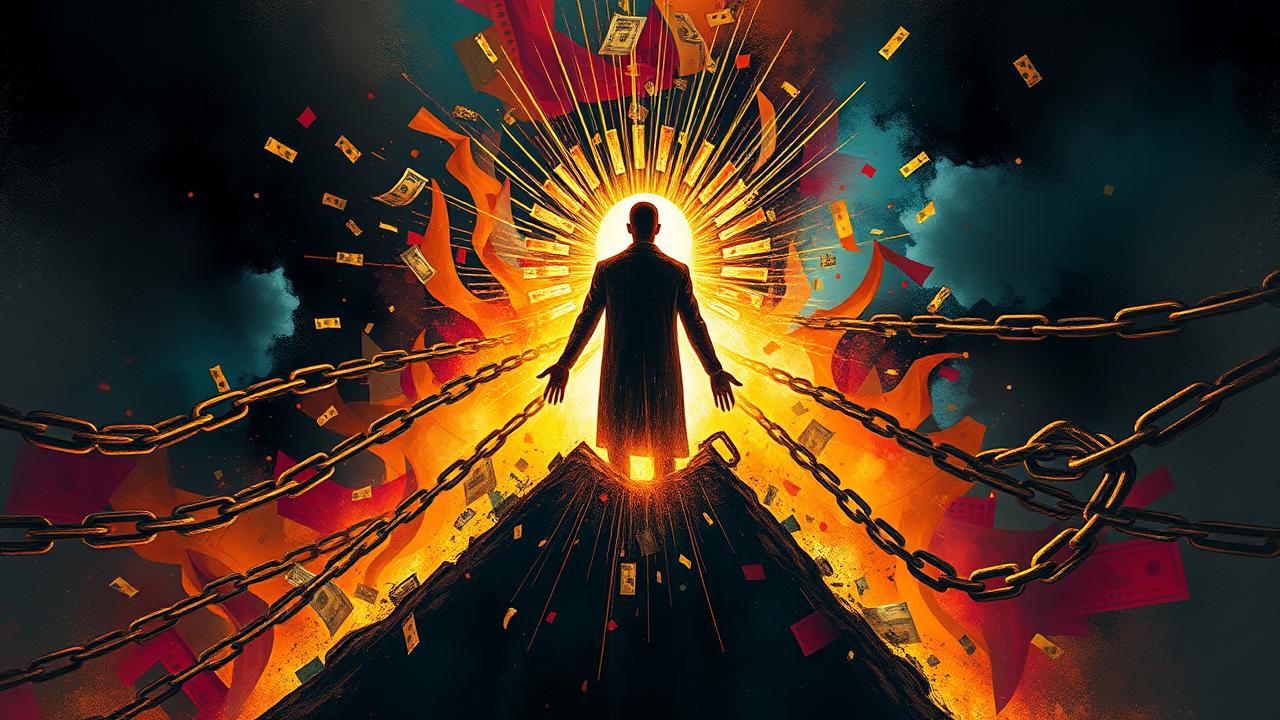
The fluorescent lights of the boardroom hummed, a low, predatory sound. Outside, the city pulsed with life, but in here, the air was thick with the ghosts of past certainties. The CEO felt a familiar cold sweat trace a path down his spine as he stared at the presentation slide. It wasn’t the graphs or the projections that did it. It was the crushing, undeniable truth they represented: evolve or be rendered obsolete, a fossil preserved in the amber of bygone financial eras. This isn’t just a market shift; it’s a battle for survival, and the digital transformation in banking industry is the unforgiving battlefield.
The Guts of the Machine
This isn’t a gentle evolution. It is a gut-wrenching reinvention. We’re not talking about adding a shiny new mobile app and calling it a day. We’re talking about ripping out the old wiring—the legacy systems, the calcified mindsets, the very soul of the institution—and building something new, something that can breathe in this new digital atmosphere. We will uncover the core technologies fueling this fire, the strategic nightmares keeping leaders awake, the absolute necessity of a customer-first mindset, and the brutal reality of failure. This is your map through the chaos.
Beyond the Polished Veneer of an App
A mobile banking app is not transformation. It’s a fresh coat of paint on a crumbling foundation. True digital transformation is a deep, cellular change. It’s the complete reimagining of business processes, from the front-line teller to the back-office risk analyst. It’s about using technology not just to do the same things faster, but to do entirely new things that were once impossible.
Think about the difference between a horse-drawn carriage and a sports car. You don’t get the latter by just breeding faster horses. You need a new engine, a new chassis, a new understanding of physics. Similarly, this shift is about moving from fragmented, siloed operations to a unified, intelligent, data-driven ecosystem. It’s the difference between merely offering services and creating seamless financial experiences woven into the very fabric of a customer’s life. The digital banking vs traditional banking debate is over; one is the future, the other is history.
The Alchemist’s Toolkit: AI, Blockchain, and the Cloud
The late-night glow of a monitor illuminated the slight tremor in Louis’s hand as he held his phone. Dust from his workshop clung to the screen protector. The payment portal for his lumber supplier had crashed again. This wasn’t just an inconvenience; it felt like a personal insult from a bank that claimed to support small businesses. A hot wave of frustration washed over him. He just wanted to build beautiful things with wood, not wage a nightly war against broken code and indifferent institutions.
This raw frustration is the fuel for the revolution. The tools to fix it are no longer science fiction.
- Artificial Intelligence (AI) & Machine Learning (ML): This is the new nervous system. The impact of AI on digital banking is staggering. It’s not just about chatbots answering simple questions. It’s about predictive algorithms that spot fraud before it happens, personalized loan offers generated in seconds, and risk models that learn and adapt in real-time. It’s the brain that can finally make sense of the mountains of data banks have been sitting on for decades.
- Blockchain & DLT: The promise of blockchain in digital banking is trust, hardcoded. For generations, banks have been the central ledger, the arbiters of truth. Blockchain distributes that trust, offering a secure, transparent, and brutally efficient way to handle everything from cross-border payments to trade finance. It eliminates the need for armies of middlemen, cutting costs and settlement times from days to minutes. This is a foundational shift in how we conceive of transactions, a core component of what many call the future of money.
- Cloud Computing: The cloud is the forge. It provides the raw, scalable power needed to run these advanced systems without the crippling expense of maintaining massive, on-premise data centers. It allows for agility, letting banks test and deploy new services at a speed that would have been unthinkable when their servers were bolted to the floor in a basement.
The Alliance with the Barbarians
For years, traditional banks viewed fintech startups as barbarians at the gate. Now, they’re realizing those barbarians might be their only salvation. Partnering with agile, innovative fintech companies allows legacy institutions to accelerate their transformation, plugging in new capabilities without having to build everything from scratch. The video below offers a stark look at how these partnerships are reshaping the industry, direct from leaders on the front lines.
Wrestling the Behemoth of Legacy Systems
The breakroom coffee was stale, mirroring the air in the entire compliance department. It was a place where enthusiasm came to die. Aylin stared at her screen, the cursor blinking over a line of COBOL code—code older than she was. A proposed security patch for their new API had a one-in-a-thousand chance of crashing the entire mainframe during peak hours. Her job was to sign off on the risk. It felt less like a professional assessment and more like being asked to bless a game of Russian roulette. The weight of it settled in her chest, heavy and cold. This machine she was meant to protect was a hostile, unknowable beast, and every attempt to tame it only revealed another row of teeth.
This is the hidden war being fought in every major bank. Their greatest asset—decades of data and customer trust—is trapped inside their greatest liability: monolithic, creaking legacy systems. Modernizing this infrastructure isn’t a simple upgrade. It’s open-heart surgery on a conscious patient. It requires courage, a clear roadmap, and a willingness to accept that parts of the old self must die for the new one to live.
The Human Element: A Radical Shift to the Customer
For too long, banking was defined by its products: the 30-year mortgage, the free checking account, the high-yield savings. The customer was a secondary consideration, a necessary component to sell the product to. That era is over. The entire point of this chaotic transformation is to flip the model on its head.
The new battlefield is the customer experience in digital banking. It’s about building services that feel intuitive, personal, and empowering. It means understanding that Louis doesn’t want a “business loan product”; he wants the capital to buy a new lathe without losing a week to paperwork. The goal is to embed finance so seamlessly into peoples’ lives that it becomes invisible, an enabling force rather than a frustrating obstacle. This is the heart of the entire digital banking evolution.
The Treacherous Path of Ethics and Regulation
The kombucha on tap tasted sour, a fitting metaphor for the mood in the “ideation lounge.” Shlomo scrolled through the project’s code repository, a digital graveyard a hundred thousand lines deep. His team’s brilliant fraud-detection algorithm, one that could have saved small businesses millions, was being permanently shelved. It worked too well. The model had inadvertently discovered patterns that suggested redlining, a ghost of banking’s ugliest past. Fixing it would require a complete model rebuild, and the investors had panicked. Management called it “de-prioritization.” Shlomo called it what it was: a failure of nerve. He felt a profound hollowness, the ache of creating something powerful only to watch it be neutered by fear and legal memos.
Innovation in a regulated space is a high-wire act over a canyon of legal and ethical disasters. As banks collect more data and unleash more powerful AI, the potential for harm grows exponentially. Unbiased algorithms are a myth. True digital banking security best practices must now include ethical guardrails, a deep understanding of data privacy, and a proactive relationship with regulators who are, themselves, scrambling to keep up. Trust, once lost in this new world, may be impossible to regain.
Forging Your Weapons for the Fight
Going into this battle unarmed is suicide. While every bank’s journey is unique, a core set of tool-types forms the backbone of any successful transformation:
- Data Analytics Platforms: Think tools like Tableau or Power BI. These are the lenses that allow you to see the patterns in your data, to transform raw information into actionable intelligence. They are the difference between guessing what your customers want and knowing.
- Robotic Process Automation (RPA) Software: Solutions from providers like UiPath or Automation Anywhere are the tireless digital workforce that can automate the mundane, repetitive tasks strangling your efficiency. This frees up your human talent to focus on what matters: strategy, creativity, and customer relationships.
- Cloud Infrastructure Providers: Amazon Web Services (AWS), Microsoft Azure, and Google Cloud are the modern foundries. They provide the secure, scalable, and resilient environments necessary to build and run the next generation of banking applications without the anchor of physical hardware.
Wisdom from a World in Flux
Some have walked this path before you. Their scars can be your guide.
- Leading Digital by George Westerman: A clear-eyed look at what separates the digital masters from the dabblers. It’s less about the tech itself and more about the vision and leadership required to wield it effectively.
- Modernizing Legacy Banking Systems by Malli Temburu & Rakesh Kumar: A tactical field manual for the harrowing process of overhauling core infrastructure. This is for those who need to get their hands dirty and understand the true complexity of the fight.
- Ask Your Developer by Jeff Lawson: An urgent plea to leadership to stop treating software developers like factory workers and start seeing them as the creative heart of modern business. A crucial mindset shift for any executive hoping to survive.
Questions Carved from Uncertainty
Why do so many digital banking transformations fail?
They fail because of a lack of courage, not a lack of technology. Many institutions approach the digital transformation in banking industry as a series of isolated IT projects. They bolt on a new feature here, spin up a new app there, but refuse to address the cultural rot and systemic inertia at the core. True transformation requires a complete overhaul of the operating model, a fanatical focus on the customer, and leadership willing to make painful, unpopular decisions for long-term survival. As Shlomo’s story shows, even brilliant tech can’t overcome a failure of will.
What are the main types of digital transformation?
While consultants love their fancy frameworks, it boils down to four fundamental domains. First is process transformation, using tech like RPA to make internal operations more efficient. Second is business model transformation, which is about fundamentally changing how the bank creates and delivers value—think moving from product sales to subscription-based financial wellness. Third is domain transformation, pushing into entirely new markets, which is what you see when a finance company starts offering cloud services. Finally, there’s cultural transformation, the hardest and most vital part, which involves changing the very mindset of the organization to be agile, data-fluent, and relentlessly innovative.
Is this leading to the end of bank branches and human tellers?
It’s leading to their reinvention, not their extinction. The branch of the future isn’t a place for simple withdrawals; your phone handles that. It’s an advisory hub, a place for complex conversations about mortgages, life planning, and small business strategy. Tellers become financial guides, empowered by technology to provide high-value, personal advice. The mundane tasks are automated, freeing up humans to do what they do best: connect, understand, and build trust. The future of digital banking includes a smarter, more targeted human touch.
Continue the Descent
The rabbit hole is deep. These resources can light the way.
- IBM’s Overview on Digital Transformation in Banking: A high-level corporate perspective on strategy and technology integration.
- McKinsey’s Analysis of Transformation Failures: A brutally honest look at why most initiatives fall short and what to do about it.
- Salesforce on Customer-Centric Transformation: Insights on leveraging technology to improve the customer journey.
- r/fintech: A raw, real-time forum of developers, founders, and industry insiders discussing the bleeding edge.
- r/Banking: A community for banking professionals to discuss the industry’s daily challenges and changes.
Your First Step into the Storm
The time for observation is over. The storm is here. The single most powerful step you can take right now is not to draft another five-year plan or form another committee. It is to find one, single, painful point of friction for your customers—like Louis’s crashing payment app—and commit, with every resource you have, to obliterating it. This single act of focused, relentless execution will teach you more about the realities of the digital transformation in banking industry than a thousand slide decks. It will be hard. It will be messy. But it will be real. And in this new world, real is the only thing that survives.