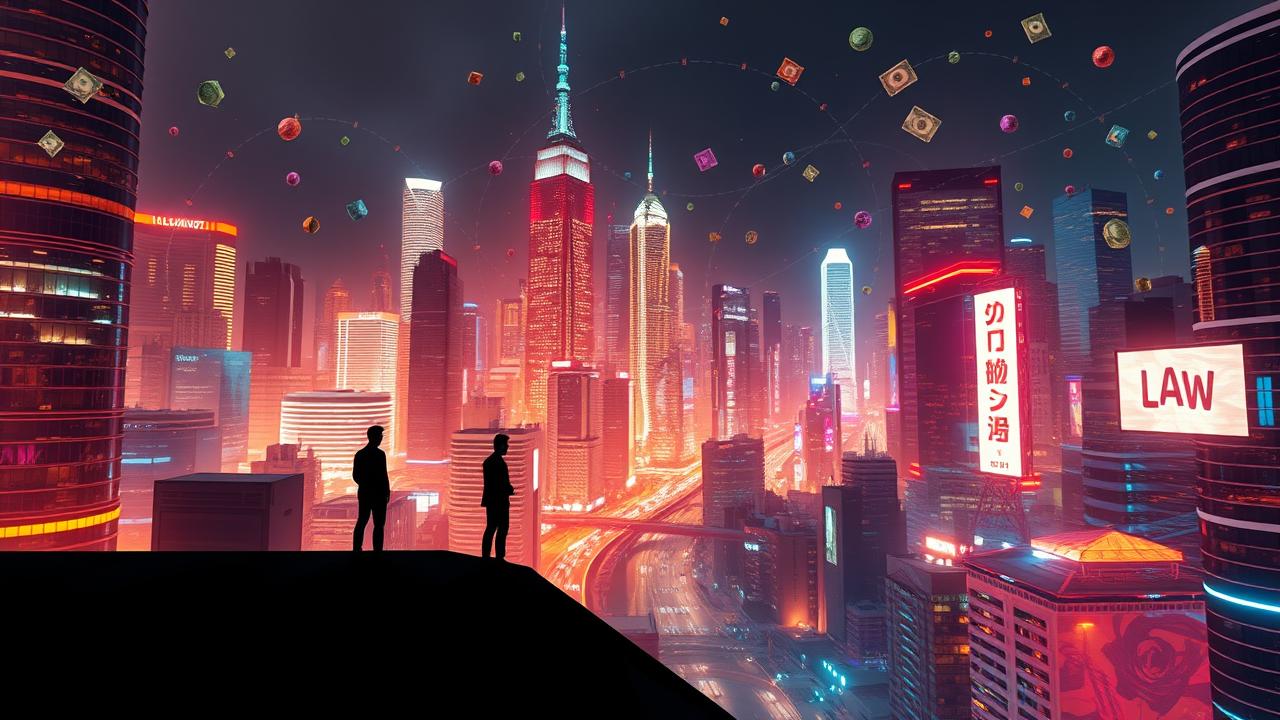
The Relentless March into a World Without Cash
The air in the subway station is thick with the metallic tang of rails and the faint, sweet smell of discarded food. A man with hands like worn leather, a street musician, strums a guitar, his open case littered not with coins and crumpled bills, but with a small, hand-scrawled sign displaying a QR code. A tap, a beep, and the transaction is done. So clean. So efficient. And so utterly, terrifyingly transparent.
This is the quiet frontier of a new world, a place where the very idea of money is being reforged in a digital fire. We celebrate the convenience, the speed, the slickness of it all. But beneath that glossy surface, a profound power struggle is underway. This isn’t just about technology; it’s about control. Understanding the government role in a cashless economy is not an academic exercise; it’s about waking up to the fact that the rules of the game are being rewritten while we’re busy tapping our phones to pay for coffee.
The freedom you thought you had? It might just be an illusion, a ghost flickering in the server racks of a central bank.
The Unvarnished Truth
There’s no time for a slow burn. The ground is shifting beneath your feet, and you need to know where the fault lines are. The push for a cashless world, championed by governments and global financial institutions, is a double-edged sword wrapped in promises of progress.
On one side, they offer a utopia: an end to illicit finance, seamless tax collection, and bringing the “unbanked” into the modern world. It’s a compelling sales pitch. Who wouldn’t want a safer, more efficient system? It’s a wonderful world, if you don’t mind someone watching every single time you buy a pack of gum.
The other edge of that sword is sharper, colder. It represents unprecedented state control. Every transaction logged, every donation tracked, every financial decision subject to algorithmic scrutiny or outright intervention. The pros and cons of a cashless economy aren’t balanced on a neat scale; they represent a fundamental conflict between a nanny state’s dream and an individual’s right to exist without constant oversight. This is the new battlefield for your autonomy.
The Crown’s New Jewels: Central Banks and Digital Currencies
In a quiet, climate-controlled office, a man who has never worried about making rent signs off on a policy that will change how a construction worker buys his lunch. This is the sterile reality of monetary power. The rise of decentralized currencies like Bitcoin was a rebellion, a declaration of independence from this system. It was messy, volatile, and utterly punk rock. And, of course, the empire had to strike back.
Enter Central Bank Digital Currencies (CBDCs). Don’t mistake them for their rebellious crypto cousins. A CBDC is not a revolution; it’s a counter-revolution. It’s the government issuing its own digital token, a dollar or euro or yen that exists only on a ledger it controls. It’s the old system, just with a new, disturbingly powerful operating system.
This race to launch CBDCs isn’t about competing with Visa or Mastercard. It’s a race to reclaim and consolidate the government’s monopoly on money, a monopoly that was threatened for the first time in centuries. It’s about ensuring that when you spend, you do it within their walled garden, under their watchful eyes.
The Benevolent Cagemasters: Tax, Inclusion, and Other Pretty Stories
Every move toward a cashless society is cloaked in the noble language of public good. The stated goals are always so wonderfully palatable. First, there’s the war on crime. A fully digital economy, they say, will shine a light into the dark corners where tax evasion and illegal activities thrive. No more “under the table” work. No more untraceable transactions. It sounds like a win for the honest citizen, and it is—as long as you trust the people holding the flashlight not to point it directly into your bedroom.
Then there’s the beautiful, heart-warming goal of “financial inclusion.” The idea is to provide digital banking to the millions who operate outside the traditional system. A noble cause, to be sure. But it also conveniently sweeps every last holdout, every off-grid individual, into a centralized, monitorable framework. It’s like offering a warm blanket that happens to have a tracking device woven into its fibers.
You have to wonder if the ultimate goal isn’t just to make tax collection more efficient, but to make dissent impossible. When every penny you own can be frozen with a keystroke, how loud will you protest?
A Glimpse Into the Machine
Watching the abstract arguments play out on a global stage can feel overwhelming. This short documentary from The Economist cuts through the noise, laying bare the mechanics and motivations behind the worldwide shift away from physical cash. It’s a stark, clear-eyed look at what this future means, not in theory, but in practice. Pay close attention to the language used by policymakers; it reveals more than they intend.
Source: The Economist on YouTube
A History of Broken Promises
Trusting any government with the absolute control offered by a cashless system requires a level of amnesia few of us can afford. We are told this new digital money will be stable, secure, and managed for our benefit. But their track record tells a different story—a story of currencies debased, of inflation spun out of control, of bailouts for the powerful while the masses pay the price.
Money, at its core, is a representation of human time and effort. It is stored energy. Yet for decades, that energy has been diluted by printing presses running hot to fund political promises and paper over economic cracks. We’ve seen massive stimulus packages that seem to vanish into the financial ether, enriching the few while the cost of living climbs relentlessly for everyone else. The economic impact of a cashless transition controlled by these same entities is a terrifying unknown.
Why would we believe that absolute digital control would suddenly instill a sense of fiscal responsibility that has been absent for generations? It’s like giving a pyromaniac a gallon of gasoline and a flamethrower and hoping they’ll suddenly take up gardening.
The Human Cost of a Keyboard Stroke
In a cramped apartment that smelled perpetually of boiled cabbage and damp concrete, Adrianna counted the now-useless bills for the third time. The government’s announcement had been swift, brutal. The old currency was worthless, effective immediately. Her husband’s week of grueling construction work, paid in cash just yesterday, had turned to decorated paper overnight. Her daughter’s fever was rising, and the pharmacy down the street, its own systems in chaos, was only accepting new notes—notes nobody could get from the overwhelmed banks.
She spent the next day in a queue that snaked for blocks, a river of desperate, angry people pressed together under a merciless sun. The air was a cacophony of shouts, crying children, and the hollow promises of officials trying to maintain order. She felt a primal fear, a helplessness that clawed at her throat. Her family’s well-being, their very survival, was held hostage by a policy decision made by distant men who would never experience its agonizing fallout. This, she thought with a cold dread, is what it feels like to have nothing. To be nothing.
These radical policy shifts, often sold as decisive blows against corruption, are the most visceral risks of a cashless society. They don’t just disrupt economies; they shatter lives. They expose the terrifying fragility of a system where your life savings can be nullified by a single decree.
Programmable Tyranny: The Leash on Your Livelihood
Across town, in the sterile quiet of a tech incubator, Mackenzie leaned back from her screen, a cold knot tightening in her stomach. She’d always been an early adopter, celebrating the seamless efficiency of the new state-backed digital wallet. It made getting paid for her freelance design work instantaneous. But the latest “feature update” was different. A pop-up informed her that a recent political donation had been flagged. Future contributions to that group would be “subject to review.” Her money was no longer just money. It had terms and conditions.
This is programmable money. It’s the crown jewel of the CBDC project and the ultimate evolution of control. It’s money that can be told what to do. Imagine funds that expire if you don’t spend them fast enough to “stimulate the economy.” Imagine your account being restricted from buying sugary drinks for health reasons, or more than a certain amount of gasoline to meet climate targets. This isn’t a dystopian novel; it is the explicitly stated potential of the technology. This is the future of money, and it has a choke chain attached.
The knot in Mackenzie’s stomach turned to fire. She wasn’t just a user; she was a product. That night, she didn’t sleep. Instead, she fell down a rabbit hole of encrypted messaging boards and decentralized finance protocols. Her keyboard clicked away, a tiny rebellion in the darkness. She wasn’t just a designer anymore. She was becoming a student, learning how to prepare for a cashless society not by complying, but by finding the exits.
Digital Colonialism and the New World Order
The power dynamics aren’t just internal; they are global. For developing nations, the rush to adopt digital finance is a siren song of modernization and economic freedom. It promises a leapfrog over decades of legacy infrastructure. But this leap can land them in a new kind of trap.
When a smaller nation adopts a digital currency framework designed and dominated by a foreign superpower, it doesn’t just import technology. It imports influence, dependence, and vulnerability. Its monetary policy can become subject to the whims and strategic interests of another country. This isn’t trade; it’s a form of “digital colonization,” where sovereignty is slowly eroded not by armies, but by algorithms and payment rails.
The fight for financial freedom in these regions becomes a fight against being absorbed into a monolithic financial system where they have no seat at the table. Their quest for autonomy could ironically lead to the complete loss of it.
Questions from the Digital Trenches
Why does the government want to get rid of cash?
Officially, it’s about curbing crime, stopping terrorism financing, and improving tax collection. And sure, those are convenient talking points. Unofficially, it’s about control. Physical cash is private, anonymous, and exists outside the direct oversight of the state. It allows for a small-scale, personal economy that is difficult to monitor or tax. Eliminating it brings every single transaction into a centralized, observable system, giving unprecedented insight and power to the institutions that manage it. The what is a cashless society question is really a question about total information awareness.
How does this digital shift affect my privacy?
It potentially annihilates it. In a fully cashless system, a permanent, searchable record of every purchase you make could be created—from the coffee you buy, to the books you read, to the political or religious organizations you support. This data trail is a goldmine for governments and corporations. Protecting privacy in a cashless economy becomes an active struggle, not a default right. It requires using privacy-focused tools, understanding encryption, and potentially operating in alternative financial ecosystems. Forgetting your wallet will be the least of your worries.
What happens to the poor and elderly in a cashless world?
They risk being left behind, or worse, trapped. People who are unbanked, lack reliable internet access, or are not technologically savvy face immense barriers. For an elderly person like Keith, a retired machinist who sells carved birds at a weekend market, the shift is bewildering. First, his customer base dwindled as fewer people carried cash. Now, the market requires all vendors to use a specific app he can’t figure out on the cheap smartphone his granddaughter bought him. He doesn’t just risk losing income; he risks losing his connection to the world, becoming invisible to an economy that no longer speaks his language. The crucial debate over the government role in a cashless economy must address this gaping digital divide.
What can stop the government and banks from controlling my money?
Right now, your strongest defenses are cash itself and the burgeoning world of decentralized finance. As long as physical currency exists and is accepted, you have an alternative. Beyond that, technologies like cryptocurrencies (Bitcoin, Monero, etc.) were created specifically to provide a permissionless, censorship-resistant alternative to state-controlled money. True financial sovereignty in the future may depend on your willingness to understand and use these alternative systems.
Arm Yourself with Knowledge
The architects of these systems have read their manuals. You should read yours. These authors offer critical perspectives that cut through the official narrative.
- The End of Cash: Power, Control, and Your Financial Freedom by John H. Maverick: A direct and unflinching look at the motives and mechanisms behind the war on cash, laying out the stakes for personal liberty.
- The Scandal of Money: Why Wall Street Recovers but the Economy Never Does by George Gilder: A brilliant and scathing critique of how government monopoly on money has distorted our economy, arguing that money is fundamentally a measure of time and innovation.
- Principles for Dealing with the Changing World Order by Ray Dalio: While not solely about digital currency, Dalio provides an essential macro framework for understanding the rise and fall of empires and their currencies, putting today’s shifts in a stark historical context.
- DOGE Wars: Crypto, Government, and the Fight for Financial Freedom by Eli Simpson: A more modern take that explores the cultural and technological clash between decentralized movements and government attempts to regulate them.
Continue Your Descent Down the Rabbit Hole
- J.P. Morgan on a Cashless Society: See how one of the biggest players in finance frames the debate.
- Brookings Institution – The End of Cash: A deeper academic and policy-oriented perspective on the transition.
- World Economic Forum – Benefits of a Cashless Society: Understand the official narrative and the benefits promoted by globalist organizations.
- r/SeriousConversation: A forum for nuanced discussions about major societal shifts, including cashlessness.
- r/changemyview: Find threads where people challenge and defend their views on a cashless future, revealing the core arguments on all sides.
The Choice Is Still Yours
The tide is moving fast, pulling us toward a future of convenience and control. It can feel like an unstoppable force, a technological tsunami that will reshape the world whether we agree to it or not. But you are not driftwood. You are a thinking, breathing human being with the power to choose.
The ultimate act of defiance isn’t picking up a placard; it’s picking up a book. It’s having a difficult conversation with your family. It’s using cash for a small purchase as a conscious act of resistance. Your first step isn’t to overthrow the system, but to refuse to be a passive passenger within it. Acknowledge the deep and complex government role in a cashless economy, and then decide how you will navigate it.
The future isn’t written in code. It is written in the choices we make today. Choose to be aware. Choose to be prepared. Choose to be free.