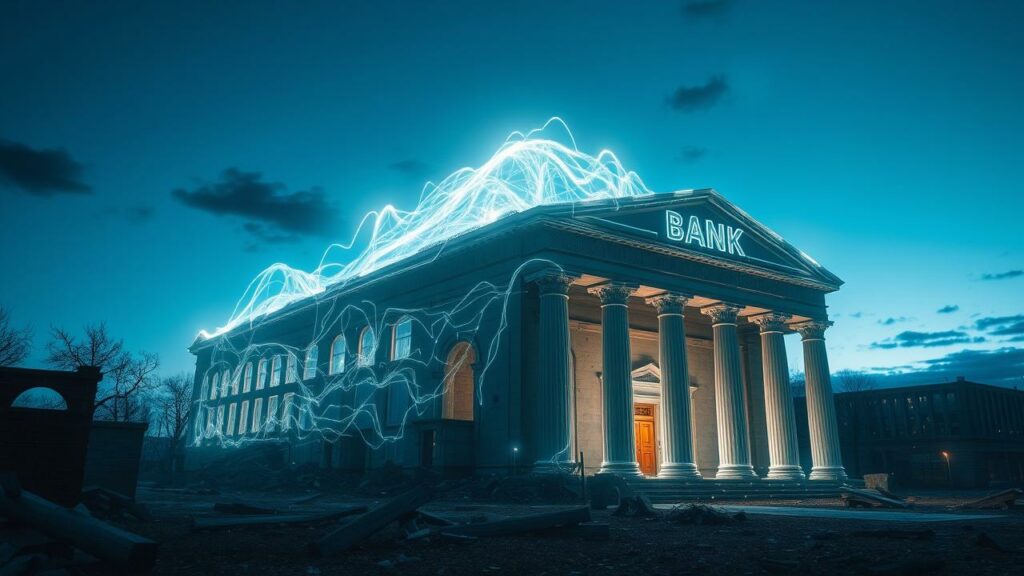
The Slow, Silent Humiliation of the Bank Line
The air in a bank lobby is always the same. A stale mix of recycled oxygen, industrial carpet cleaner, and the faint, papery scent of money that isn’t yours. It’s the smell of waiting. Of watching the clock on the wall tick away minutes of your life you will never get back, all for a transaction that a sliver of code could execute in a nanosecond.
There is a unique powerlessness in that queue. You stand, you inch forward, you clutch a signed piece of paper or a withdrawal slip like a prayer card. This isn’t just about inconvenience; it’s a quiet declaration that your financial life operates on someone else’s terms, within their walls, during their hours. It’s an old world clinging to relevance in an age of instant miracles.
But the walls of that world are cracking. There is another way. The decision to learn how to switch to digital banking isn’t about chasing trends. It’s a raw, powerful act of taking back control. It is the demolition of the queue and the reclaiming of your sovereignty over your own resources. It’s about deciding that your money, your time, and your life will move at your speed.
The Escape Plan Distilled
This is not a gentle transition; it’s a breakout. You are moving your financial core from a physical vault to a secure fortress in your pocket. Here is the field manual.
- Reconnaissance: First, you must understand yourself. Analyze your current financial habits with brutal honesty. Where does the old system fail you? What tools do you absolutely need to survive and thrive?
- Choose Your Weapon: Select the right digital institution. This isn’t about brand loyalty; it’s about finding the platform whose technology and mission align with your financial freedom.
- Establish the Beachhead: Open and fund your new account. This is often the fastest, most surprisingly simple part of the operation. The first deposit is your flag planted on new ground.
- Redirect Your Lifelines: Methodically reroute your entire financial existence—direct deposits, automatic payments, and app connections—to your new command center. This is the most critical phase. Precision is everything.
- Burn the Boats: After confirming the transition is complete, formally close your old account. Leave no bridge back to the old world of waiting and limitation.
The Fortress vs The Museum
The heavy glass doors of the bank lock at 5 PM, a silent declaration that your money sleeps on their schedule, not yours. This is the fundamental conflict in the ongoing digital banking vs traditional banking debate. One is a fortress, accessible 24/7 from anywhere on earth with a signal. The other is a museum—impressive, solid, but only open for viewing during designated hours.
Traditional banks offer the comfort of a physical person, a handshake, a familiar face behind a counter. It’s a human touch that feels safe. Digital banks offer something more potent: immediacy. They operate with lower overhead, which often translates into higher interest rates on your savings and fewer of those soul-sucking monthly fees that bleed you dry, dollar by excruciating dollar.
People often confuse basic “online banking” with a full digital switch. Online banking is just a window into the museum; you can peek at your accounts, maybe move a few things around. Digital banking is tearing the museum down and building a dynamic, AI-powered command center in its place. It’s the difference between looking at a photograph of a storm and orchestrating the lightning yourself.
What Do You Truly Need to Survive?
The sun beat down on the job site, baking the dust on Tanner’s arms into a fine crust. It was 3:45 PM. He checked his phone, a fresh wave of frustration tightening his chest. The check from the client was in his truck, but the bank would be closed by the time he packed up, fought traffic, and got there. Another day his money would sit uselessly in his glove compartment instead of in his account, working for him. This was the moment the vague notion of switching banks sharpened into a visceral need.
Before you leap, you must take inventory of your own battlefield. Tanner’s mind raced. He handled cash from smaller jobs—how would he deposit it without a teller? He needed ATMs, but not just any; he needed a network that wouldn’t gut him with fees every time he needed twenty bucks. He looked at his own habits not as data points, but as the rhythm of his life. The question wasn’t about abstract features, but about raw function: “Will this tool work when I’m covered in drywall dust at 7 PM?”
The real power-play comes when you compare the cost of your loyalty. The meager interest his brick-and-mortar bank offered was a joke, an insult. He’d read about high-yield savings accounts from neobanks that felt like a different reality. The stark contrast between neobanks vs traditional banks wasn’t just about convenience anymore; it was about respect. It was about choosing a partner that valued his money as much as he did.
A Look Under the Hood
Change this profound can feel like stepping into the dark. Before you commit, it helps to see the machine in action. This video pulls back the curtain on the digital banking ecosystem, explaining how your money moves, how it’s protected, and how the system is designed to serve you—not the other way around. It’s a conceptual blueprint that will ground you before you take the practical leap.
Choosing Your Digital Excalibur
In the blue glow of her monitor, Nina was surrounded by digital ghosts. Twenty browser tabs, each a potential financial future. She was a paralegal, trained to spot the flaw, the loophole, the hidden clause in line 327 of a contract. She applied that same ruthless diligence to choosing a bank. One app promised high returns but had reviews screaming about glitches during check deposits. Another had a beautiful interface but its customer service was a chatbot named “Sunny” that could only respond with emojis. It was maddening.
Her choice wasn’t just about finding one of the best digital banks 2025; it was about trust. Could she trust the app not to crash when she was making a time-sensitive rent payment? The customer experience in digital banking wasn’t a luxury; it was the entire foundation. She read forums, watched video reviews, and imagined the worst-case scenarios. If her account was locked at 2 AM, could she reach a living, breathing human who could actually solve her problem?
Finally, she focused on the armor. Security was not negotiable. She dove into the fine print, looking for more than empty promises. Two-factor authentication wasn’t a feature; it was the baseline. She researched encryption standards and FDIC insurance with the intensity of a soldier inspecting her rifle. Adhering to digital banking security best practices was her personal responsibility, but she needed to know the institution took it just as seriously. This wasn’t just choosing a bank; it was choosing a guardian for her entire financial life.
The First Step Into a Larger World
After a week of intense vetting, Nina made her choice. She sat down, steeling herself for a bureaucratic nightmare of forms and uploads. Ten minutes later, she was staring at the “Welcome” screen. Her account was open. Funded. Real. She let out a breath she didn’t realize she’d been holding. “That’s it?” she thought, a small, incredulous laugh escaping her lips. The anticipation had been a mountain; the reality was a single step.
The enrollment process was disarmingly simple, a guided flow that asked for her driver’s license and a quick selfie to verify her identity. The initial transfer from her old, clunky bank account was initiated in seconds. The power was intoxicating.
She immediately downloaded the app, the new icon glowing on her home screen like a trophy. Push notifications on. Face ID enabled. The simple act of setting up biometric authentication in banking felt like programming the defense grid for her personal fortress. It was done. The beachhead was secure.
The Great Untangling
Beatrice sat at her small kitchen table, a stack of bills on one side and her new tablet on the other. A knot of anxiety was tightening in her stomach. She’d been with the same local bank since she and her husband opened their first account with a crisp fifty-dollar bill forty years ago. Now, it felt like she was trying to untangle a lifetime of financial fishing line. The direct deposit for her teacher’s pension was easy enough, but then came the flood: the utility bills, the phone, the car insurance, the small automatic donation to the library, the streaming service her grandkids used. Each one was a tiny tether to the old account, a potential point of failure.
She thought she’d caught them all. For two weeks, things were quiet. Then the email landed, its subject line a cold slap: “Payment Declined.” Her gardening magazine subscription. A measly $4.99. But the failure felt enormous, a confirmation of her deepest fear: that she wasn’t capable of navigating this new world. This experience highlighted the challenge of knowing how to switch to digital banking when your financial life is a complex web woven over decades.
The sheer number of connections is a byproduct of the modern world. The digital banking evolution has made starting automated payments frictionless, but it has made stopping or moving them a Herculean task of memory and meticulousness. Beatrice had to create a checklist, a physical, paper list, hunting down every thread. It was a painstaking audit of her own life, one subscription at a time.
Severing the Final Tie
It took another month. Beatrice kept her old account open, a financial ghost limb, watching it like a hawk. She waited for two full billing cycles, ensuring every last automated phantom had been exorcised and redirected to the new account. She saw a tiny interest payment of six cents appear, a final, pathetic gasp from the old system.
Finally, it was time. She didn’t want to go in person. It felt too much like a final goodbye she wasn’t ready for. She made the call. The voice on the other end was polite, procedural. After a few security questions, it was done. “You will receive a confirmation letter of the account closure within 7-10 business days,” the voice said. “Is there anything else I can help you with?”
Beatrice hung up, the silence in her kitchen feeling heavy. There was no fanfare, no triumphant chord. Just the quiet finality of a chapter closed. She clutched the promised letter when it arrived like a death certificate, proof that the untangling was finally, truly complete. It wasn’t a victory march, but an act of profound and necessary survival.
Beyond Survival: Wielding a New Power
Months later, Tanner sat in his truck, the engine off, the job site quiet for the day. He wasn’t rushing. He was tapping through his banking app. With a few clicks, he categorized the day’s expenses—fuel, materials, lunch—and sent a professional invoice a client who’d just approved the final walkthrough. The money would be in his account by morning. The hours he used to spend hunched over receipts and spreadsheets were now his own.
This was the ultimate promise fulfilled. The transition wasn’t just about escaping the 5 PM deadline; it was about unlocking an arsenal of tools. He set up automated savings goals, siphoning off a percentage of every payment into a “New Truck” fund. The app’s AI offered insights, showing him his busiest months and biggest expense categories. This wasn’t just banking; it was business intelligence. For him, the rise of digital banking for small businesses was a revolution.
He was no longer just managing money; he was directing it with intent and precision. The instant transfers, the integrated budgeting, the seamless flow of capital—it all felt less like managing a bank account and more like conducting a symphony. This was a glimpse of the future of money, and for the first time, he felt like he was the one holding the baton.
Questions From the Edge of the Abyss
What is the real difference between ‘online’ and ‘digital’ banking?
Think of it this way: online banking is a remote control for your TV. You can change the channel and adjust the volume. Digital banking is a smart-home system that learns your habits, automates the lighting, controls the thermostat, and alerts you if a window is open. Digital banking integrates deeper tech—AI, budgeting tools, data analysis—to create a holistic financial management system, while online banking just gives you web access to your basic accounts.
What are the real-world disadvantages I should be prepared for?
First, the lack of a physical branch can be jarring when you need a complex problem solved or require services like a cashier’s check on the spot. Second, depositing cash can feel like a scavenger hunt. While many digital banks partner with retail stores or have ATM networks that accept deposits, it’s not as simple as walking up to a teller. Finally, the burden of security falls more heavily on you. While banks have robust defenses, you are the front line against phishing scams and password theft. Vigilance is not optional.
How long does this really take? Am I in for a marathon?
Opening the account is a sprint—often done in minutes. The full transition, however, is a marathon of strategic patience. To do it right and avoid the kind of missed-payment nightmare Beatrice faced, you must give it four to six weeks. Keep your old account open during this period as a safety net. This is the most common piece of advice for anyone learning how to switch to digital banking because it prevents small oversights from becoming major disasters. As Beatrice discovered, asking a tech-savvy family member or friend for help isn’t a sign of weakness; it’s a smart tactical move.
Dispatches from the Revolution
To truly master the new landscape, you must study its architects and its cartographers. These texts provide a deeper understanding of the forces at play.
- Digital Bank by Chris Skinner: This is not a book; it’s a blueprint. Skinner lays out the raw strategies for building or becoming a digital financial institution, revealing the tectonic plates shifting beneath the industry.
- The Digital Banking Revolution by Luigi Wewege: Wewege chronicles the insurgency. He details how agile fintech upstarts are systematically dismantling the old guard through sheer disruptive innovation. It is a field guide to the ongoing financial war.
Your Digital Toolkit and Armory
- 7 Things to Consider Before Switching Banks – A solid reconnaissance checklist from Experian before you make the leap.
- FDIC Consumer Guide – Essential reading from the FDIC on the safety and security of your money in the digital age.
- ATM Network Fee Comparison – A tactical guide to understanding and avoiding ATM fees, a critical factor for digital bank users.
- r/personalfinance – A vast community forum where you can find firsthand accounts, advice, and warnings from others on the front lines of personal finance.
The First Step is the Only One That Matters
The system of brick, glass, and limited hours was built for an era that is dead and gone. It thrives on your inertia, on the belief that change is too hard, too risky. But the cost of staying put is a slow erosion of your time, your money, and your power.
The journey of learning how to switch to digital banking begins not with an application, but with a decision. The decision that your financial life belongs to you. Use this guide not as a map, but as a weapon. Start your research tonight. Take that first, defiant step. The freedom on the other side is real, and it is waiting for you to claim it.