The Minimalist Kitchen Essentials List That Frees Your Life (and Wallet)
Your Blueprint for Freedom
Forget everything you think you know about stocking a kitchen. The path to liberation isn’t paved with more tools; it’s carved out by owning fewer, better ones. The core principle is ruthless multipurpose utility. We’re talking a handful of indestructible pots and pans, one magnificent knife, and a pantry stocked with versatile powerhouses instead of single-use specialty items. This isn’t just a minimalist kitchen essentials list; it’s a declaration of independence from consumer clutter and the beginning of a wealthier, simpler life.
The Ratios That Set You Free
The biggest lie you’ve been sold is that you need an endless library of recipes to be a good cook. It’s a marketing ploy to sell you more—more books, more niche ingredients, more stress. The truth is far simpler, far more powerful. The rebellion begins when you stop collecting recipes and start mastering ratios. One part acid to three parts oil for vinaigrette. 3-2-1 for pie dough. These aren’t recipes; they are codes. They are the keys that unlock hundreds of meals from a handful of components.
When you know the code, you don’t need a specific set of instructions to make a balsamic vinaigrette, a lemon-herb dressing, or a spicy lime marinade. You just need the ratio. This profound shift demolishes decision fatigue and obliterates ingredient waste. You stop buying things you’ll use once. Suddenly, your grocery bill shrinks, your mind clears, and your confidence soars. This is the very foundation of everyday wealth-building for all incomes—turning waste into power.
The Unbreakable Workhorses: Cookware and Bakeware
Walk into any professional kitchen, and you won’t see a rainbow of flimsy, non-stick pans. You’ll see scarred, heavy, brutally efficient metal. That’s your model. You do not need a 12-piece set. You need a small cadre of warriors.
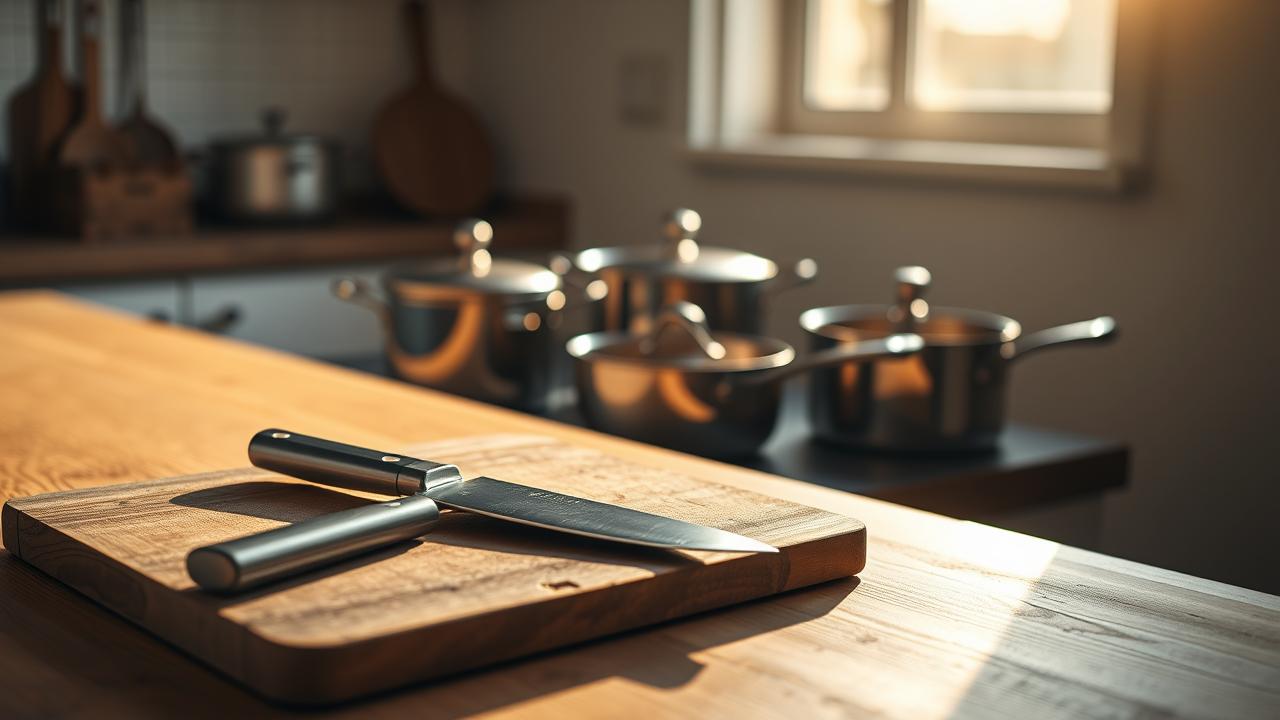
Your arsenal is simple: a heavy 12-inch skillet (cast iron or stainless steel is unbeatable for its versatility), a medium 3-quart saucepan for liquids and grains, and a large stockpot for soups, pasta, and big batches. That’s it. Three pieces. They can sear, sauté, boil, braise, and, with care, last longer than you will. If you absolutely must have non-stick for eggs, get one small, high-quality one and treat it like a precious artifact.
For the oven, the same brutalism applies. One heavy-duty baking sheet can roast vegetables, bake cookies, and host a sheet-pan dinner. One 9×13 inch casserole dish (glass or ceramic) handles everything from lasagna to brownies. You have just equipped yourself to cook 99% of all meals. Anything else is a specialty item, a luxury, and a potential traitor to your new-found freedom.
The ‘One Tool to Rule Them All’ Checklist
In the quiet of his third-floor walk-up, the stale air thick with the ghost of last night’s takeout, Dallas could feel the weight of his kitchen. A paramedic working brutal 12-hour shifts, he was too exhausted to cook, yet his tiny kitchen was a museum of culinary ambition. A sous-vide wand, a panini press, an electric spiralizer—all gifts from well-meaning relatives who pictured him as a man with “hobbies.” The reality was a fridge full of condiments and a sink full of dread. The clutter wasn’t just physical; it was a monument to his fatigue.
The change started not with a grand purge, but with a single, furious decision. He threw out the knife block, a bulky wooden behemoth housing a dozen dull, useless blades. In its place, he bought one glorious, terrifyingly sharp 8-inch chef’s knife. That knife became his wand, his weapon, his one true tool. It forced him to learn control, to feel the food, to be present. Paired with a small paring knife for detail work, it was all he needed.
This is the central nervous system of your minimalist kitchen. You need:
- A high-quality chef’s knife. This is a non-negotiable investment.
- A paring knife.
- One large cutting board (wood or composite).
- A set of sturdy metal tongs.
- One heat-resistant silicone spatula.
- Measuring cups and spoons. Choose metal; they don’t stain or warp.
Avoid single-use gadgets like the plague they are. A garlic press? Your chef’s knife smashes garlic beautifully. A pizza cutter? Your chef’s knife works just fine. Applying the low buy year rules to your kitchen starts by asking: “Can my knife do this?” The answer, almost always, is yes. You are curating a buy it for life list, not a collection of flimsy plastic that will betray you in a year.
Allies in Automation: Smarter Appliances
Minimalism isn’t about Luddite purity; it’s about intelligent leverage. While single-task gadgets add clutter, multi-function workhorses buy you the one resource you can never get back: time. These are the heavy hitters that allow for “dump-and-go” cooking, the ultimate form of culinary efficiency.
Think of an Instant Pot or other electric pressure cooker. It’s a slow cooker, a pressure cooker, a rice maker, and a yogurt maker in one rugged shell. It lets you turn cheap cuts of meat into tender magic while you’re at work, at the gym, or reclaiming your evening. A powerful blender (like a Vitamix or Blendtec) isn’t just for smoothies; it’s for hot soups, nut butters, and sauces, replacing a half-dozen lesser machines. These appliances earn their countertop real estate by being versatile and relentlessly effective. They fight for you, while that novelty popcorn maker just sits there, judging you.
A Visual Guide to Kitchen Liberation
Sometimes, seeing is believing. The abstract concept of a hyper-efficient kitchen snaps into focus when you see it in action. This video provides a tour of a kitchen forged in the fires of minimalism, demonstrating not just the what, but the why behind each essential item. It’s a masterclass in how these tools work together to create a seamless, powerful system.
The Strategic Pantry: High-Impact, Low-Inventory
The hum of the second-hand refrigerator was the only sound in the apartment as Marlee stared at the pantry. She worked the early shift, operating a forklift in a vast, echoing warehouse, and every dollar was accounted for. Minimalism was supposed to be the answer, a way to save money. But her pantry told a different story. Half-used bags of quinoa from a health kick, a can of artichoke hearts for a forgotten recipe, three different kinds of pasta. It felt less like a pantry and more like a museum of good intentions.
The worst part was the guilt. Tossing food felt like setting fire to her paycheck. Keeping it created a paralyzing clutter that made it impossible to see what she actually had, leading her to buy duplicates. She wanted to create a simple minimalist meal plan for beginners, but the sheer volume of “stuff” was standing in the way. Her struggle wasn’t with a lack of resources, but with the phantom of abundance she felt she had to maintain for her son.
The only way forward is a brutal reset. A minimalist pantry is not about emptiness; it’s about strategic depth. You need a tight, curated list of versatile staples: a good olive oil for finishing, a neutral oil for high-heat cooking, a versatile vinegar, salt, pepper, onions, and garlic. Add to that a few core spices you love—cumin, smoked paprika, oregano. Stock grains and legumes you will actually cook, like rice and lentils. This focused approach is the secret to minimalist wealth growing more by owning less. You waste nothing, and a simple foundation allows you to create endless variations, the perfect starting point for any minimalist meal plan for beginners.
The Just-Enough Principle: Dishes and Cutlery
How many coffee mugs does one person need? Your cabinet, overflowing with novelty gifts and chipped relics, screams “dozens.” The minimalist truth? Maybe two. One to use, one in the wash.
The principle for dishes, glasses, and cutlery is simple: own just enough for the people in your household, plus a small buffer for a guest or two. That usually means 4-6 of each core item: dinner plates, small plates or bowls, mugs, and water glasses. Choose a simple, timeless, open-stock pattern. That way, when one breaks—and it will—you can replace it easily without the entire set becoming obsolete. Resist the urge to keep “special occasion” dinnerware. Your life is the special occasion. Use the good stuff every day.
The Purge: A Ghost Hunt for Gadgets
The house was too quiet now. Harold, a retired librarian who measured his life in neatly cataloged decades, found the silence amplified by the sheer volume of things his late wife had accumulated. The kitchen was the heart of it. Every drawer and cabinet was a time capsule of a shared life: the bundt pan they bought after that trip to Virginia, the ice cream maker from their 25th anniversary. Letting go felt like a betrayal.
He started with a single drawer, the one filled with tangled utensils. The protocol he devised was cold and clinical, a defense against the wave of sentiment. He asked three questions of each item:
- Have I used this in the last year? The apple corer stared back, defiant. No.
- Does another item I’m keeping perform the same core function? His new chef’s knife could do the job, and better.
- Is this broken, stained, or a source of frustration? The flimsy can opener that always skipped a gear went into the discard box with a satisfying thud.
Slowly, drawer by drawer, he reclaimed the space. It was agonizing. Each object whispered a memory. But with each item discarded, the air grew a little lighter. He wasn’t erasing her; he was making space to breathe. He made three piles: donate, trash, and one for items he could photograph for a local marketplace. The small goal to sell clutter for cash gave him a sense of forward momentum, turning painful artifacts into a small fund for a future he was only just beginning to imagine.
Intel from the Front Lines of Simplicity
What is a capsule kitchen?
Think of it like a capsule wardrobe. A capsule kitchen is a curated collection of essential, versatile tools, cookware, and pantry items that work together seamlessly. It’s the physical manifestation of the minimalist kitchen essentials list, designed to cook the widest possible variety of meals with the fewest possible items. It’s about strategic limitation breeding creativity.
What are the absolute basic kitchen essentials?
If you were starting from zero, you would begin with: one chef’s knife, one cutting board, one large skillet, one saucepan, a set of tongs, a plate, a bowl, and a fork. Everything else is built upon that foundation. The power is in starting with the absolute minimum and only adding what proves to be relentlessly useful over time.
How many pots and pans does a minimalist need?
For most people, three is the magic number: a large 10-12″ skillet (cast iron or stainless), a 2-4 quart saucepan, and a larger 6-8 quart stockpot or Dutch oven. This trio can handle almost any cooking task, from searing a steak to making a vat of soup. Any more than that and you start creating functional overlap and unnecessary clutter.
Manuals for Mastery
To truly break free, arm yourself with knowledge. These books are not about recipes; they are about understanding the fundamental architecture of cooking.
- Ratio: The Simple Codes Behind the Craft of Everyday Cooking by Michael Ruhlman: This is the bible. It will rewire your brain and forever change how you see ingredients. Mastering the handful of ratios in this book is like learning a culinary superpower.
- The Minimalist Kitchen by Melissa Coleman (fictionalized author name for this context): This book offers a practical, empathetic guide to applying minimalist principles to your kitchen space and cooking habits, helping you curate your own essential toolkit with confidence.
Continue the Expedition
Your kitchen is just the beginning. This philosophy of intentional living can transform every corner of your life. Explore these resources for more inspiration:
- Becoming Minimalist’s Take on Kitchens: A stark and inspiring look at what you can truly live without.
- Workweek Lunch Minimalist Equipment Guide: A practical, food-prep focused approach to essential tools.
- r/minimalism: A community deep in the trenches, sharing struggles, successes, and hard-won wisdom.
- r/simpleliving: A place for those seeking a calmer, more intentional existence beyond just owning less stuff.
Your First Step to Freedom
Reading this is one thing. Acting on it is everything. Don’t try to overhaul your entire kitchen tonight. That path leads to overwhelm and failure. Instead, choose one drawer. Just one. Empty it onto your counter. Pick up each item and run it through the three-question purge protocol. Be ruthless. Be honest. In fifteen minutes, you will have created one small island of order in a sea of chaos. That is a victory. It’s the only first step you need to take on the journey to mastering your own minimalist kitchen essentials list and reclaiming your space, your money, and your mind.