From Digital Dust to Tangible Trust
There’s a cold, hollow feeling that settles in your gut when you look at a bank statement that’s supposed to represent your future. You did everything right. You saved. You sacrificed. But the numbers, despite growing, feel smaller, weaker. Eaten alive by an invisible decay you can’t fight. It’s the quiet dread of running in place, the grim realization that the traditional path to security has become a treadmill to nowhere.
This isn’t just about money; it’s about a loss of agency. A sense that the rules were written by someone else, for someone else. But what if you could sidestep those rules? What if you could connect your digital wealth directly to the tangible world—to the steel, concrete, and cash flow that have always held true value? This is the raw-knuckled promise of yield-bearing real world assets (rwa), a bridge from the speculative haze of digital currencies to the solid ground of predictable income.
The Blueprint in Your Pocket
The core of this revolution is brutally simple. It’s about taking high-value, income-producing assets that were once the exclusive domain of the ultra-wealthy—commercial real estate, private business loans, infrastructure projects—and slicing them into affordable, digital pieces you can own.
By tokenizing these assets on a blockchain, the system carves out the army of middlemen who siphoned away your returns. The result? Higher yields, transparent ownership, and the ability to buy or sell a piece of a skyscraper as easily as you order a pizza. This is about reclaiming what’s real and making it work for you, not for a distant institution.
What Exactly is a “Real” Asset, Anyway?
In a workshop filled with the sharp scent of ozone and hot metal, Dustin welded seams on a custom electrical panel. He was a master craftsman, a man who trusted what he could see, touch, and measure. Copper wire had integrity. Steel conduits had strength. His bank account, however, felt like digital smoke, its value dissipating with every news report about inflation. The idea of “investing” in purely digital coins seemed like gambling on ghosts.
But then he heard about something different. Not a coin backed by a prayer, but a token backed by a solar farm. Or a slice of a rental property. Or a loan to a growing business. These are Real World Assets (RWAs): tangible, physical, or traditional financial instruments that generate real-world revenue. Think buildings, invoices, or even investing in music royalties. They are assets with intrinsic value, the kind you can point to and say, “That right there? That generates income. And I own a piece of it.”
The Engine of Higher Yield: Cutting Out the Bloat
In a glass-walled office overlooking a sprawling port, Serena coordinated the movement of thousands of shipping containers across the globe. Her entire career was a battle against inefficiency, a relentless hunt for redundant steps and costly intermediaries. She could reroute a fleet to save millions, yet her own retirement fund was a black box, a tangled mess of management fees, administrative costs, and opaque holdings. The hypocrisy was a bitter pill.
Tokenization strikes at the heart of this inefficiency. By placing an asset’s ownership ledger on a blockchain, it automates the processes that once required legions of bankers, lawyers, and administrators. Dividend payouts, ownership transfers, compliance checks—all handled by self-executing smart contracts. The money that used to pay for that bloated infrastructure now flows directly to the asset owners. It’s the financial equivalent of building a hyperloop where a winding dirt road used to be. The yield isn’t magic; it’s the reclaimed value that was always being leeched from the system.
Breaking Down the Gates of the Fortress
The low hum of the refrigerator filled the silence of the small apartment, a constant reminder of the electricity bill. After putting her son to bed, Alana, a paralegal, sat bathed in the glow of her laptop screen. The numbers for a down payment on a decent home were not just daunting; they were insulting. She spent her days drafting contracts that moved millions for her firm’s clients, yet the gates to the investments that built real wealth—like commercial real estate—were sealed shut, guarded by a six-figure buy-in she’d never have.
She tried. She looked into REITs, but the returns felt diluted, the control nonexistent. She even explored some early platforms for crowdfunding for real estate investments, but they were clunky, illiquid, and still demanded more capital than she could risk. The system wasn’t just broken for her; it was designed to keep her out. It was a cold, hard wall, and she was on the wrong side of it, with the gnawing frustration of knowing you have the intelligence but not the access.
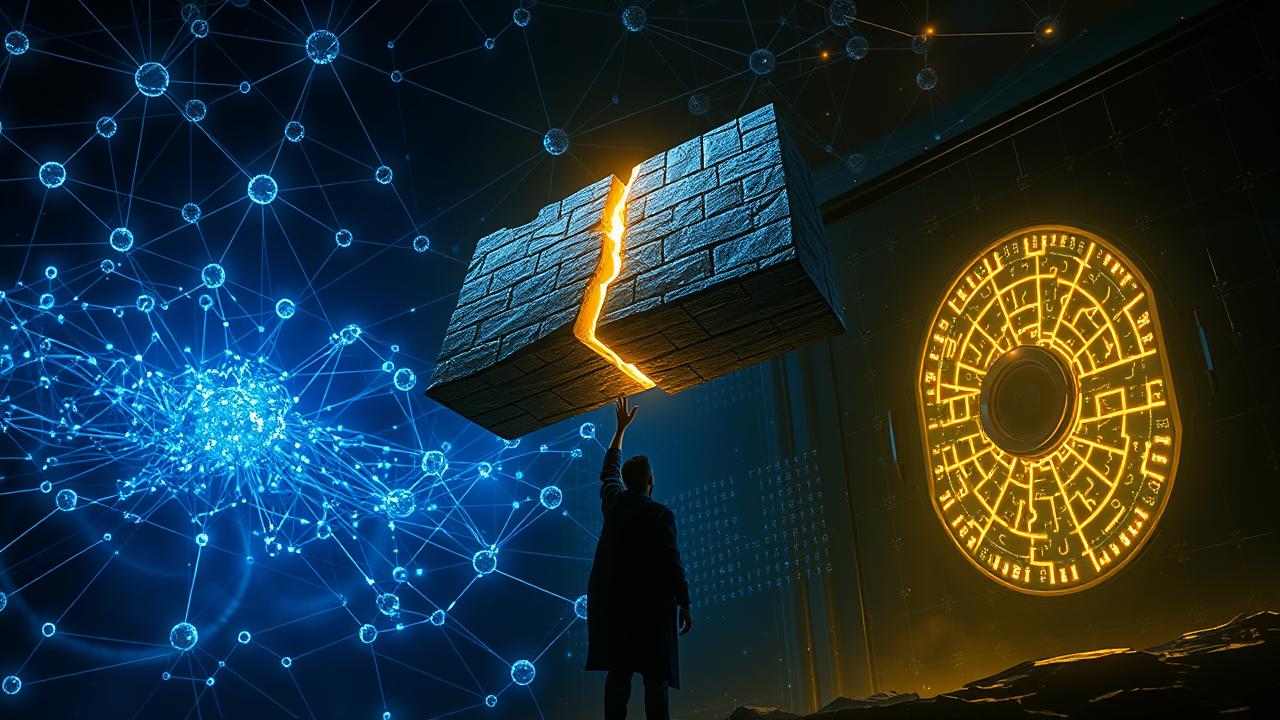
This is the wall that RWA tokenization is built to demolish. By fractionalizing a multi-million-dollar asset into thousands of digital tokens, it shatters the barrier to entry. Suddenly, a piece of that once-inaccessible office building or a share in a portfolio of private loans can be bought for a hundred dollars, or even less. It’s not a handout. It’s a crowbar, giving ordinary people access to the same asset classes the wealthy have used for generations to build and preserve their fortunes.
Seeing the Trillion-Dollar Shift
Sometimes, a seismic shift is happening right beneath your feet, and you need someone to draw you a map. This is one of those moments. The video below unpacks the sheer scale of the RWA opportunity, translating the abstract concepts into a concrete vision of a multi-trillion-dollar migration of value from traditional ledgers to the blockchain. It’s a powerful overview of why this isn’t just another crypto trend, but a fundamental rewiring of finance.
Source: Real World Assets (RWA) Explained via Dads Gone Crypto on YouTube
Beyond Simple Yield: The Next Level of Ownership
Dustin, the electrician, started small. He bought a token representing a tiny fraction of a private credit fund. He saw the interest payments, paid in a stable digital dollar, appear in his wallet—reliable, predictable. It was real. But then he discovered something deeper. He found a project tokenizing a new community solar installation. The token didn’t just pay a yield from the electricity sold to the grid; it also gave its owners discounted power rates. It was a dual-threat asset: part investment, part utility.
This is where the strategy evolves beyond simple returns. Some asset pools are managed by decentralized autonomous organizations (daos), where token holders vote on the asset’s management and future. This is true ownership, true control. It’s the difference between being a passenger and having your hands on the wheel. You’re not just clipping coupons; you are building your own sovereign money blueprint, piece by tangible piece.
The Two-Headed Dragon: Navigating Legal and Digital Risk
Serena, the logistics expert, was intrigued but skeptical. Her mind, trained to spot points of failure, saw two major risks. What happens if the code has a bug? And, more importantly, what good is a digital token if the company backing the physical asset goes bankrupt in the real world? It’s a valid, terrifying thought—owning a digital ghost of a dead asset.
This is the proving ground where serious RWA protocols separate themselves from the pretenders. The solution is a hybrid one. First, an ironclad “legal wrapper”—a robust legal structure that ensures your token represents a true, enforceable claim on the underlying asset. If things go sideways, there is a clear path for recourse in a court of law. Second, battle-tested smart contract security. This isn’t the Wild West of meme coins; this is about building institutional-grade infrastructure for a new era of alternative and decentralized investing.
Ignoring either side of this coin—the legal or the digital—is asking for disaster. The real power lies in the fusion of blockchain’s transparency with the hard-won reliability of traditional legal frameworks.
Your Digital Toolkit for a Tangible World
Stepping into this world doesn’t mean blindly throwing money into the digital ether. It requires the right tools for discovery and due diligence. These aren’t your broker’s clunky apps; they are the crowbars and flashlights for exploring this new landscape.
- RWA Discovery Platforms: Protocols like RWA.io serve as aggregators, giving you a bird’s-eye view of different asset types available across the market, from tokenized treasuries to private credit.
- Specialized Asset Protocols: Platforms like Ondo Finance focus on tokenizing low-risk, high-quality assets like U.S. Treasury bonds, offering a stable entry point. For those interested in real estate, Landshare provides a direct way to invest in tokenized properties. Maple Finance opens doors to institutional lending.
- Portfolio Trackers: As you diversify, tools that can connect to your wallet and track the value of both your crypto and your RWA holdings, like Vezgo, become essential for seeing the whole picture.
Digging Deeper Beyond the Digital Surface
A blog post can light the fire, but a deep dive requires more. These concepts are drawn from experts who have been mapping this new territory for years.
DeFi Protocol Analysis: Explores how protocols are shifting from speculative assets to tangible, value-backed investments, with a heavy focus on the regulatory hurdles that are both a challenge and a key to mass adoption.
Tokenized Real Estate Investing: A manual for generating passive income through tokenized properties, detailing how fractional ownership and stablecoin dividends are revolutionizing an ancient asset class and enabling global diversification.
The New Age of Private Credit: An inside look at how complex debt instruments are being packaged into liquid, high-yield digital notes, leveraging smart contracts to out-compete traditional bond markets.
DAO Governance for Real Assets: A crucial text on how decentralized organizations are becoming the new boards of directors for pools of tokenized assets, exploring how voting rights tied to ownership ensure integrity and confidence.
Hybrid Risk Management for RWAs: A strategic guide that stresses the absolute necessity of merging on-chain security with robust, off-chain legal frameworks to create investments that are both efficient and resilient.
Questions From the Edge of the New Frontier
What is an example of a real world asset (RWA)?
Think of anything with clear, provable value that generates income. The most common examples are real estate (a commercial building), private credit (a loan to a business), U.S. Treasury bills, and even high-value invoices (trade finance). But the field is expanding to include everything from tokenized commodities investing to fine art and intellectual property rights.
How is this different from just buying a stock or a REIT?
Two main ways: efficiency and access. By using blockchain, RWA tokenization cuts out many of the intermediaries, which can lead to higher yields being passed on to you. Secondly, it offers fractional ownership of assets you could never access before. Buying a REIT gives you a share in a huge, opaque fund. Buying an RWA token can give you a direct, transparent stake in a specific building or loan, giving you more clarity on where your money is working.
Is this really safe? What if I lose my money?
Safety is relative, and no investment is without risk. However, the core idea behind yield-bearing real world assets (rwa) is to anchor your investment to something with intrinsic value, which is inherently less volatile than a speculative digital currency. The biggest risks are platform security and the quality of the underlying asset. That’s why due diligence is crucial. Look for projects with strong legal backing, transparent auditing, and a proven track record. For someone like Alana, this means starting with small, experimental amounts in well-vetted, regulated platforms offering tokenized U.S. government bonds, the digital equivalent of dipping a toe in the water, not diving headfirst.
Your Library of Alexandria
This journey is one of continuous learning. Here are some of the resources and platforms that can serve as your guides.
- RWA.io: An excellent starting point for market data and discovering new RWA projects.
- InvestaX: A platform for accredited investors to access tokenized assets and Security Token Offerings (STOs).
- QuillAudits: A resource for understanding the security side of Web3, essential for vetting platforms.
- YouTube: Real World Assets (RWA) Explained: The video linked above, worth a re-watch to solidify the core concepts.
- r/defi: A Reddit community for deep, often technical, discussions about decentralized finance and emerging narratives like RWAs.
- r/investing: A broader community where discussions often bridge the gap between traditional finance and new technologies.
Take the First Step on Solid Ground
The world won’t stop trying to take what’s yours through inflation, fees, and exclusion. You can’t outrun it, but you can build on different ground. You don’t need to be a tech wizard or a financial guru. You just need to possess the defiant spark that says, “There has to be a better way.”
Your first step isn’t to invest your life savings. It’s to learn. To explore one of the platforms mentioned. To read. To reclaim your own financial education. The world of yield-bearing real world assets (rwa) is not a magic pill, but it is a powerful tool. And it’s waiting for you to pick it up.