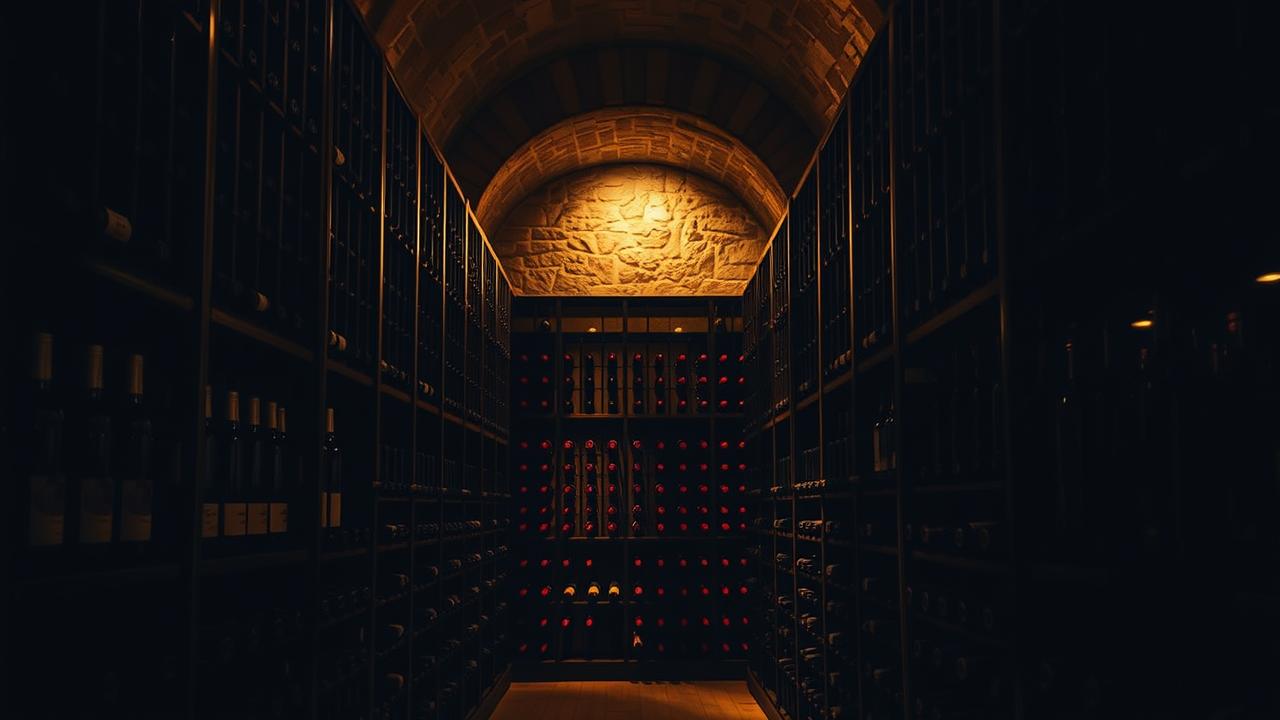
The screen glows with an impossible promise, digits shimmering like a desert mirage. Stocks dip, currencies flicker, and the familiar knot of anxiety tightens in your gut. It’s a low, persistent hum—the sound of your future being decided by forces you can’t see, can’t touch, and certainly can’t trust. You’ve followed the rules, played the game, but the foundation feels like it’s built on sand. And in that quiet desperation, the mind wanders to something solid. Something real. An asset that doesn’t exist as a line of code but as a dark, heavy bottle resting in a cool, silent cellar, growing not just in value, but in character. This is the primal pull of wine investment funds, a world where wealth feels tangible again.
This Is Not A Lottery Ticket
Forget the fantasy of stumbling upon a dusty bottle in your grandmother’s attic that turns out to be liquid gold. This is not about luck. This is about strategy, discipline, and understanding that the same forces of scarcity and demand that drive all markets are at play here, only with a cork. We’re tearing down the velvet rope to show you how these funds operate, who they’re for, and the brutal truths you must face before diving in. This is your map through a territory that can be as treacherous as it is rewarding.
Decoding the DNA of a Winner
Before you can even think about a fund, you have to understand what gives a single bottle its power. What separates a pleasant table wine from an asset that can outperform the stock market? It’s not magic; it’s a cold calculus of factors. The video below is an essential primer, breaking down the five core pillars of investment-grade wine. Watch it not as a casual observer, but as a strategist learning to identify the genetic markers of future value. This knowledge is your first line of defense.
The Vault in Your Mind
For twenty-five years, he studied the alien architecture of coral reefs in the deep, silent pressures of the ocean. Now retired, Christopher found the world of digital finance loud, chaotic, and jarringly abstract. He wanted something he could understand, an investment that felt anchored to the physical world. He didn’t want to buy cases of wine himself—the logistics of storage, insurance, and eventual sale were a nightmare he had no interest in navigating. The very thought of it made his small coastal home feel claustrophobic, imagining crates stacked in his garage, slowly cooking in the humid air.
This is the void that wine investment funds are built to fill. Think of them as a collective vault. You, along with other investors, pool your capital. A team of experts—the sommeliers, the analysts, the market historians—then use that pool to acquire a portfolio of investment-grade wines. They handle the sourcing from reputable producers, the professional cellaring in bonded warehouses (which offers significant tax advantages), and the timing of the eventual sale to maximize returns. You own a share of the vault’s contents, without ever having to touch a bottle. It’s a way to access the stability of art and collectibles as investments, but with a more established secondary market and clearer metrics for growth.
The Tortoise and the Hare, Reeking of Terroir
There are two ghosts that haunt every investor’s thoughts. The first is the ghost of the missed opportunity—the explosive “tenbagger” that could have changed everything. This is the siren song of venture capital, of crypto, of investing in a new, unproven vineyard in a region whispered to be the “next Bordeaux.” It’s a high-stakes hunt for wines that might skyrocket in value. Some funds chase this dragon, seeking out emerging producers and radical vintages. The potential is immense. So is the risk of ruin.
The second ghost is that of catastrophic loss. This is the lesson of value investing, preached by masters like Benjamin Graham. It favors a portfolio of blue-chip wines from legendary producers like Domaine de la Romanée-Conti or First Growth Bordeaux estates. These wines are the stalwarts. Their growth is steadier, more predictable, driven by decades of proven performance and dwindling supply. The goal here isn’t to get rich overnight; it’s to not become poor, ever. Your choice of fund will depend entirely on which ghost you fear more.
The Sweat on the Back of Your Neck
The glow from the monitor cast long, distorted shadows across Franklin’s cramped home office. He ran a small, successful landscaping business, but the profits felt perpetually fragile, prey to fuel costs, weather, and the whims of his clients. He’d recently sold a piece of commercial land his father had left him, and the money sat in his bank account, radiating a terrifying potential. He scrolled through the website of a wine fund, the promises of 10% annual growth feeling both intoxicating and venomous. His father’s words echoed in his head, a bitter mantra from two decades ago after a ‘can’t-miss’ emu farming scheme had wiped him out: “If it sounds too good to be true, it’s a lie wrapped in a pretty ribbon.”
This palpable fear is the most important sense an investor can have. The wine world has its shadows, filled with counterfeit bottles and funds that are little more than slickly marketed Ponzi schemes. A fund’s quality isn’t in its marketing brochure; it’s in its guts. Does it offer liquidity? Or is your money locked up for seven years with no way out? What is their process for ensuring provenance—the unbroken chain of ownership back to the winery? Do they conduct independent audits? These questions aren’t just details; they are the entire game. A legitimate fund will welcome this scrutiny and provide verifiable proof, not just promises. Anything less is a red flag flapping in a storm.
The Unseen Machine of Success
From her post overseeing trans-Pacific satellite deployments, Evelynn had learned a brutal lesson: passion without process is chaos. Hope is not a strategy. When she decided to explore wine investing, she approached it not as a connoisseur, but as a systems analyst. She spent weeks dissecting the operational structures of different funds, ignoring their lists of acclaimed wines and focusing instead on their management protocols. She built a spreadsheet, a cold and logical fortress against emotional decisions. Fees, insurance policies, custodial arrangements, risk mitigation strategies—each was a data point.
Her choice was a fund that was, frankly, a little boring. They didn’t boast about finding the next cult shiraz. They boasted about their proprietary software for tracking auction prices and their regimented, multi-layered authentication process. This is the power of operational excellence. A great fund runs like a Swiss watch, a machine built for one purpose: to protect and grow capital with a ruthless lack of emotion. Evelynn’s satisfaction came not from a sudden windfall, but from the quiet confidence that her asset was being managed with the same relentless discipline she applied to her own career. She had taken chaos and wrestled it into submission.
A Hedge Against a Burning World
There’s a growing sense that the very ground beneath our financial systems is shifting. Inflation gnaws at savings, and global markets feel more interconnected—and thus more fragile—than ever. In this environment, investors are desperately searching for life rafts, for assets whose value isn’t tied directly to the whims of Wall Street or a government printing press.
Fine wine, as a tangible and globally desired asset, emerges as a fascinating component of this defense. Its value is driven by a simple, powerful dynamic: supply is finite and constantly decreasing as bottles are consumed, while demand from an expanding global class of wealthy collectors continues to rise. This creates a natural inflationary hedge. For some, adding an asset like this is about more than just numbers; it’s about building a personal sovereign money blueprint, a portfolio designed to withstand storms by holding things of intrinsic, physical worth. It’s a move toward resilience in an age of uncertainty.
Choosing Your Weapon: ETFs vs. Managed Funds
The path to wine exposure splits. On one side, you have Wine ETFs (Exchange-Traded Funds). These function like stocks, trading on public exchanges. They offer high liquidity—you can buy and sell shares easily throughout the day. However, they typically track an index of wine prices, giving you broad, impersonal exposure. You’re betting on the market as a whole, not the curated genius of a specific team.
On the other side are the managed wine investment funds we’ve been exploring. These are private, less liquid (often with lock-up periods), and demand higher minimum investments. But in exchange, you get active management. You’re betting on the expertise of the fund managers, their ability to find undervalued assets and navigate the market with surgical precision. It’s a crucial distinction in your overall strategy for alternative asset diversification. Do you want a passive ride on the river, or do you want an expert guide navigating the rapids?
Instruments of Clarity
In this opaque world, transparency is power. Platforms like Vinovest or services that aggregate data from global auctions give you a fighting chance. They are your periscope, allowing you to track the performance of specific wines and regions, verify market prices, and cross-reference the claims made by any fund. Don’t trust; verify. Use these tools to light up the dark corners and see what’s really there before you commit a single dollar. A fund that shies away from this kind of third-party validation isn’t protecting its secrets; it’s hiding its weaknesses.
Arming the Mind
The battle for financial freedom is fought first in your head. These texts are not just books; they are arsenals of thought, filled with the principles needed to navigate any complex investment landscape, wine included.
- The Intelligent Investor by Benjamin Graham: The undisputed bible of value investing. Its lessons on discipline, risk aversion, and ignoring market noise are the bedrock upon which any sound investment in tangible assets must be built.
- Principles: Life and Work by Ray Dalio: The founder of the world’s largest hedge fund breaks down how to build systematic, principle-based decision-making processes to remove emotion and ego from your choices. A masterclass in creating an operational machine for success.
- 101 Extraordinary Investments by Toby Walne: A brilliant and witty exploration of the world of tangible, alternative assets. This book will stretch your imagination and ground your understanding of how value can be found in the most unexpected places, from classic cars to, yes, fine wine.
Questions from the Brink
Is investing in wine genuinely a good idea?
It can be, but it’s not for everyone. Historically, fine wine has shown impressive returns, often uncorrelated with traditional stock markets, which is a huge plus. But it is an illiquid, long-term game. If you need your cash back in three years, this is a horrific idea. If you are patient, disciplined, and work with a reputable fund, it can be a powerful tool for portfolio diversification and wealth preservation. Don’t look at it as a replacement for stocks; look at it as a stabilizer.
What should I actually look for to avoid getting scammed?
This is the question Franklin should be asking. Focus on three things: transparency, track record, and terms. Ask for audited financials. Demand to see their due diligence process for authenticating wine. Understand every single line item in their fee structure. A trustworthy fund will have clear, fair terms regarding liquidity and redemptions. If they get defensive or evasive when you ask these hard questions, run.
Can I start small with wine investment funds?
Traditionally, no. Many high-end managed funds required six-figure investments. However, the landscape is changing. Platforms and some newer funds are emerging that allow accredited investors to get started with smaller amounts, sometimes as low as $1,000. This is democratizing access, but it doesn’t remove the need for due diligence. The risks are the same, regardless of the dollar amount. Your first investment isn’t money; it’s the time you spend researching.
Continue the Reconnaissance
Your journey doesn’t end here. True mastery requires relentless curiosity. These resources offer deeper dives and unfiltered community feedback.
- Cult Wines: A major player in the wine investment space, their site offers market reports and insights.
- Wine Folly: Excellent educational content for understanding the fundamentals of wine itself.
- Investopedia – Where To Buy and Sell Fine Wine: A solid financial overview of the marketplace mechanics.
- r/WineEP: A Reddit community focused on “en primeur” (wine futures) and investing. You will find raw, unfiltered, and often brutal opinions here. A vital reality check.
- SmartAsset – How to Invest in Wine: Provides a clear breakdown of different investment avenues.
Take Back the Ground Beneath Your Feet
The world won’t stop being chaotic. The markets will continue their manic dance. You cannot control any of that. But you can control your response. You can decide to build a portion of your future on something solid, something with history and weight. The next step isn’t to mortgage your house and buy a pallet of Bordeaux. It’s smaller. It’s simpler. It’s deciding to spend the next hour researching one reputable fund, reading their prospectus not as a customer, but as an adversary. That single act of taking control, of arming yourself with knowledge, is the first real return you’ll get from wine investment funds. It’s the moment you stop hoping and start building.