The cold dread hits in the gut first. A frantic patting of pockets, the frantic energy of a cornered animal. Keys, phone… but the familiar rectangular bulk of a wallet is gone. That physical tether to your identity, your access, your money—vanished. It’s a violation that feels intensely personal, a small death of security in the middle of a Tuesday. This raw, primal fear is precisely what the cold, elegant logic of biometric authentication in digital wallets is designed to extinguish. It transforms security from something you have into something you are, forging a link that cannot be lost, stolen, or forgotten.
The Core Truth of Your Security
This isn’t about fancy tech for its own sake. It’s a fundamental shift in power. Biometric security means your fingerprint, your face, the very pattern of your iris becomes the key. It replaces flimsy PINs and forgotten passwords with the one thing no one can take from you: your unique biological identity. This is the first, most powerful line of defense in a world clawing for your data, a personal fortress gate that only you can command open.
The Moment Your Identity Becomes the Key
At its heart, biometric authentication is the raw science of you. It’s an algorithm that reads the unique labyrinth of your fingerprint, the precise geometry of your face, or the distinct signature of your voice. In the world of digital finance, this isn’t just a party trick for unlocking your phone; it’s a declaration of sovereignty.
It’s the terminal point for the thief who just snatched a brand-new phone. He sees the banking app, the digital wallet icon shining like a beacon. His heart thumps with greedy anticipation. But he hits a wall. Not a password he can guess or a PIN he can brute-force. He hits a wall made of you. The device demands a fingerprint he doesn’t have, a face he can’t replicate. The prize is right there, but it is utterly, infuriatingly, and beautifully useless to him.
This is the promise: security that is simultaneously effortless and absolute. A single touch, a fleeting glance, and you’re in. For everyone else, the door remains sealed shut.
The Five Signatures of You
The a late-night train car rattled around her, the fluorescent lights flickering with a sickly buzz that made the world feel fragile. Colette, a logistics coordinator who spent her life orchestrating the movement of massive steel containers across oceans, felt a sudden, sharp pang of vulnerability. An urgent invoice needed paying, a wire to a port authority in another time zone. A moment of distraction, a jostle from the crowd, and her phone was nearly gone. But the would-be thief fumbled, dropping it. She scooped it up, her heart a frantic drum against her ribs. With a quick glance, Face ID unlocked her wallet, she approved the transfer, and the confirmation flashed on screen. The entire transaction took less time than the thief’s failed attempt. The power in that moment was breathtaking.
While facial recognition provides that seamless speed, it’s just one of the five core methods turning your body into a master key:
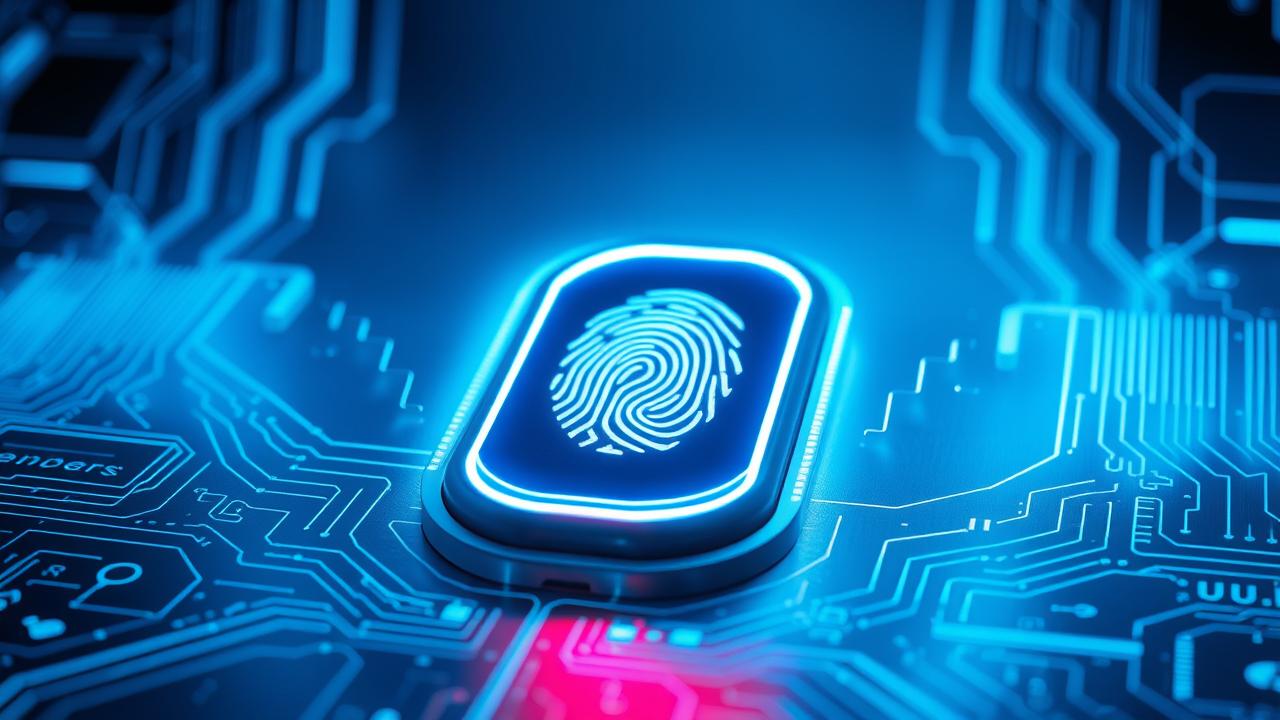
- Fingerprints: The original. The tiny, unique whorls and ridges on your fingertip, pressed against a sensor. Common, reliable, and deeply personal.
- Facial Recognition: The silent geometry of your face, mapped in three dimensions. Incredibly fast and low-friction, a staple of modern smartphones.
- Voice Recognition: Your unique vocal print. Less common for payments, but powerful for identity verification where speaking a command feels natural.
- Iris Recognition: The intricate, chaotic pattern of your iris, scanned with an infrared light. Astonishingly secure, though typically found in higher-security applications.
- Palm or Vein Patterns: A scanner reads the unique network of veins beneath the skin of your palm. It’s like a secret road map only you possess, delivering an exceptional level of security.
For everyday mobile wallets like Apple Pay or Google Wallet, fingerprints and facial recognition are king. They strike the perfect balance between convenience and robust security. For specialized hardware, particularly in the crypto space, you’ll start seeing more advanced options emerge, shaping the future of digital identity and privacy and defining the top digital wallet security practices for high-value assets.
Your First Step to Taking Command
Watching a demonstration can sometimes cut through the noise better than a thousand words. It shows you just how simple, how intuitive it is to transform your digital wallet from a locked box into a seamless extension of your will. This video walks through the process for Google Wallet, but the core principle is the same across platforms: a few taps to claim your power.
Video Source: TechBasics on YouTube
The Unbreachable First Gate
The calluses on Camden’s thumb were thick as old leather, a roadmap of a life spent managing construction sites, gripping tools, and wrestling with stubborn machinery. He’d finally taken the plunge into crypto, buying a sleek, new hardware wallet that promised fortress-grade security. The setup required a fingerprint scan. He pressed his thumb to the tiny sensor. Nothing. He tried again, harder. “Scan failed.” A small seed of frustration began to sprout. He wiped his thumb, wiped the sensor, took a deep breath. “Scan failed.” The damn thing couldn’t read him. It couldn’t see past the grit and the scars of his labor. The very thing meant to secure his assets was locking him out.
Camden’s struggle highlights a crucial truth: biometrics are the gatekeeper. When they work, they are magnificent. They make a lost or stolen device a useless brick to a thief. A PIN can be watched over your shoulder, but your fingerprint cannot. This is the critical first layer, the bouncer at the door of your financial life. When you set up a new device, linking your fingerprint or face is the act of stamping your personal, physical authority onto a digital object.
The question of what is a digital wallet is answered here. It’s not just an app; it’s a vault. And biometrics are the first, most personal lock on that vault’s door.
Where the Stakes are Absolute: Crypto and Your Digital Soul
Some people collect stamps. David, a meticulous digital archivist, collected rare, historically significant data sets, which he preserved on a decentralized network. His crypto wasn’t just an investment; it was the lifeblood of his work, the fuel for protecting digital history. For him, simple security wasn’t enough. It needed to be a ritual, a layered ceremony of verification that was both complex and second-nature. His non-custodial wallet required a sequence: a biometric scan on his phone to unlock a secure vault, which then revealed a segment of a passphrase needed to authorize a transaction on his hardware device. It was a symphony of checks and balances.
This is where the game changes. In the world of blockchain and digital identity, a lost asset is gone forever. There is no customer service line to call. Biometrics here often serve as one factor in a multi-factor sequence. It’s the harmonious collision of human and machine, where your physical self becomes an integral part of a cryptographic puzzle. This advanced approach to privacy, identity & digital wallets ensures that even if one layer is compromised, the fortress holds strong.
The Fortress Has Many Walls
A single wall, no matter how high, can eventually be breached. True security is a defense in depth, a series of concentric rings that exhaust and defeat any attacker. Biometrics are the outer wall—imposing, personal, and formidable. But they are rarely alone.
- Layer 1: Biometrics. This is you. Your fingerprint, your face. It answers the question, “Is the rightful owner present?”
- Layer 2: Platform Security. This is the work of the wallet provider. They use tokenization to scramble your card numbers, 2FA to verify your device, and encryption to protect data in transit. This layer asks, “Is the transaction itself legitimate and protected?”
- Layer 3: Cryptographic Sovereignty. For the highest stakes, this is the inner keep. Hardware cold storage that never touches the internet. Multi-signature systems that require multiple people to approve a transaction. Seed phrases etched into steel plates. This layer doesn’t ask, it states: “The keys to this kingdom are beyond reach.”
The Ghost in the Machine: When Security Starts to Know You
The next frontier is both thrilling and unsettling. It’s where security stops being a single event—a scan, a tap—and becomes a constant state of awareness. AI-enhanced systems are learning to watch not just who you are, but how you are.
This is behavioral biometrics. The system learns the unique rhythm of your typing. The specific angle at which you typically hold your phone. The speed and pressure of your swipes. It creates a living, breathing profile of your digital behavior. If someone else—someone with your stolen phone and a spoofed fingerprint—tries to access your wallet, the system will feel it. The typing cadence will be wrong. The swipe will be too hesitant. An invisible alarm will sound.
This dynamic, continuous authentication is a powerful defense against the most sophisticated threats. It represents the ultimate convergence of identity and action, securing not just a moment in time, but the entire flow of your interaction. It feels, in a strange and powerful way, like the future of money is learning to recognize its rightful owner by their very essence.
Claiming Your Ground: How to Fortify Your Wallet Right Now
This isn’t theory. This is an immediate, actionable step you can take to reinforce your digital defenses. Don’t just assume your wallet is secure; command it to be.
- Start With Your Device: Before you even open your wallet app, go to your phone’s primary security settings. On an iPhone, this is “Face ID & Passcode” or “Touch ID & Passcode.” On Android, it’s typically under “Security & privacy.” Ensure your biometrics are registered and active for unlocking your device. This is the first gate.
- Inspect Your Wallet App: Open Google Wallet, Apple Wallet, or your specific banking app. Dig into the security or verification settings. Most will have an explicit option to require biometric verification for payments or even just for opening the app. Turn it on. Make it mandatory.
- For Hardware Users: If you’re using a crypto hardware wallet, investigate models that integrate biometrics, like the D’Cent wallet. Understand how it functions—whether as a primary unlock or as one factor in a larger security scheme.
Questions from the Digital Trenches
What is a biometric wallet?
A biometric wallet is a digital wallet—on your phone or a hardware device—that uses your unique biological characteristics like a fingerprint or your face as the primary method to verify your identity and authorize transactions. It’s security that is part of you, not just something you know or have.
What are the 5 main types of biometric authentication?
The five heavy hitters are: Fingerprints (the unique map on your fingertip), Facial Recognition (the 3D geometry of your face), Voice Recognition (the specific signature of your voice), Iris Recognition (the intricate pattern in your eye), and Palm/Vein Patterns (the hidden network of veins in your hand).
Is biometric authentication actually making digital payments safer?
Absolutely, with a small dose of reality. For preventing casual theft, it’s a monumental leap forward. A thief can’t use your stolen phone to pay for things if it requires your face to work. However, no single system is a silver bullet. As some security experts point out, biometrics are fantastic for authentication (proving it’s you) but for high-value authorization, they should be part of a layered system. For the vast majority of daily threats, though, biometric authentication in digital wallets turns a compromised device from a disaster into a minor inconvenience.
Your Path to Digital Sovereignty
- FIDO Alliance: A deep dive into the standards connecting biometrics, payments, and digital ID.
- Stripe’s Guide to Biometric Payments: An excellent overview of the technology from a major payment processor’s perspective.
- Are Biometrics the Answer?: A thoughtful piece on the role of biometrics in the mobile payment ecosystem.
- r/Bitcoin: A fascinating forum discussion on the pros and cons of fingerprint sensors on hardware wallets, revealing the community’s security mindset.
Take Control of Your Digital Self
Security isn’t a passive state; it’s an active choice. It’s the decision to draw a line in the sand and declare that your digital life, your financial world, belongs to you and you alone. The power of biometric authentication in digital wallets is that it makes this choice intuitive, elegant, and incredibly strong.
Your next step isn’t to buy a new device or learn a complex system. It’s simpler. Pick up your phone right now. Go into its security settings. And make sure the gate is locked with the one key no one else on earth possesses: you.