The fluorescent light of the cubicle hummed a low, mocking tune. It was the third time this month Dalton had sat in this exact chair, facing this exact shade of beige, trying to explain why his existence didn’t quite line up with the numbers on the screen.
He was a contract welder, a man who built immense, unyielding structures with his own hands. Yet here, he was formless, a ghost haunting a database. A single erroneous digit on a credit report from a decade ago—a mistake not of his making—had metastasized. It had cost him a truck loan two years back. Now, it was poisoning his application for a small business line of credit. He felt a familiar, hot knot of helplessness tighten in his chest. His identity, his history, his very legitimacy, was owned by a corporation that saw him as a data point, and a flawed one at that.
This silent, grinding powerlessness is the reality for millions. It’s the toll extracted by a system where you are not the owner of your own story. But a fundamental shift is underway, a quiet revolution in the architecture of trust itself. The rise of self-sovereign identity in finance isn’t just a technological upgrade; it’s a declaration of independence for your digital self.
The Unbreakable You: A Summary
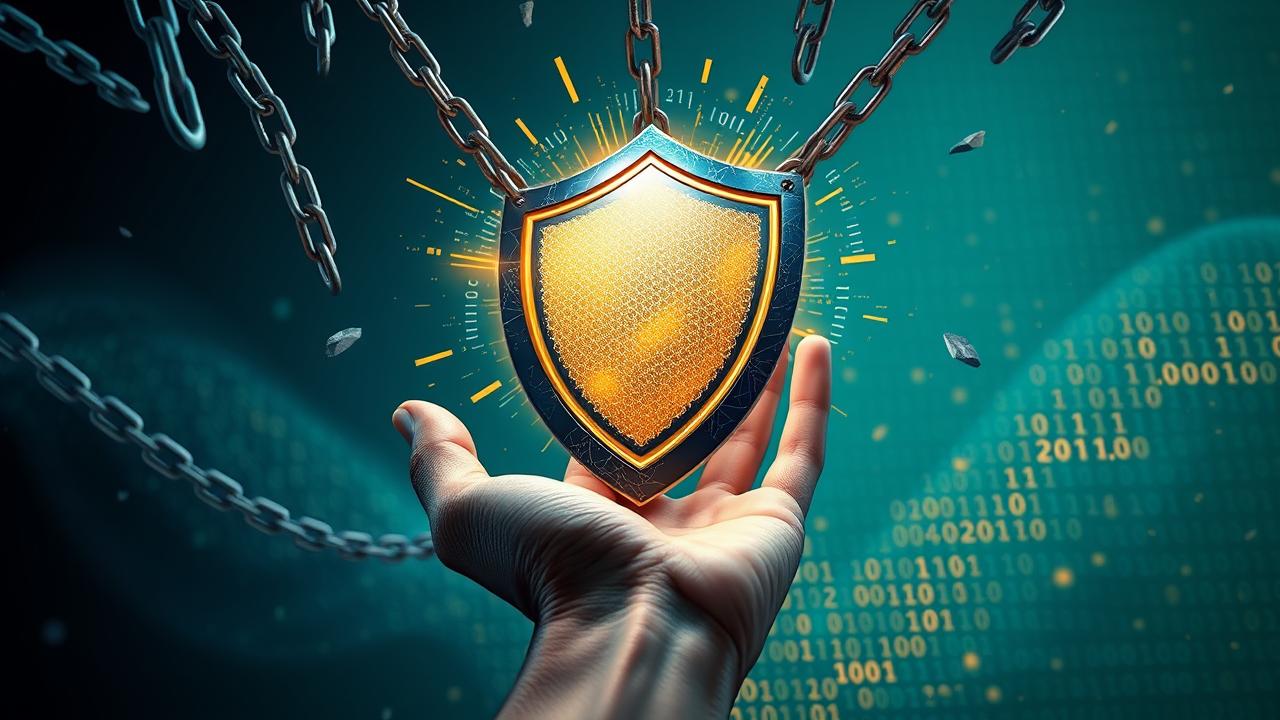
The life you’ve built—your financial history, your professional achievements, your very name—shouldn’t be held hostage in someone else’s server farm. Self-Sovereign Identity (SSI) is the key to unlocking the digital cage. It’s a framework that hands you the digital master keys to your own life, allowing you to prove who you are without surrendering control. It replaces the fragile, centralized model of identity with one that is personal, portable, and profoundly powerful.
What Do You Mean, I Don’t Own My Identity?
A raw emotional truth stated decisively: You have been conditioned to believe that logging in with Google or Facebook is a convenience. It is not. It is a trade. You trade a piece of your digital soul for access.
Self-Sovereign Identity (SSI) demolishes this broken bargain. It’s a paradigm shift from a world where massive corporations act as your digital landlords to one where you own the deed to your own data. It’s built on three pillars of absolute, non-negotiable power:
- Existence: You can exist online without needing a third-party gatekeeper to bless your presence.
- Control: You—and only you—have the final say over your identity. You decide what information gets shared, with whom, and for how long.
- Access: Your data and credentials are yours. You can access them, hold them, and take them with you anywhere, anytime.
This isn’t some far-off dream. It’s the practical, necessary evolution of privacy, identity & digital wallets, putting the user back at the center of their own universe.
The Bedrock of Unbreakable Trust
The scent of tanned leather and acrid dye filled the small workshop, but what truly hung heavy in the air was frustration. Sergio, a master craftsman whose hands could turn rough hide into works of art, felt impossibly clumsy in the digital world. Each new international marketplace he tried to sell on was a fresh hell of verification. Uploading his business license, bank statements, his own passport… again and again. Each platform held a piece of him, and the fees they skimmed felt like a tax for the privilege of being constantly vetted.
The technical heart of SSI beats with two core components designed to obliterate this kind of friction: Decentralized Identifiers (DIDs) and Verifiable Credentials (VCs). Think of the blockchain not as a place for crypto speculation, but as a global, incorruptible public square. A place where your DID—your unique, self-owned address—can be looked up by anyone you authorize, without a central directory. This link between blockchain and digital identity creates a permanent, unshakeable anchor for your digital self.
Verifiable Credentials are the proofs you carry. A VC is a digital, tamper-proof version of a driver’s license, a university diploma, or a business registration, issued by a trusted authority (like the DMV or a university) but stored in your own digital wallet. This is the core of how decentralized identity (did) explained becomes a practical reality. Sergio could have a VC for his business registration. When a new platform asks for proof, he presents only the credential, not the mountain of source documents, instantly proving his legitimacy without surrendering his data.
Turning Compliance from a Cost to a Superpower
For financial institutions, identity has long been a liability. It’s a swamp of fraud prevention, data breach remediation, and the soul-crushing, expensive churn of Know Your Customer (KYC) and Anti-Money Laundering (AML) checks. It’s a cost center. A perpetual, slow-motion fire.
SSI flips the script. It transforms identity into a growth engine. With SSI, the endless loop of resubmitting documents gets shattered. A customer can present a reusable, privacy-preserving Verifiable Credential to open an account. Suddenly, digital identity verification explained is no longer about painful data collection, but about instant, cryptographic confirmation. This doesn’t just cut costs; it builds a foundation of profound trust with the customer.
This is where it gets truly elegant. Using advanced cryptographic methods like zero-knowledge proofs, a user can prove a fact (e.g., “I am over 18” or “My income is above X threshold”) without revealing the underlying data (their exact birthdate or salary). The bank gets the compliance check it needs, and the customer retains their privacy. It demonstrates exactly how to create a secure digital identity that serves both regulator and individual, a rare moment of beautiful, mathematical harmony in a world of clashing interests.
Witness the Shift in Power
Words can paint a picture, but seeing the architecture of this new world in motion can trigger a deeper understanding. This video breaks down the promise of Self-Sovereign Identity, showing why this change isn’t just about technology, but about restoring a fundamental human right in the digital age: the right to own yourself.
Source: Redefining Digital Identity: The Promise of Self-Sovereign Identity via Devoxx on YouTube
Identity for the Invisible
The laptop screen cast a pale, cold light in the cramped room that smelled of stale coffee and desperation. She had escaped a collapsing country with her skills, her portfolio, and little else. Back home, Ainhoa was a celebrated designer with a robust credit history and a list of accolades. Here, in this new city, she was a ghost. Without local bank records or government ID, she was unbanked, unable to sign a lease, secure a client contract properly, or get a loan to buy the powerful new computer she desperately needed. She was trapped in a financial no-man’s-land, her past erased by geography.
SSI is more than a convenience for the privileged; it is a lifeline for the excluded. For the billions of people without access to traditional banking, a secure, verifiable digital identity is the first rung on the ladder to economic participation. It’s the foundation for accessing loans, building a business, and participating in the global economy. This is what makes it a core component of the future of money—a future that is more inclusive and equitable.
We’ve all made the Faustian bargain: exchanging our privacy for “free” services. We clicked “agree” without reading, and the result is a world rife with massive data breaches and unsettling levels of corporate surveillance. The constant privacy concerns with digital wallets and social media platforms are a symptom of this broken model. SSI severs that connection. It’s a system designed from the ground up to protect you, not to exploit you.
The Wallet Is Your Shield
The term ‘digital wallet’ immediately makes most people think of cryptocurrency or tapping a phone to pay for coffee. But in the SSI ecosystem, the wallet evolves into something far more profound. It becomes your personal data vault, a digital attaché case holding not just currency, but your credentials, your proofs, your very identity. It answers the question of what is a digital wallet with a resounding vision of personal empowerment.
This raises the obvious and critical question of security. Unlike traditional databases that serve up a banquet for hackers, this model is inherently more resilient. Your identity isn’t stored in one giant, vulnerable honeypot. It’s decentralized. The keys to your identity—your private cryptographic keys—are held by you and you alone. Understanding the top digital wallet security practices, like safeguarding these keys, becomes paramount. This is the fundamental difference when comparing SSI-based digital wallets vs traditional payment apps; you are the gatekeeper, not a faceless corporation.
Looking ahead, this concept even extends to the physical world. Imagine a future where your self-sovereign ID securely connects to your car, your home, or industrial machinery—so-called “Digital Twins.” This creates a trusted bridge between your physical and digital assets, unlocking a new frontier of smart, secure finance and IoT integration.
The Road Ahead is Paved with Challenges
A touch of wry sarcasm here: claiming this transition will be smooth, seamless, and met with universal applause would be a fantastic lie. The road to widespread SSI adoption is littered with hurdles.
There are immense technical mountains to climb, chiefly scalability and interoperability. For this to work, different systems built by different companies in different countries must be able to talk to each other flawlessly. Establishing universal standards, a kind of digital Esperanto for identity, is crucial for the future of digital identity and privacy. Then there’s the human element—convincing billions of people to change a lifetime of habits. No small task.
We need more than just good tech; we need a vibrant, competitive ecosystem. People will be searching for the best digital identity platforms 2025, and they need clear, trustworthy options. Finally, regulators are circling, and rightly so. The challenge is to weave these new decentralized frameworks into existing governance structures like the EU’s eIDAS regulation, ensuring they enhance, rather than clash with, the rule of law.
Your Toolkit for Digital Sovereignty
While the market is still young and churning with innovation, you can begin exploring the tools that will power this new reality. Instead of waiting for a single ‘winner,’ start familiarizing yourself with the categories. Search for “DID wallets” or “Verifiable Credential custodians” that are built on open W3C standards. These platforms are the foundation of true privacy-focused digital wallets. Pay special attention to projects that support emerging protocols like IDX, which are designed to give users even more granular control over their data streams. This isn’t about picking a product; it’s about learning the principles.
Arm Yourself with Knowledge
Self-Sovereign and Decentralized Identity: The Future of Identity Management by James Relington. If you want to go under the hood and understand the machinery that drives this revolution, this is your manual. It’s a clear, deep exploration of the architecture and the seismic shifts it will cause.
Web3: Charting the Internet’s Next Economic and Cultural Frontier by Alex Tapscott. For a birds-eye view, this book places SSI within the grander narrative of the internet’s evolution. It helps you see how owning your identity is a cornerstone of the entire “Read-Write-Own” movement that is reshaping our world.
Questions from the Bleeding Edge
What is the difference between Self-Sovereign Identity and Decentralized Identity?
Think of it like this: Self-Sovereign Identity (SSI) is the constitution—the philosophy and the declaration of rights stating you are in control. Decentralized Identity (DID) is the legal and technical code that makes the constitution enforceable—the frameworks, protocols, and ledgers that bring that philosophy to life.
Is SSI really going to stop identity theft?
It makes a certain kind of mass-scale identity theft—like a hacker stealing 50 million user records from one company—extraordinarily difficult. There’s no central vault to crack open. However, this shifts the responsibility. The new weak point becomes you. This is why learning how to secure your digital wallet and protect your private keys is not just a good idea; it is the entire game. With great power, as they say, comes great responsibility. No kidding.
Will governments and big banks ever actually allow this to happen?
They might not have a choice. The pressure isn’t just coming from privacy advocates; it’s coming from the sheer economic inefficiency of the current system. As shown with KYC and AML, SSI can save them billions.Forward-thinking governments, like those in the EU with eIDAS, are already exploring how to integrate these frameworks. It’s a slow-moving ship, but the pull of efficiency, security, and user demand is a powerful tide.
Explore the Decentralized Frontier
- W3C Decentralized Identifiers (DIDs) Specification: The official technical blueprint for how DIDs work.
- W3C Verifiable Credentials (VCs) Data Model: Dive into the standard for portable, secure credentials.
- Decentralized Identity Foundation (DIF): Follow the industry group working to ensure all these different systems can work together.
- Okta’s SSI 101: A solid primer from a major player in the identity space.
- Dock Labs’ SSI Guide: An in-depth guide covering the core concepts and use cases.
- r/CryptoTechnology: A subreddit for deep technical discussions that often touch on identity and privacy.
Forge Your Own Keys
This isn’t just theory. This is the ground shifting beneath your feet. The question is no longer if this change is coming, but when you will be ready for it. Your next step isn’t to become an expert overnight. It’s simpler.
Take one minute and think about all the places your identity lives online—banks, social media, government portals. If any one of them vanished or locked you out, what would you lose? Now, open a new tab and search for an open-source “DID wallet” or “SSI wallet.” You don’t have to download anything yet. Just look. See the names. Recognize that the tools for your liberation are already being built. This small act of awareness is the first step in mastering the future of self-sovereign identity in finance and reclaiming what has always been yours.